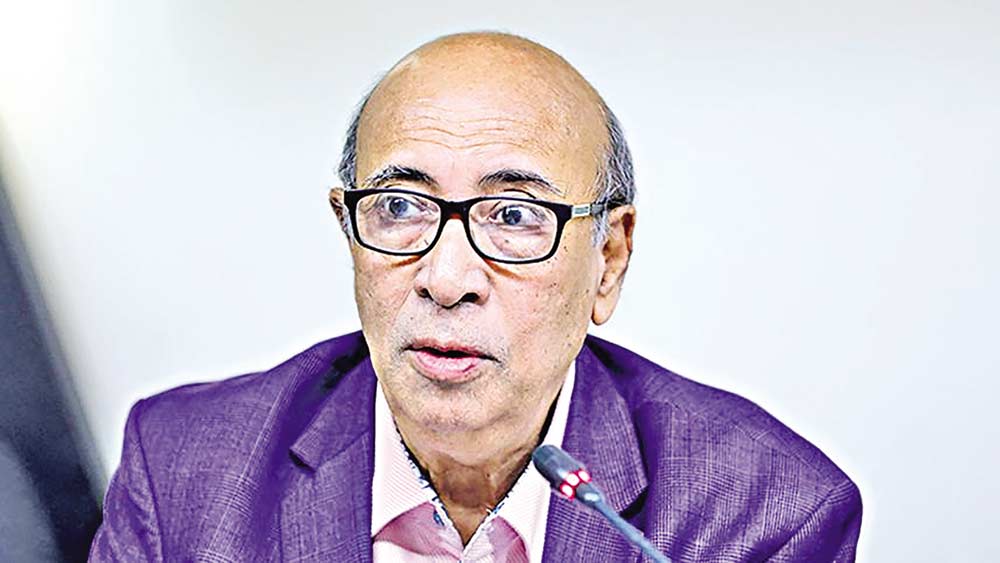
Bangladesh’s plastic industry, one of the country’s fastest-growing manufacturing backbones, is staring at a dangerous crossroads as soaring raw material costs, mounting tax burdens, collapsing consumer demand and policy neglect threaten to choke its export potential, warns Bangladesh Plastics Manufacturers and Exporters Association (BPGMEA) President Shamim Ahmed.
In an exclusive interview with The Daily Observer, the outspoken industry leader urged the Finance Minister to grant plastic packaging materials the same exportable goods status now enjoyed by the ready-made garments sector in the National Budget for FY2026-27, saying such a move could unlock billions in foreign exchange earnings and widen the government’s shrinking revenue base without squeezing existing taxpayers further.
“Instead of nurturing new exporters, the government is burdening businessmen with additional duties and taxes,” Shamim Ahmed said. “If plastic goods used in packaging are recognised as export-oriented products, export receipts will rise and the National Board of Revenue (NBR) will also gain from a broader income stream.”
He said the sector has the capacity to raise annual export earnings to US$4 billion within a short period, but warned that policy discrimination continues to keep Bangladesh’s plastic exporters from tapping their full global market share.
‘Do Not Make a Budget Just for Political Optics’
Ahmed launched a blistering critique of the government’s plan to announce a Tk 9 trillion-plus national budget for the coming fiscal year, terming it fiscally unrealistic and potentially disastrous for the private sector.
According to him, the proposed budget will assign the NBR an ambitious revenue collection target of around Tk 6 trillion, nearly double what the authority is likely to collect in the outgoing fiscal year.
“The NBR may end this year with Tk 3 to 3.5 trillion in revenue. Then where will Tk 6 trillion come from next year?” he questioned.
“The government is not expanding the tax net. It is simply putting heavier pressure on the same group of compliant taxpayers and industrial entrepreneurs. A budget cannot be implemented by repeatedly bleeding those who already pay.”
He cautioned that amid a fragile global econwomy, volatile commodity prices and geopolitical conflicts, Bangladesh should adopt a realistic and implementable budget rather than an inflated political document designed to appear bigger than previous ones.
“This is not the time for a cosmetic mega-budget. This is the time for a survival budget,” he said.
War Shock Sends Raw Material Cost Through the Roof
The BPGMEA President said the ongoing international conflict and disruption in global shipping routes have badly damaged the plastic sector’s import-dependent supply chain.
Before the latest Middle East tensions, key polymer raw materials used in Bangladesh’s plastic factories were imported at around US$900 to US$950 per tonne. That cost has now surged to US$1,500 to US$1,600 per tonne, pushing manufacturers into a severe margin crisis.
“The tragedy is that duty is charged proportionately on the higher import value,” he said. “Earlier we paid 32 percent duty on US$900. Now we are paying the same duty on US$1,600. So both production cost and tax burden have jumped simultaneously.”
He added that many exporters had already secured foreign and domestic orders at earlier prices and are now being forced to deliver products at a loss.
“This is wiping out working capital. Many factories are surviving only on borrowed money.”
4,000 Linkage Factories Under Severe Stress
Shamim Ahmed noted that the plastic sector is no longer confined to low-end consumer goods but has become a crucial backward linkage industry supporting garments, pharmaceuticals, food processing, electronics, agriculture and household products.
Of the country’s estimated 6,000 plastic factories, nearly 4,000 are linkage industries supplying packaging, accessories and industrial plastic inputs to export-oriented sectors, while about 2,000 serve direct consumer markets.
“Consumer demand has sharply fallen because prices have increased. At the same time, export linkage factories are under pressure because their buyers are not willing to absorb cost escalation,” he said.
“The market condition is extremely bad. Many factories are operating below capacity.”
‘Government Export Data Does Not Reflect Reality’
The BPGMEA chief also challenged official claims regarding the sector’s export performance, saying government figures do not capture the true size of plastic exports because a major portion of plastic packaging shipped alongside garment and industrial products is not counted separately.
“The government’s accounting system is contradictory and misleading,” he alleged. “Plastic packaging materials that move with export consignments are not recognised as standalone export items. This creates a false picture.”
According to him, this policy blindness has long deprived the sector of incentives, bonded warehouse facilities and fiscal privileges available to other export industries.
“This is why we are demanding export recognition in the upcoming budget. Once that is done, the true contribution of the plastic sector will become visible.”
‘Ban Single-Use Plastic Blindly and GDP Will Suffer’
On environmental restrictions, Shamim Ahmed said policymakers must balance sustainability concerns with industrial realities.
He warned that an indiscriminate ban on single-use plastic products could inflict a serious blow on manufacturing, logistics and retail distribution.
“Plastic is not merely a consumer item-it is a facilitator of almost every other product sold in the market,” he said.
“Food, medicine, electronics, agricultural inputs-everything depends on plastic packaging for preservation, hygiene and transportation. If all single-use plastic is banned without alternatives, GDP growth will be severely affected.”
He argued that modern plastic packaging has revolutionised food preservation and reduced spoilage.
“Products that once spoiled within days can now remain usable for months or even years because of plastic wrapping. So the discussion must be practical, not emotional.”
15-Year Delay in Plastic Industrial City Frustrates Investors
Expressing frustration over the delayed implementation of the long-promised 100-acre Plastic Industrial City in Keraniganj, Ahmed said the project, announced nearly 15 years ago, has seen little effective progress.
Worse still, he said, the government-fixed land price of Tk 12 lakh per decimal is beyond the reach of most manufacturers. “How can entrepreneurs relocate factories or build new units at such an inflated land cost?” he asked.
“In Vietnam, industrial land is often provided virtually free to strategic manufacturers. In India too, investors get land support and labour subsidies. Here, we are being asked to pay premium rates and survive without incentives.”
The industrial city was originally conceived as a relocation zone for old and hazardous plastic warehouses scattered across Dhaka, but businessmen now fear the cost structure may render the project commercially unviable.
Heavy Govt Borrowing May Starve Private Sector
Shamim Ahmed also expressed alarm over the government’s expected plan to borrow nearly Tk 3 trillion from domestic and foreign sources to finance the next budget deficit.
He warned that aggressive public borrowing would tighten liquidity in the banking sector and crowd out private sector credit at a time when industries are already struggling to secure affordable working capital.
“If the government takes away such a huge amount of money from the banking system, where will entrepreneurs get loans?” he asked.
He further alleged that tax enforcement is increasingly being used as a pressure tool against businesses.
“When relations sour, audit files are opened and harassment begins. This culture must stop if the government genuinely wants investment and export growth.”
Industry Sends Clear Warning Before Budget
The BPGMEA President’s message ahead of the FY2026-27 budget is blunt: Bangladesh cannot build a larger economy by punishing its productive sectors while denying them export incentives, industrial infrastructure and policy recognition.
Without widening the tax base, reducing import duties on raw materials, recognising plastic packaging as an export contributor and easing access to finance, he warned, one of Bangladesh’s most employment-intensive manufacturing sectors could slide into a prolonged crisis.
“The government must decide whether it wants revenue through industrial expansion,” Shamim Ahmed said, “or whether it wants to keep suffocating the very businesses that generate that revenue.”





