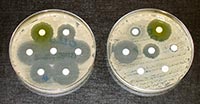
There is a particular kind of silence that follows a catastrophe that no one notices in time. Antimicrobial resistance is that kind of catastrophe. It does not announce itself the way a cyclone does, does not fill television screens with dramatic footage, and yet the science is unambiguous: we are running out of medicines to treat infections that were once routine to cure. In Bangladesh, the crisis has an environmental dimension that our public discourse has barely begun to reckon with. Our polluted rivers, our contaminated soils, our flooded fields, our tannery effluents and aquaculture ponds are not merely ecological problems. They are engines of biological catastrophe.
In 2019, antimicrobial resistance was directly responsible for 1.27 million deaths and associated with an estimated 4.95 million deaths globally. These are not abstractions. They are people who went to hospitals with treatable infections and came home in coffins because the drugs no longer worked. By 2050, the use of antimicrobials in humans and animals is projected to increase by roughly 70 to 80 percent in low and middle income countries. Bangladesh sits squarely in that trajectory, and unless we change course, the coming decades will be defined by infections we cannot cure. To understand how we arrived here, one must think like an environmental scientist rather than a clinician.
Bangladesh's rivers tell this story with brutal clarity. The Buriganga, the lifeblood of old Dhaka, is now a textbook case of how industrial negligence becomes a public health emergency. Each day, over 60,000 cubic meters of hazardous wastewater is discharged from battery manufacturing units, garment factories, steel mills, and tanneries along its banks, contributing to the river's designation as biologically dead. Dead is the correct word. But death here is not stillness. In that murk, resistant microbes thrive, mutate, and transfer their genetic armour to one another in ways that eventually find their way into human bodies. The tannery industry deserves particular scrutiny. Research has found that tannery wastewater samples from the Hazaribagh area carry significantly higher bacterial loads compared to non-tannery wastewater, and that unsafe disposal of tannery waste into nearby waterbodies has become an imminent threat to public health as multidrug-resistant bacteria and heavy metals enter community settings and animal food chains. Chromium, a dominant contaminant from tannery waste, creates a perverse synergy with antibiotics by contributing to the co-selection of resistance in bacterial populations, promoting the horizontal transfer of resistance genes between species. What this means in plain terms is that even industries that do not directly use antibiotics can accelerate resistance simply by poisoning the water with metals.
But the contamination does not stop at the riverbank. It seeps into the ground beneath our feet. Soil has been the underappreciated medium in Bangladesh's resistance crisis, and the science emerging from our own farmlands is deeply alarming. A study examining soil floors and cow dung from rural households in Sirajganj district identified 182 potential pathogens in samples, with organisms including Escherichia coli, Klebsiella pneumoniae, Salmonella enterica, and Pseudomonas aeruginosa present at the highest abundances, alongside antibiotic resistance genes found in every sample tested. These are not organisms found in a hospital laboratory. They are organisms found in the floors of homes where children crawl, play, and inevitably put their hands to their mouths. The pathway from soil to human infection is shorter than most people imagine.
Farm soils across Bangladesh carry this burden in measurable quantities. Research from cattle farms in Dhaka, Barisal, and Sylhet found multidrug-resistant Klebsiella pneumoniae carrying genes associated with resistance to carbapenem antibiotics, drugs often considered the last line of defence in critical care. Their spread was linked to poor sanitation, antibiotic misuse, and high cattle density. When last-resort antibiotics stop working, ordinary infections can once again become fatal.
Urban agriculture is not exempt from this contamination. Studies from Dhaka North, Dhaka South, and Gazipur found multidrug-resistant E. coli in both soil and vegetables collected from rooftop and surface gardens. Irrigation with contaminated water turns even household farming into a pathway for the transmission of resistance. Vegetables grown in polluted environments may carry resistant bacteria directly into kitchens and markets.
The aquaculture sector deepens the crisis further. Antibiotics are widely used in fish farming for disease prevention and growth promotion, but these chemicals do not remain confined to ponds. They seep into sediment, nearby soil, and surrounding waterways, creating ideal conditions for resistant bacteria to evolve and spread. Research has also identified a strong connection between resistance genes in aquatic environments and bacteria originating from untreated human sewage.
The public health consequences are already visible across rural Bangladesh. Studies in coastal Mathbaria and northern Chhatak found multidrug-resistant bacterial strains not only in diarrheal patients but also in rivers, ponds, and canals used daily by local communities. Resistance is no longer confined to hospitals; it circulates through the same water people bathe in, fish in, and sometimes drink.
The floods of 2024 exposed how environmental disasters can intensify this crisis. Metagenomic analyses of floodwaters from several districts identified hundreds of pathogenic species, including multidrug-resistant Klebsiella pneumoniae and Pseudomonas aeruginosa. Floodwaters mix sewage, industrial waste, contaminated soil, and stagnant water into a single moving reservoir of infection. Every major flood effectively redistributes resistant organisms across new regions and populations.
Despite mounting evidence, Bangladesh's response remains fragmented. Antimicrobials are still widely available without prescription, environmental monitoring remains weak, and enforcement of waste management regulations is inconsistent. Existing policies often fail because of inadequate resources, poor public awareness, and the absence of coordinated national surveillance across human, animal, and environmental sectors.
The solutions are neither mysterious nor impossible. Industrial effluent treatment plants must be mandatory and strictly enforced. Antibiotic use in aquaculture and livestock farming requires stronger veterinary oversight and residue monitoring. Soil, river water, and floodwater should be incorporated into national antimicrobial resistance surveillance systems alongside clinical testing. Most importantly, Bangladesh must adopt a genuine One Health approach that recognises human, animal, and environmental health as inseparable.
AMR is not a distant or invisible threat. It is in the Buriganga's polluted water, in the floodwaters that submerged Feni, in the soil of cattle sheds in Sirajganj, and in the vegetables grown on Dhaka rooftops. Science has already made the warning unmistakably clear. The question now is whether Bangladesh will act before the medicines we still rely on lose their power entirely, leaving the next generation to confront infections that modern medicine can no longer cure.
The writer is a student, Department of Environmental Science, Bangladesh University of Professionals





