
The light of dawn had not yet fully spread. Standing in the village field, farmer Abdul Karim was looking at the sky, wondering how the rain would be this year, how much the price of fertilizer and seeds could be managed, and whether he would get a fair price for his crops. At that moment, the school teacher next door heard the news of the national budget on his mobile and said to him, "This time, much more importance has been given to the agriculture, food, fisheries and livestock sectors."
Karim's eyes were filled with curiosity. Because he knows that the large numbers in the country's budget are ultimately related to his land, his sweat and the livelihood of his family.
In the national budget for the 2026-27 fiscal year, a total allocation of Tk 43,335 crore has been proposed for the Ministry of Agriculture, Food and Fisheries and Livestock which is 0.63 percent of the country's total GDP. In the revised budget for the last fiscal year 2025-26, the allocation for these three sectors was Tk 37,126 crore or 0.61 percent of GDP. That is, the allocation has increased by Tk 6,209 crore in a year.
This increase is not just a statistic; it has newly highlighted the government's priority towards the country's food security, farmer welfare and sustainable agri-economy.
For a farmer like Karim, the most important thing is to reduce production costs and ensure profit. Therefore, the budget has given importance to increasing agricultural subsidies and agricultural mechanization. Increasing the use of modern agricultural machinery will reduce labor costs, save time and increase productivity. As a result, small and medium farmers will also be able to enjoy the benefits of modern agriculture.
At one time, farming meant reliance on experience. But in today's world, it is difficult to imagine the development of agriculture without information and technology. That is why the budget has given special emphasis on digital agriculture and smart technology-based agricultural systems. If soil health, weather forecast, disease and pest identification and market information, all reach the farmers through technology, then production will be more planned and profitable.
Sitting at the village tea shop, Karim heard another piece of good news. An initiative has been taken to provide 2,500 taka assistance annually to marginal farmers through the farmer card, for which an allocation of 1,625 million taka has been proposed. This initiative is not just financial assistance, but will create a social safety net for marginal farmers.
Another major problem of farmers is crop preservation and marketing. Many times, despite good yields, farmers are forced to sell their crops at low prices due to lack of preservation. Therefore, the issue of conservation and development of agricultural products has been given importance in the budget. If improved warehouses, cold storage and efficient supply management are developed, the chances of farmers getting fair price for their produce will increase.
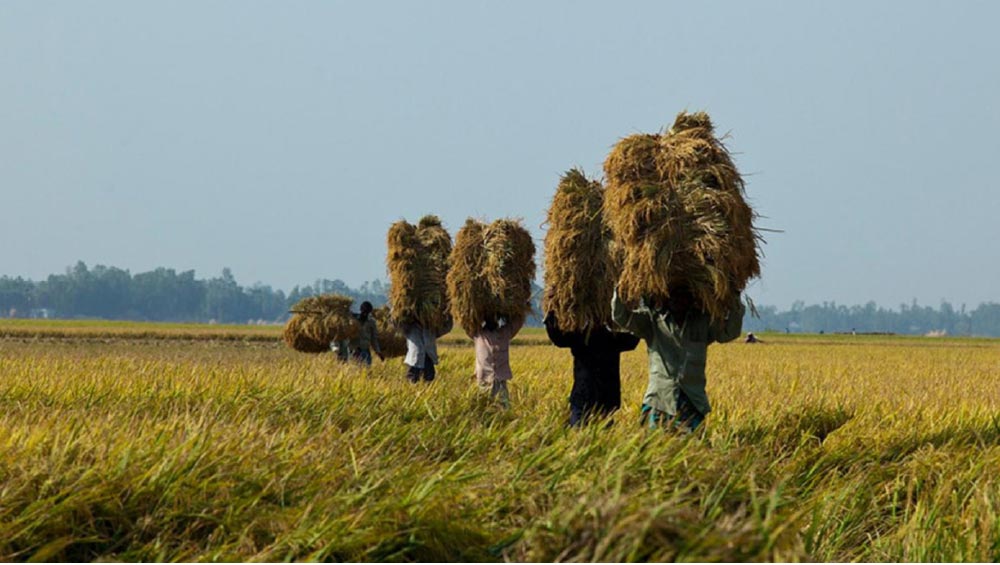
The initiative to ensure fair price of agricultural products and provide tax benefits in the budget carries special significance. Just as tax subsidies will encourage investment to increase agricultural production, the development of market systems will help increase farmers' income.
In addition, emphasis has been placed on expanding irrigation facilities. Agriculture is now facing various challenges due to the impact of climate change. Affordable and modern irrigation systems will help stabilize agricultural production. This will have a positive impact, especially in areas prone to drought or irregular rainfall.
The issue of farmer loans has also gained importance. Farmer loan waivers and financial assistance initiatives can help affected farmers get back on their feet. This is a positive message for those who face losses due to natural disasters or market crises.
The 2026-27 budget considers the agriculture sector not only as a production sector, but also as one of the foundations of national development. Initiatives such as ensuring food security, increasing agricultural subsidies, mechanization, use of smart technology, farmer cards, expansion of irrigation, development of market systems and financial security of farmers will further pave the way for a modern and sustainable agricultural system.
If the implementation of these programs can be ensured in a planned manner, this budget will not only bring smiles to the faces of farmers, but will also further strengthen the foundation of a prosperous, self-reliant and food-secure Bangladesh.
When the dreams of farmers and the plans of the state are woven into one thread, then the future of a nation becomes brighter. Budget for the fiscal year 2026-27 brings new dreams of agriculture, new commitment to food security.
The writer is agriculture and environment specialist





