



| HEADLINE |

|
Farakka Day Today
Fakhrul calls it a 'death trap'
Published : Saturday, 16 May, 2026 at 12:00 AM
Staff Correspondent


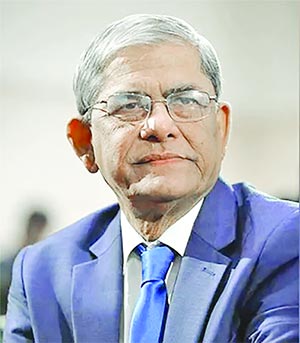 BNP Secretary General and LGRD Minister Mirza Fakhrul Islam Alamgir has described India's Farakka Dam as a "death trap" for Bangladesh, claiming it has caused long-term environmental and ecological damage to the country's northwestern region.
In a message marking "Historic Farakka Day," he said Bangladesh continues to suffer due to reduced water flow in the Ganges, which he alleged began after the construction and operation of the Farakka Dam. He claimed that large parts of the northwestern region are now facing severe water shortages and ecological imbalance.
Fakhrul said the then Awami League government allowed the dam to operate on an "experimental basis" without adequately assessing biodiversity, environmental risks or humanitarian consequences. He alleged that the decision has had lasting negative impacts on Bangladesh's environment.
He said May 16 holds special significance in the country's political history, recalling the historic long march towards Farakka led by veteran political leader Maulana Abdul Hamid Khan Bhasani nearly five decades ago. The movement, he said, demanded fair sharing of Ganges waters under international law.
According to Fakhrul, India began withdrawing water from the shared river following the construction of the dam, leading to serious disruptions in river flow. He claimed that parts of northwestern Bangladesh have gradually become drought-prone, with worsening environmental conditions.
He also alleged that India has continued constructing dams on several of the 54 shared rivers without adhering to international water-sharing principles, calling it a threat to Bangladesh's long-term survival.
The BNP leader said the Farakka issue has evolved into a broader international concern due to fears of environmental degradation and potential humanitarian consequences. He warned that continued reduction in water flow could further intensify ecological risks.
Recalling the 1976 march, Fakhrul said thousands of people joined the movement from Rajshahi towards Farakka to demand equitable water rights. He said the protest remains a symbol of national resistance and continues to inspire annual observance of "Historic Farakka Day."
Loading...
Loading...
Also read



Editor : Iqbal Sobhan Chowdhury
Published by the Editor on behalf of the Observer Ltd. from Globe Printers, 24/A, New Eskaton Road, Ramna, Dhaka.
Editorial, News and Commercial Offices : Aziz Bhaban (2nd floor), 93, Motijheel C/A, Dhaka-1000.
Phone: PABX- 41053001-06; Advertisement: 41053012; 01793317829, 01550707291, E-mail: [email protected], [email protected] Online: email: [email protected] 41053014; 01550707297 Advertisement: 01550707296
Published by the Editor on behalf of the Observer Ltd. from Globe Printers, 24/A, New Eskaton Road, Ramna, Dhaka.
Editorial, News and Commercial Offices : Aziz Bhaban (2nd floor), 93, Motijheel C/A, Dhaka-1000.
Phone: PABX- 41053001-06; Advertisement: 41053012; 01793317829, 01550707291, E-mail: [email protected], [email protected] Online: email: [email protected] 41053014; 01550707297 Advertisement: 01550707296


