At the core of the poverty alleviation philosophy, the "Family Card" is one of the most effective and powerful tools. Through a social partnership contract, the current government has initiated not only the planning but also the implementation of Family Cards, Farmer Cards, tree plantation and canal excavation as part of ensuring good governance, safety and improved living standards of the country's underprivileged citizens.
In both top-down and bottom-up policy approaches, the "Family Card" represents an exemplary agreement between the government and mother-centered partnerships. Based on mutual responsibility and accountability Family Card is the partnership against poverty.
According to the Bangladesh Family Card Gazette published on 24 February 2026, section 1.2(3) of the "Family Card Recipient Selection Committee under the Cabinet Structure," there have been some errors or deviations that should be corrected soon. It also mentions that discussions may take place regarding whether any existing programs can be used as the foundation for implementing the scheme.
The vision and summary of the Family Card program aim to transform it into a long-term "Universal Social ID Card" for every citizen by integrating all government social security benefits into a single card by 2030.
The vision and summary of the Family Card program aim to transform it into a long-term "Universal Social ID Card" for every citizen by integrating all government social security benefits into a single card by 2030.
Under the BNP Vision 2030 and mission, the program also seeks to identify genuinely underprivileged families through an integrated digital platform and ensure opportunities for food security, education, healthcare and self-reliant way forward.
For the implementation and monitoring of the program, committees will operate from the Cabinet level down to the field level. Ward committees will handle data collection and preliminary verification. Union committees will supervise and prepare beneficiary lists, and Upazila committees will provide final approval.
The gazette also emphasizes the core philosophy that the Family-not the Individual-is the fundamental unit of development. The initiative aims to eliminate existing irregularities and poverty through a transparent, scientific and technology-based framework.
A critical and careful study of the gazette by us and experts reveals that, the roots of this initiative could be traced back to the 2001-2006 BNP government led by Prime Minister Begum Khaleda Zia, when seed program of Maternity Allowances for poor mothers was first planted.
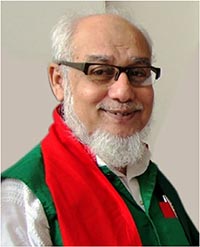
In 2005, on the occasion of World Mother's Day, the then Deputy Speaker, Mr. Akhtar Hamid Siddiqui, at the Voluntarily Health Services Society (VHSS) inaugurated a plan to provide Maternity Allowance and signature campaign organized by the Development of the Rural Poor (DORP) to promote the institutionalization and government budgeting. The government had allocated budget and started providing Maternity Allowance from 2007 and increasingly continued successfully up to the present year.
Now, in 2026, during the month of World Mother's Day on 10 May, the implementation of the "Family Card," inspired by the vision and realization of Prime Minister Mr. Tarique Rahman, is expected to bring transformative national change and establish the foundation for achieving SDG Goal 1: "Ending Poverty."
This is why the integration and coordination of all services under a single Family Card is a must and both logical and timely protective umbrella of the `Family Card' centering mother.
A broad analysis of the gazette evolved the following key components of the Family Card integration: Services including birth control, birth registration, prevention of child marriage, nutrition, and WASH support through a Health Card, Ensuring education for all and a discrimination-free education system through Culture and Entertainment- Education Card, Housing, including water, sanitation and LPG facilities, which could potentially be integrated with the Bangladesh Bank Grihayon Fund and Asrayan (if exists), Livelihood and employment-TCB facilities and agricultural input assistance through the Farmer Card and Savings, environmental, tree plantation and related initiatives help fulfill "basic rights" and ensure the sustainability of the Family Card-Social Assistance Program for Non-Asseters (SAPNA) package.
The writer is founder and CEO, DORP and recipient of Gusi International Peace Award





