



| HEADLINE |

|
Seven Summer Bases Where Remote Work Actually Holds Up
Published : Tuesday, 23 June, 2026 at 4:10 PM


Collected Photo
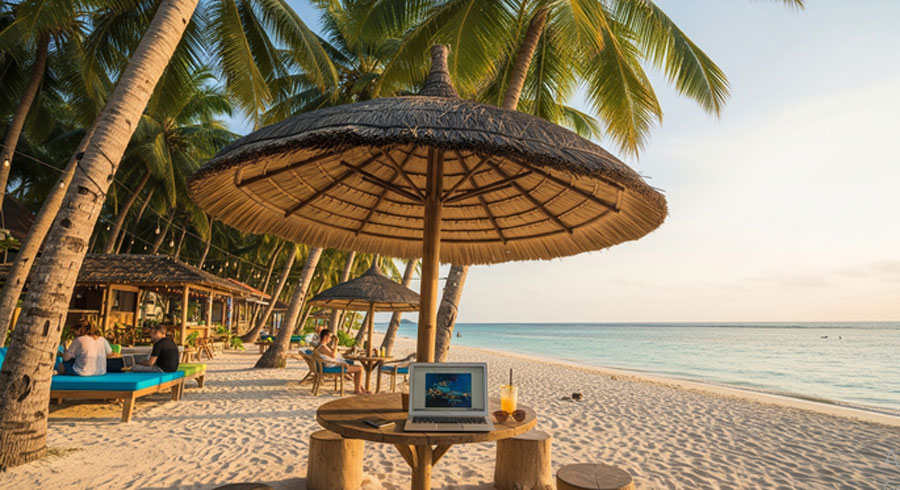
Summer travel gets thinner when the Wi-Fi drops at 3 p.m. before a client call. The better digital nomad destinations in 2026 are not just photogenic; they have workable time zones, clear visa routes, coworking density, public transport, and enough evening life to stop the week from feeling rented by the job. Portugal, Spain, Estonia, Thailand, Croatia, Barbados, and the United Arab Emirates all make the shortlist for different reasons. Small observation: the strongest bases usually have boring infrastructure and lively nights, not the other way around.
Lisbon Still Works When the Calendar Gets Ugly
Lisbon remains the practical summer pick because Portugal has a defined remote-work visa route, a dense coworking scene, and enough flights through Humberto Delgado Airport to make a Thursday client meeting in London or New York less painful. The city also has a clear sporting pulse: Benfica plays at Estádio da Luz, Sporting CP plays at Estádio José Alvalade, and summer transfer talk fills cafés before the Primeira Liga returns in August. The drawback is rent. A 30-day stay in Príncipe Real or Santos can punish a freelancer faster than a missed invoice. Small observation: the best workdays in Lisbon often start early because the afternoon heat drags attention down after 2 p.m.
Valencia Has the Better Daily Shape
Valencia does not shout as loudly as Barcelona, which helps. Spain’s digital nomad visa route gives qualified remote workers a legal base, and the city gives them a cleaner daily pattern: Turia Gardens before Slack, Mercado Central at lunch, Malvarrosa after a late call. Valencia CF’s Mestalla keeps the city tied to football even when the summer schedule is thin. The appeal is not a mystery; it is friction. Metro lines, bike lanes, and compact neighborhoods make the workday feel less chopped up.
Tallinn Rewards the Organized Worker
Tallinn is not the warmest summer pitch, but it may be the cleanest one for remote work travel. Estonia’s digital nomad visa allows eligible remote workers to stay for up to 12 months, and the country’s e-services still give it a distinct administrative feel compared to most European bases. The football is smaller than Lisbon’s, but the routine is sharp: laptop in Telliskivi, tram to Kadriorg, late daylight near the harbor. A nomad who tracks sport, crypto prices, or football odds after work may use a betting site as one screen inside the broader evening scroll, but the better habit is still measured. Check the market, know the stake, and close the tab before it eats the night. The phone should serve the schedule, not run it.
Split Gives the Summer a Harder Edge
Split is beautiful, but it is not gentle in July. Croatia’s coast pulls in heavy tourism, and the Old Town can turn slow by noon when cruise traffic and beach crowds meet at the Riva. For digital nomads, the useful base is often just outside the most crowded streets, close enough for evening swims and far enough for calls that do not include street music. Hajduk Split gives the city its sports spine, and Poljud Stadium carries that noise even in the offseason. Small observation: Split works best for remote workers who finish early and protect mornings from beach plans.
Barbados and Dubai Are Different Bets
Barbados offers the Welcome Stamp model for remote workers who want the Caribbean without pretending it is cheap. The island suits people with U.S. clients, early calls, and a budget that can handle imported goods. Dubai plays a different card: fast infrastructure, tax appeal for many expatriates, and long indoor afternoons when August heat kills casual walking. Neither place is a backpacker compromise. They work when the work is stable, the income is real, and the traveler wants the base to support the job rather than rescue it.
Lisbon Still Works When the Calendar Gets Ugly
Lisbon remains the practical summer pick because Portugal has a defined remote-work visa route, a dense coworking scene, and enough flights through Humberto Delgado Airport to make a Thursday client meeting in London or New York less painful. The city also has a clear sporting pulse: Benfica plays at Estádio da Luz, Sporting CP plays at Estádio José Alvalade, and summer transfer talk fills cafés before the Primeira Liga returns in August. The drawback is rent. A 30-day stay in Príncipe Real or Santos can punish a freelancer faster than a missed invoice. Small observation: the best workdays in Lisbon often start early because the afternoon heat drags attention down after 2 p.m.
Valencia Has the Better Daily Shape
Valencia does not shout as loudly as Barcelona, which helps. Spain’s digital nomad visa route gives qualified remote workers a legal base, and the city gives them a cleaner daily pattern: Turia Gardens before Slack, Mercado Central at lunch, Malvarrosa after a late call. Valencia CF’s Mestalla keeps the city tied to football even when the summer schedule is thin. The appeal is not a mystery; it is friction. Metro lines, bike lanes, and compact neighborhoods make the workday feel less chopped up.
Tallinn Rewards the Organized Worker
Tallinn is not the warmest summer pitch, but it may be the cleanest one for remote work travel. Estonia’s digital nomad visa allows eligible remote workers to stay for up to 12 months, and the country’s e-services still give it a distinct administrative feel compared to most European bases. The football is smaller than Lisbon’s, but the routine is sharp: laptop in Telliskivi, tram to Kadriorg, late daylight near the harbor. A nomad who tracks sport, crypto prices, or football odds after work may use a betting site as one screen inside the broader evening scroll, but the better habit is still measured. Check the market, know the stake, and close the tab before it eats the night. The phone should serve the schedule, not run it.
Split Gives the Summer a Harder Edge
Split is beautiful, but it is not gentle in July. Croatia’s coast pulls in heavy tourism, and the Old Town can turn slow by noon when cruise traffic and beach crowds meet at the Riva. For digital nomads, the useful base is often just outside the most crowded streets, close enough for evening swims and far enough for calls that do not include street music. Hajduk Split gives the city its sports spine, and Poljud Stadium carries that noise even in the offseason. Small observation: Split works best for remote workers who finish early and protect mornings from beach plans.
Barbados and Dubai Are Different Bets
Barbados offers the Welcome Stamp model for remote workers who want the Caribbean without pretending it is cheap. The island suits people with U.S. clients, early calls, and a budget that can handle imported goods. Dubai plays a different card: fast infrastructure, tax appeal for many expatriates, and long indoor afternoons when August heat kills casual walking. Neither place is a backpacker compromise. They work when the work is stable, the income is real, and the traveler wants the base to support the job rather than rescue it.
Loading...
Loading...
Also read

Editor : Iqbal Sobhan Chowdhury
Published by the Editor on behalf of the Observer Ltd. from Globe Printers, 24/A, New Eskaton Road, Ramna, Dhaka.
Editorial, News and Commercial Offices : Aziz Bhaban (2nd floor), 93, Motijheel C/A, Dhaka-1000.
Phone: PABX- 41053001-06; Advertisement: 41053012; 01793317829, 01550707291, E-mail: [email protected], [email protected] Online: email: [email protected] 41053014; 01550707297 Advertisement: 01550707296
Published by the Editor on behalf of the Observer Ltd. from Globe Printers, 24/A, New Eskaton Road, Ramna, Dhaka.
Editorial, News and Commercial Offices : Aziz Bhaban (2nd floor), 93, Motijheel C/A, Dhaka-1000.
Phone: PABX- 41053001-06; Advertisement: 41053012; 01793317829, 01550707291, E-mail: [email protected], [email protected] Online: email: [email protected] 41053014; 01550707297 Advertisement: 01550707296


