In a choking 12-hour window, the planet earth witnessed an extraordinary sequence of global tectonic activities that brought two geographically remote nations face-to-face with their seismic vulnerabilities.
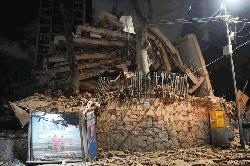
On Wednesday evening, June 24, 2026, north-central Venezuela was devastated by catastrophic back-to-back earthquakes, a magnitude 7.2 foreshock followed immediately by a massive magnitude 7.5 mainshock, marking the country's strongest seismic event in over a century. Barely an hour later, on Thursday morning, June 25, a powerful magnitude 7.2 earthquake struck off the northeastern coast of Japan.
While both nations endured tremors of almost identical magnitudes, the outcomes on the ground could not have been more different. Japan escaped with minor injuries and zero structural collapses. Venezuela, meanwhile, was plunged into a national state of emergency, counting dozens of immediate deaths and hundreds of injuries, amidst warnings of potential mass casualties.
This glaring disparity highlights the deep differences in the seismological roots, historical data, and structural disaster mitigation strategies defining both nations.
Profiles in Devastation: Major Historical Data
The structural impact and death toll of the June 2026 events are deeply rooted in the historical timelines of both nations. While Japan faces megathrust quakes regularly, Venezuela's less frequent events have historically proven remarkably lethal.
Venezuela's Major Historical Earthquakes
Historically, Venezuela’s seismic events have exacted a heavy toll due to their shallow nature and proximity to urban centers.
1812 Caracas Earthquake (Magnitude ~7.1-7.4): The most infamous disaster in the nation's history completely destroyed Caracas, La Guaira, and Barquisimeto. It claimed between 15,000 and 20,000 lives.
1900 Caracas Earthquake (Magnitude 7.7): One of the strongest historic tremors recorded prior to the 2026 doublet, causing widespread structural failure across northern Venezuela and claiming 140 lives.
1967 Caracas Earthquake (Magnitude 6.5): Despite its moderate size, this shallow quake struck directly underneath the capital city. Modern high-rise apartment buildings pancaked completely, killing over 240 people and injuring 1,500.
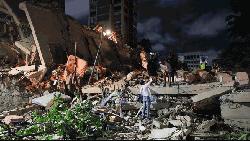
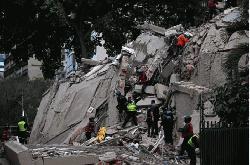
2026 Doublet Earthquakes (Magnitudes 7.2 & 7.5): The current disaster struck near Morón and San Felipe. It has killed at least 32 people, injured over 700, collapsed high-rise structures in Caracas, and triggered a statistical warning from the USGS estimating a 44% chance that fatalities could eventually scale into the thousands.
Japan's Major Historical Earthquakes
Japan stands as one of the most seismically active places on Earth, historically enduring massive maritime and crustal movements.
1923 Great Kantō Earthquake (Magnitude 7.9): Striking the Tokyo-Yokohama metro area, it triggered massive urban firestorms and a 12-meter tsunami, killing over 140,000 people.
1995 Great Hanshin (Kobe) Earthquake (Magnitude 6.9): A shallow, inland crustal quake directly under Kobe that collapsed elevated expressways, claimed 6,434 lives, and revolutionized global seismic engineering.
2011 Tōhoku Earthquake and Tsunami (Magnitude 9.0): The strongest earthquake in Japan's recorded history generated a massive 40-meter tsunami, killing nearly 19,500 people and causing the Fukushima nuclear disaster.
2026 Iwate Earthquake (Magnitude 7.2): Striking off the coast of Iwate Prefecture at a depth of 50 kilometers, the 2026 event registered a rare "upper 6" intensity in Aomori Prefecture. Remarkably, it resulted in only six minor injuries and no structural failures.
Tectonic Mechanics: The Root Causes
The radical variance in destruction between the two disasters is partly a product of their entirely distinct geological mechanics.
1. Transform Strike-Slip Faulting (Venezuela)Venezuela’s seismic activity is concentrated tightly along its northern coastal mountain ranges. The country sits directly on the boundary where the Caribbean Tectonic Plate meets the South American Tectonic Plate. These plates slide horizontally past one another, with the Caribbean plate grinding eastward at roughly 20 millimeters per year. Because the boundaries are jagged, they lock up and accumulate stress. When they snap, they create shallow, harsh strike-slip earthquakes along localized fault networks like the Boconó and San Sebastián faults.
The June 24, 2026 disaster was a rare "double-event"- a 7.2 foreshock followed 40 seconds later by a 7.5 mainshock- which multiplied the ground acceleration and proved fatal to building foundations.
2. Subduction Zone Thrusting (Japan)Japan sits at a volatile tectonic crossroads where four major plates intersect: the Pacific, Philippine Sea, Eurasian, and Okhotsk plates. This is a classic subduction zone. The heavy oceanic crust of the Pacific and Philippine Sea plates continuously plunges dynamically downward beneath the lighter continental crust of Japan. As the lower plates drag the upper plate downward, the upper continental crust eventually snaps back violently.
The June 25, 2026 quake was a product of this subduction thrusting off the coast of Iwate. Because it occurred 50 kilometers deep in the ocean, a significant portion of its destructive energy was absorbed by the water column and the earth's crust before reaching land.
Expert Analysis: Disparities in Disaster Mitigation
Structural engineers and disaster risk analysts argue that the vastly different outcomes of these concurrent 2026 earthquakes reflect a major divide in how both nations prepare for and respond to disasters.
Japan: A Culture of Absolute Resilience
Seismologists and engineering experts widely recognize Japan as the global gold standard for earthquake mitigation. Following the 1995 Kobe earthquake, Japan overhauled its Building Standard Act, implementing stringent mandatory requirements for modern infrastructure.
Engineering Innovations: Modern structures use base isolation (placing rubber pads and dampers beneath foundations to absorb shock) and flexible steel frames. This engineering explains why the 7.2 magnitude shock caused nothing more than minor cracked walls and swaying cameras in the Tohoku region.
Early Warning Systems: Japan's automated Japan Meteorological Agency (JMA) early warning system utilizes P-wave sensors to broadcast instant phone alerts, automatically cut off gas lines, and brake high-speed Shinkansen bullet trains seconds before the violent S-waves strike. This system successfully halted rail lines instantly during the morning rush hour, preventing catastrophic derailments.
Public Readiness: Regular nationwide evacuation drills ensure the population knows exactly how to respond within seconds, severely limiting human casualties.
Venezuela: Economic Decay and Vulnerable Infrastructure
In stark contrast, infrastructure experts point out that Venezuela’s extreme casualties are heavily compounded by decades of economic hardship and a lack of enforcement of seismic building codes. Though Venezuela possesses seismic design standards, the building types in major cities like Caracas present severe risks.
The "Basin Effect" and Construction Style: The USGS notes that Caracas is built on a soft sediment basin that amplifies seismic waves. Combined with unreinforced concrete apartment blocks and high-density informal housing clinging to the surrounding hillsides, the structural vulnerability is immense.
Economic Constraints: Analysts note that rebuilding and maintaining structural safety has taken a backseat to hyperinflation, infrastructure decay, and international sanctions. Consequently, the twin 2026 quakes caved in ceilings at Simón Bolívar International Airport and collapsed multiple residential buildings.
Crisis Management: With local telecommunications blacked out and power lines severed, Venezuela is highly dependent on immediate international aid. Following the interim presidency's declaration of an emergency, urban search-and-rescue teams from the US, Mexico, and El Salvador had to be deployed to locate survivors trapped in the rubble.
Lessons from the Earth
The global events of June 2026 provide a stark reminder to seismologists and policymakers alike. Earthquakes are an inevitable part of the Earth's natural cycle, yet the destruction they leave behind is heavily dictated by human preparation. While Japan’s advanced investments in engineering and automated tech proved they can withstand a 7.2 magnitude blow with virtually no disruption, Venezuela’s tragic outcome underscores the urgent need for structural enforcement, international engineering partnerships, and sustainable economic investment to safeguard human lives against the volatile faults below.
Read More:
IF