



| HEADLINE |

|
Iran prepares largest state funeral for slain Ayatollah Khamenei
Published : Wednesday, 1 July, 2026 at 12:00 AM


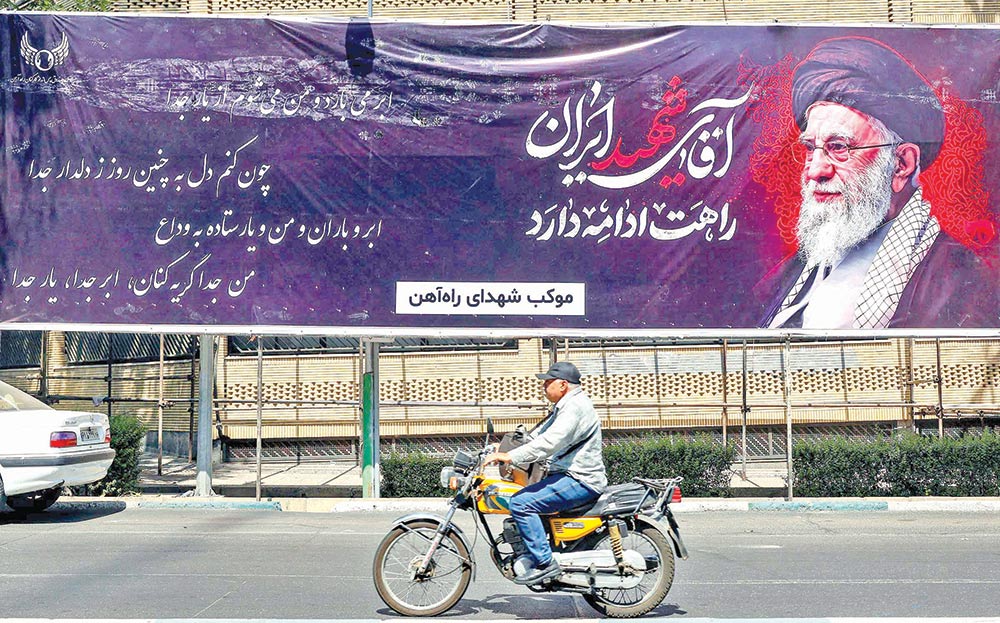 TEHRAN, Jun 30: After months-long delays, Tehran is in the midst of organising a six-day, multi-city funeral for late Ayatollah Ali Khamenei, amid tight security and fragile US-Iran talks over Hormuz, nuclear and sanctions issues.
 Iran is preparing the largest state funeral in the history of the Islamic Republic, with ceremonies spanning five cities across Iran and Iraq over six days beginning Saturday, as the country buries the late Ayatollah Ali Khamenei nearly four months after his death in the opening US-Israeli strikes of the war on 28 February.
Khamenei served as the Islamic Republic's ayatollah for 37 years, the second-longest-serving holder of the position since the Islamic Republic's founding following the 1979 revolution.
Born in 1939 in Mashhad, he served as Iran's president from 1981 to 1989 before being selected as ayatollah by the Assembly of Experts - the elected body of Islamic scholars responsible for appointing the supreme leader - following the death of Ayatollah Ruhollah Khomeini.
The body has been lying in state since the start of the war. The four-month delay was the direct result of the war, the ceasefire and the subsequent negotiation process.
Authorities say the timing has now been set for a period of relative de-escalation, with both Iran and the US pausing exchanges of fire as talks on the memorandum of understanding continue.
Tehran is keen to ensure the ceremony proceeds without disruption in front of an international audience.
Ceremonies will begin in Tehran on Saturday and Sunday at the Mosalla prayer complex, Tehran's main venue for large-scale state religious gatherings.
The Mosalla, whose name means "prayer ground," has hosted the funerals of senior Islamic Republic figures and serves as the symbolic hub of state mourning ceremonies.
The main funeral procession will take place on Monday along a 10-kilometre route from Imam Hossein Square to Azadi or "Freedom" square - the vast public venue that has been the site of the defining mass gatherings of Iranian history, from the 1979 revolution to the country's largest protests.
Tehran's mayor has said roughly 20 million people are expected to attend, describing it as "the largest gathering in the city's history".
The procession will then move to Qom on 7 July, running between the shrine of Fatima Masoumeh and Jamkaran Mosque.
Qom is the centre of Shiite Islamic learning in Iran and the most important seminary city in the world for Twelver Shia Islam.
Jamkaran Mosque, on the city's outskirts, is associated with the Hidden Imam - the Mahdi - and is among the most significant pilgrimage sites in Shia Islam.
The body will then be transferred to Iraq, where ceremonies are planned in Najaf and Karbala, the two holiest cities in Shiite Islam, which house the shrines of the First Imam, Ali, and the Third Imam, Hussein.
Iranian Foreign Minister Abbas Araghchi visited both cities during a trip to Iraq and met their governors to advance preparations.
The final burial will take place in Mashhad on 9 July. �" AGENCIES
Loading...
Loading...
Also read



Editor : Iqbal Sobhan Chowdhury
Published by the Editor on behalf of the Observer Ltd. from Globe Printers, 24/A, New Eskaton Road, Ramna, Dhaka.
Editorial, News and Commercial Offices : Aziz Bhaban (2nd floor), 93, Motijheel C/A, Dhaka-1000.
Phone: PABX- 41053001-06; Advertisement: 41053012; 01793317829, 01550707291, E-mail: [email protected], [email protected] Online: email: [email protected] 41053014; 01550707297 Advertisement: 01550707296
Published by the Editor on behalf of the Observer Ltd. from Globe Printers, 24/A, New Eskaton Road, Ramna, Dhaka.
Editorial, News and Commercial Offices : Aziz Bhaban (2nd floor), 93, Motijheel C/A, Dhaka-1000.
Phone: PABX- 41053001-06; Advertisement: 41053012; 01793317829, 01550707291, E-mail: [email protected], [email protected] Online: email: [email protected] 41053014; 01550707297 Advertisement: 01550707296


