



| HEADLINE |

|

Weekly Market Analysis
Global Jitters and Weak US Data Send Bangladesh Gold Prices to Fresh Highs
Published : Monday, 6 July, 2026 at 12:00 AM
Faruk Ahmed


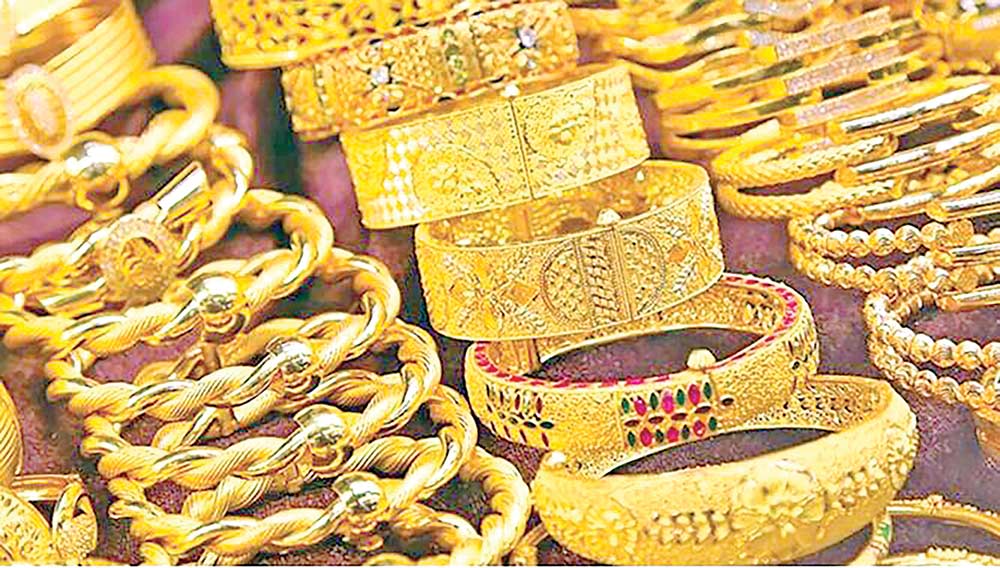 Bangladesh's gold market has witnessed another sharp surge, with prices rising twice in as many days as global economic uncertainty, softer US labour data and shifting expectations over American monetary policy fuel renewed demand for the precious metal.
The Bangladesh Jewellers Association (BAJUS) on Friday raised the price of 22-carat gold by Tk 4,374 per bhori (11.664 grams), taking it to Tk 228,556, including VAT. The increase came only a day after a previous hike of Tk 2,216 per bhori, meaning consumers are now paying nearly Tk 6,600 more per bhori within 48 hours.
The latest revision has also pushed the prices of 21-carat and 18-carat gold to Tk 218,292 and Tk 187,440 per bhori respectively, while traditional-method gold now costs Tk 153,148 per bhori.
BAJUS attributed the adjustment to higher prices of pure or acid gold in the domestic market. Yet analysts say the real forces behind the rally originate in international markets, where investors are once again turning to bullion as a safe-haven asset.
Global gold prices climbed strongly this week after weaker-than-expected US employment figures heightened expectations that the Federal Reserve may adopt a less aggressive monetary stance in the coming months. Spot gold touched its highest level in recent weeks, while futures remained close to record territory.
The latest US private-sector employment data showed job creation falling short of market expectations, reinforcing concerns about slowing economic momentum. Investors are now closely watching the non-farm payrolls report for further signals on the direction of Federal Reserve policy.
Market analysts note that softer labour market conditions generally strengthen gold prices by reducing expectations of further interest-rate increases. Lower borrowing costs diminish the opportunity cost of holding non-yielding assets such as gold, making bullion more attractive to investors.
The recent decline in oil prices has added another supportive factor. Renewed diplomatic engagement between Iran and the United States over shipping routes through the Strait of Hormuz has eased immediate concerns over energy supplies and inflationary pressures. Combined with a weaker US dollar, these developments have further boosted international demand for precious metals.
Central banks also continue to underpin the market. According to the World Gold Council, monetary authorities added around 41 tonnes of gold to their reserves in May as part of broader efforts to diversify reserve holdings amid persistent geopolitical and financial uncertainties.
The trend extends well beyond Bangladesh. Gold prices have risen across major regional markets, including the Middle East, where investors have responded to the same global factors driving sentiment in international bullion trade.
Analysts believe that demand from central banks, resilient buying in China and continued geopolitical risks are likely to provide strong support for gold prices in the near term, even though elevated prices have moderated consumer demand in some markets such as India.
For Bangladesh, the implications are mixed. While higher prices strengthen gold's appeal as a store of value, they also increase costs for consumers, particularly during the wedding season and other periods of strong retail demand.
The latest adjustments by BAJUS underscore the growing integration of Bangladesh's gold market with international financial developments. Decisions taken by the US Federal Reserve, movements in global energy prices and geopolitical events thousands of miles away are now rapidly influencing prices in local jewellery shops.
Loading...
Loading...
Also read



Editor : Iqbal Sobhan Chowdhury
Published by the Editor on behalf of the Observer Ltd. from Globe Printers, 24/A, New Eskaton Road, Ramna, Dhaka.
Editorial, News and Commercial Offices : Aziz Bhaban (2nd floor), 93, Motijheel C/A, Dhaka-1000.
Phone: PABX- 41053001-06; Advertisement: 41053012; 01793317829, 01550707291, E-mail: [email protected], [email protected] Online: email: [email protected] 41053014; 01550707297 Advertisement: 01550707296
Published by the Editor on behalf of the Observer Ltd. from Globe Printers, 24/A, New Eskaton Road, Ramna, Dhaka.
Editorial, News and Commercial Offices : Aziz Bhaban (2nd floor), 93, Motijheel C/A, Dhaka-1000.
Phone: PABX- 41053001-06; Advertisement: 41053012; 01793317829, 01550707291, E-mail: [email protected], [email protected] Online: email: [email protected] 41053014; 01550707297 Advertisement: 01550707296


