



| HEADLINE |

|

Shu Xiong’s interview with Daily Observer
Chevron eager to work for BD's long-term energy security
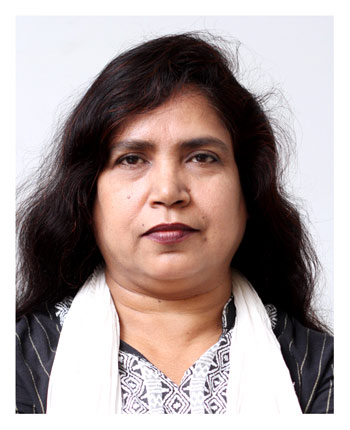


 Shu Xiong joined Chevron Bangladesh as the President and Managing Director on August 1, 2026 to drive the business of country’s largest natural gas producer, supplying around 60 per cent of Bangladesh's natural gas and more than 80 per cent of domestic condensate consumption from its three gas fields. Chevron is the country's largest foreign investor. It has invested more than $4.4 billion since 1995, with its 98 per cent Bangladeshi workforce. The company has been supplying reliable, safe and low-cost domestic energy for more than 30 years in cooperation with Petrobangla and the government of Bangladesh. In an exclusive interview with Special Correspondent Shahnaj Begum of The Daily Observer, she focused on Chevron Bangladesh’s future plan, operation and country’s energy situation. Following is the excerpt of the interview:
 Daily Observer: How would you describe Bangladesh’s energy scenario today? What concrete steps can ensure long-term energy security?
Shu Xiong: Bangladesh’s energy sector is at an important transition point now. Reliable and affordable energy is essential for power production, industrial growth, households, and investor confidence. At the same time, declining domestic gas production, growing energy demand, and increased exposure to imported fuels are creating pressure on the system.
In my view, two questions matter most to Bangladesh’s long-term energy outlook: How much energy will be needed? And where will that energy come from? As Bangladesh grows from 178 million people today toward 195 million by 2035, according to the United Nations estimates, and pursues a trillion-dollar economy, its energy demand could rise by 50% to nearly 100% above current levels.
Meeting that challenge will require a diverse and resilient energy system. Oil, gas, coal, renewables, nuclear, efficiency improvements, modern infrastructure, domestic resources, and reliable imports all have a role to play. The challenge is not choosing one over another but determining how each contributes at the right level at the right time. First, the country should continue maximizing domestic gas production, where it is technically and commercially viable. Second, it should continue attracting responsible long-term investment through predictable policy, timely approvals, and contract certainty. Third, Bangladesh should diversify its energy mix, including LNG, renewables, grid modernization, and efficiency measures, while ensuring that affordability and reliability remain central to the transition.
DO: Is Chevron planning to expand its footprint, including offshore bidding or renewable energy?
Shu Xiong: Chevron is always interested in opportunities that align with our capabilities, our disciplined investment approach, and the priorities of the countries where we operate. In Bangladesh, our immediate focus remains safe and reliable operations, maximizing domestic gas production from existing assets, and continuing our long-standing partnership with the Government of Bangladesh and Petrobangla.
As a matter of policy, we do not comment on specific commercial opportunities, bidding decisions, or technical evaluations. However, we believe all forms of energy will be important for Bangladesh's future. Domestic natural gas, LNG, renewables, grid modernization, and efficiency all have roles to play in a practical and affordable energy transition.
Globally, Chevron's strategy is to safely deliver lower-carbon energy to a growing world by growing our oil and gas business, lowering the carbon intensity of our operations, and growing new energy businesses. In Bangladesh, any future opportunity would need to be aligned with national priorities, regulatory requirements, and globally competitive commercial frameworks.
DO: As a development partner, what hurdles or operational challenges is Chevron facing in Bangladesh?
Shu Xiong: Chevron operates in Bangladesh with a long-term partnership mindset. Our work is highly technical, capital-intensive, and dependent on strong coordination across multiple stakeholders, including Petrobangla, government agencies, regulators, local communities, suppliers, and our workforce. The key challenges are similar to those faced by many long-term investors in complex energy markets: mature-field decline, the need for timely approvals, policy predictability, and efficient and timely coordination across institutions.
At the same time, we see these challenges as areas for constructive engagement. Bangladesh has significant energy needs, and we believe reliable and low-cost domestic gas can continue to play an important role in supporting power generation, industry, households, and economic growth. Our focus is to work transparently and constructively with our stakeholders to support safe operations, reliable supply, and long-term value for the country.
I would also emphasize that our operations are supported by a highly skilled local workforce. Chevron Bangladesh has a workforce that is 98% Bangladeshi nationals, which reflects our commitment to local capability and long-term development.
DO: How do you assess the current investment climate in Bangladesh? Is it attractive and viable for foreign businesses like Chevron?
Shu Xiong: Bangladesh has strong fundamentals: a large population, growing energy demand, an expanding industrial base, and a clear need for reliable energy to support economic growth. These factors make Bangladesh an important market for long-term investors. At the same time, energy investments require large capital commitments, long timelines, technical certainty, and predictable commercial frameworks.
Around the world, governments are working to strengthen energy resilience by attracting energy investment. As countries compete for a limited pool of global capital, policy clarity, fiscal competitiveness, investment certainty, and ease of doing business have become increasingly important differentiators. Bangladesh has an opportunity to position itself strongly in that competition.
Encouragingly, recent efforts by the Government of Bangladesh to improve the investment environment, encourage exploration, and strengthen policy predictability underline the recognition that energy security and economic competitiveness are closely connected.
DO: Chevron is a long-standing partner and major gas supplier, but supply is declining. Do you have concrete plans to increase output?
Shu Xiong: We recognize the importance of sustaining domestic gas supply. While we do not comment on specific commercial plans, Chevron Bangladesh remains focused on safely maximizing production from existing assets and exploring new opportunities, in partnership with Petrobangla and the Government of Bangladesh, that can support Bangladesh's long-term energy needs.
DO: It has been suggested that Chevron requests terms beyond the existing PSC, such as access to relinquished areas. Why not strictly abide by the existing contractual framework?
Shu Xiong: Chevron abides by the PSC framework. Any discussion about future opportunities is separate from existing contractual compliance and would be pursued only through the appropriate government and Petrobangla processes, with mutual agreement and full respect for Bangladesh's laws and regulations.
DO: How would you describe your new assignment in Bangladesh? What are your goals and vision?
Shu Xiong: I am honored and excited to take on this role in Bangladesh. Chevron's relationship with Bangladesh is built on three decades of partnership with the Government, Petrobangla, our communities, and our employees. I look forward to building on that 30-year partnership and deepening the relationship to support the nation's energy needs today and into the future.
I'm encouraged by the courageous leadership of the government in strengthening the country's stability and growth at the same time - and energy security underpins both imperatives. Across my Chevron career, I cannot think of another role that could matter more to more peoples' lives. I am fully committed to working alongside our partners and stakeholders to create the conditions for Chevron Bangladesh's next chapter.
My immediate priorities are clear: ensure safe and reliable operations, continue strengthening our partnership with key stakeholders, support the development of Bangladeshi talent, and contribute to the country's energy security in a responsible and sustainable way. I also want to listen and learn from our partners, employees, communities, and industry stakeholders so that Chevron can continue to be a trusted and constructive partner.
DO: How does Chevron address climate change and environmental issues locally? CSR is different from climate financing. How do you clarify Chevron's role?
Shu Xiong: Chevron recognizes that the world needs affordable, reliable, and ever-cleaner energy. Globally, Chevron's strategy is to safely deliver lower-carbon energy to a growing world by lowering the carbon intensity of operations and growing new energy businesses.
In Bangladesh, our first responsibility is to operate safely, reliably, and responsibly. That includes maintaining strong environmental stewardship, applying global operational standards, using technology efficiently, and working to reduce the environmental footprint of our operations where practical. Chevron supports long-term community partnerships focused on health, education, economic development, and environmental stewardship, including tree plantation initiatives near our operations and in Dhaka.
Chevron will build on our over three decades of commitment to contribute responsibly within our business, operations, technology, and community partnerships, while supporting a practical energy transition that balances reliability, affordability, and lower-carbon progress.
DO: Access to affordable and reliable energy for women remains critical. What role can Chevron play?
Shu Xiong: Access to reliable and affordable energy has a direct impact on women and families, whether through household responsibilities, reduced access to education or economic opportunity, or added constraints on health and safety. Energy access is therefore not only an infrastructure issue; it is also a development and inclusion issue.
Chevron's primary contribution is to help deliver reliable domestic energy that supports households, schools, healthcare facilities, businesses, and industry. Beyond energy production, we also support programs that help expand opportunities, including education, health, economic development, and women's empowerment. Chevron Bangladesh's community programs support skills training, income generation, education, women's empowerment, and improved access to health services.
A recent example is Chevron's support for the Asian University for Women Math and Science Summer School, which welcomed 104 young women in 2026 to explore STEM fields. The program is designed to strengthen interest and capability in science, technology, engineering, and mathematics, helping young women build confidence and future career pathways.
Our role is to continue supporting Bangladesh's energy security while investing in people, especially young women and communities near our operations, so that the benefits of energy and development are more widely shared.
Closing statement
Chevron's commitment to Bangladesh is long-term. We are proud of our 30-year partnership with the Government of Bangladesh and Petrobangla, and we remain focused on delivering safe, reliable domestic energy, developing Bangladeshi talent, supporting communities, and working constructively with stakeholders to help strengthen Bangladesh's energy security and economic growth.
In Bangladesh, thousands of people in and around Chevron's areas of operation in the country's northeast are being benefitted through partnerships the company has forged with the community and NGOs in a collective bid to address a range of socioeconomic issues.
Chevron Bangladesh's social investments focus on creating sustainable, measurable impacts in health, education, economic development, and environmental stewardship for communities across its areas of operation. Through strategic social investments, Chevron Bangladesh has invested over $15 million in community programs over the past 15 years, benefiting more than 140,000 people and supporting 9 of the 17 UN Sustainable Development Goals.
Being the largest foreign investor with more than 400 Bangladeshis employed, Chevron wants to continue its pursuit of excellence.

Loading...
Loading...
Also read



Editor : Iqbal Sobhan Chowdhury
Published by the Editor on behalf of the Observer Ltd. from Globe Printers, 24/A, New Eskaton Road, Ramna, Dhaka.
Editorial, News and Commercial Offices : Aziz Bhaban (2nd floor), 93, Motijheel C/A, Dhaka-1000.
Phone: PABX- 41053001-06; Advertisement: 41053012; 01793317829, 01550707291, E-mail: [email protected], [email protected] Online: email: [email protected] 41053014; 01550707297 Advertisement: 01550707296
Published by the Editor on behalf of the Observer Ltd. from Globe Printers, 24/A, New Eskaton Road, Ramna, Dhaka.
Editorial, News and Commercial Offices : Aziz Bhaban (2nd floor), 93, Motijheel C/A, Dhaka-1000.
Phone: PABX- 41053001-06; Advertisement: 41053012; 01793317829, 01550707291, E-mail: [email protected], [email protected] Online: email: [email protected] 41053014; 01550707297 Advertisement: 01550707296


