



| HEADLINE |

|

Dhaka, Delhi Set for High-Stakes Trade Reset as $9.2b Deficit, Barriers Cloud Ties



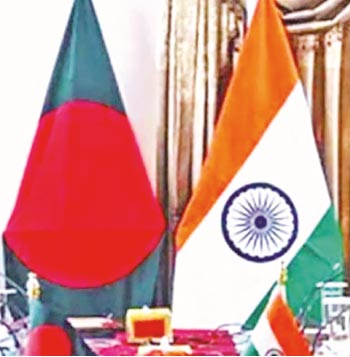 Bangladesh and India are heading into high-stakes trade talks in New Delhi on Thursday, with a $9.2 billion bilateral trade gap, reciprocal land-route restrictions, anti-dumping duties and persistent non-tariff barriers putting their strained economic relationship to the test.
The two-day 16th meeting of the Joint Working Group on Trade will test whether Dhaka and New Delhi can dismantle key trade barriers and restore momentum to bilateral commerce after relations deteriorated following the ouster of the Awami League government in 2024.
Bangladesh exported goods worth only $1.75 billion to India against $10.96 billion in imports in the 2025-26 fiscal year, leaving Dhaka with a sharply adverse trade balance. Bangladesh is expected to seek greater market access, removal of trade restrictions and a more predictable regime for its exporters.
Additional Secretary of the Commerce Ministry Ayesha Akther will lead Bangladesh’s nine-member delegation at the talks, which officials see as an important step towards rebuilding economic ties and restoring regular bilateral engagement.
The meeting will be the second major official-level engagement between the two countries since the BNP-led government assumed office in February. The first was the director-general-level meeting between Border Guard Bangladesh (BGB) and India’s Border Security Force (BSF) in June.
Officials and industry insiders said signs of a thaw have emerged, with both sides showing interest in restoring regular contacts and creating a more conducive environment for trade and investment.
Bangladesh is expected to raise India’s anti-dumping duties on jute products, restrictions on land-route trade and non-tariff barriers, including stringent testing requirements, differences in product standards and weaknesses in border infrastructure.
Indian diplomats told this correspondent that New Delhi is also keen to improve economic ties in the changing political landscape, saying a more conducive business environment could help rebuild confidence and contribute to better political relations.
The previous Joint Working Group meeting was held in Dhaka on September 26-27, 2023. Since then, political tensions have disrupted bilateral economic cooperation, with both countries introducing trade restrictions and India imposing partial visa restrictions.
A major dispute centres on restrictions on land-route trade. Bangladesh barred imports of Indian yarn through five major land ports, including Benapole, Bhomra and Sonamasjid, requiring the shipments to move by sea. India has strongly objected to the move, arguing that yarn is a critical raw material for Bangladesh’s readymade garment industry.
India subsequently restricted land-route imports of several Bangladeshi products, including readymade garments, processed foods, fruit juices, plastics and PVC products, particularly through its north-eastern borders.
The restrictions have increased logistics costs and disrupted established supply chains, forcing traders to use more expensive sea routes.
Bangladeshi exporters also face longstanding non-tariff barriers in accessing the Indian market, including stringent testing and certification requirements, limited mutual recognition of standards and inadequate customs and border infrastructure.
Another major flashpoint is India’s anti-dumping duty on Bangladeshi jute products. The Directorate General of Trade Remedies (DGTR) imposed duties of up to $445 per tonne on jute yarn and twine, which Dhaka says has weakened the competitiveness of Bangladeshi jute exporters.
Bangladesh has repeatedly sought a review and withdrawal of the duties, arguing that they restrict trade and undermine the scope for deeper economic integration.
The underlying trade structure remains heavily tilted towards India. Bangladesh mainly imports industrial raw materials, fabrics, yarn and cotton from India, while its exports comprise largely textile and other manufactured products.
Against this backdrop, the New Delhi talks will put the focus squarely on whether the two neighbours can convert renewed official contact into concrete trade concessions.
For Dhaka, the immediate stakes are greater market access, lower trade costs and a reduction in the widening deficit. For New Delhi, restoring predictable commercial ties would help revive trade flows and safeguard business interests in a major neighbouring market.
The outcome could provide an early indication of whether Bangladesh and India are ready to move from trade restrictions and diplomatic strain towards a more pragmatic and commercially focused relationship.

Loading...
Loading...
Also read



Editor : Iqbal Sobhan Chowdhury
Published by the Editor on behalf of the Observer Ltd. from Globe Printers, 24/A, New Eskaton Road, Ramna, Dhaka.
Editorial, News and Commercial Offices : Aziz Bhaban (2nd floor), 93, Motijheel C/A, Dhaka-1000.
Phone: PABX- 41053001-06; Advertisement: 41053012; 01793317829, 01550707291, E-mail: [email protected], [email protected] Online: email: [email protected] 41053014; 01550707297 Advertisement: 01550707296


