



| HEADLINE |

|

IMF-World Bank annual meetings in Bangkok amid energy crisis
Published : Tuesday, 13 October, 2026 at 11:20 AM
Observer Online Report


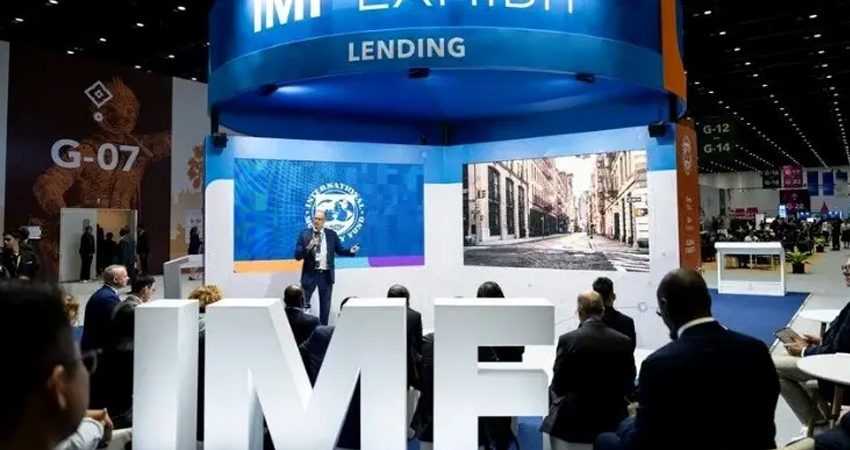
Collected Photo
The week-long Annual Meetings of the International Monetary Fund (IMF) and the World Bank Group commenced in the Thai capital of Bangkok on Monday (October 12), bringing together over 15,000 delegates to address pressing global economic challenges.
The gathering—attended by central bank governors, finance ministers, economists, and business leaders representing 191 member nations—focuses on strategies to sustain global growth and alleviate poverty amid escalating Middle East tensions and growing uncertainty surrounding global energy supplies.
Addressing the opening sessions, IMF Managing Director Kristalina Georgieva urged nations to significantly ramp up investments in artificial intelligence (AI) infrastructure, noting that Asian hardware suppliers are already reaping early economic dividends.
According to IMF estimates, robust AI investments could boost annual economic growth in advanced Asian economies by 0.5 to 1 percentage point, while emerging Asian markets could see growth gains ranging from 0.2 to 0.8 percentage points.
Georgieva highlighted that AI investments have helped sustain global growth around 3 per cent despite ongoing energy market disruptions.
Likening AI to a "slow-moving tsunami," the IMF chief warned that the technology will fundamentally transform global employment, education, productivity, and tax revenue systems.
Initial IMF research suggests AI could alter or displace roughly 40 per cent of jobs worldwide in the long term, noting that 10 per cent of active job openings in the United States already demand AI-related skills.
World Bank Group President Ajay Banga emphasized that the organization is focusing on deploying targeted, small-scale AI technologies to enhance the productivity of healthcare workers, teachers, and farmers across developing nations.
Meanwhile, Singapore President Tharman Shanmugaratnam cautioned governments to closely monitor AI's impact on graduate employment and address widening growth disparities between advanced and developing economies.
The IMF, which previously projected a 3 per cent global economic growth rate for 2026, is scheduled to publish its updated World Economic Outlook report on Tuesday. High-profile absentees at this year's meetings include US Treasury Secretary Scott Bessent and Spanish Finance Minister Arcadi España.
-SA

Loading...
Loading...
Also read









Editor : Iqbal Sobhan Chowdhury
Published by the Editor on behalf of the Observer Ltd. from Globe Printers, 24/A, New Eskaton Road, Ramna, Dhaka.
Editorial, News and Commercial Offices : Aziz Bhaban (2nd floor), 93, Motijheel C/A, Dhaka-1000.
Phone: PABX- 41053001-06; Advertisement: 41053012; 01793317829, 01550707291, E-mail: [email protected], [email protected] Online: email: [email protected] 41053014; 01550707297 Advertisement: 01550707296
Published by the Editor on behalf of the Observer Ltd. from Globe Printers, 24/A, New Eskaton Road, Ramna, Dhaka.
Editorial, News and Commercial Offices : Aziz Bhaban (2nd floor), 93, Motijheel C/A, Dhaka-1000.
Phone: PABX- 41053001-06; Advertisement: 41053012; 01793317829, 01550707291, E-mail: [email protected], [email protected] Online: email: [email protected] 41053014; 01550707297 Advertisement: 01550707296


