



| HEADLINE |

|

Tourists Seek an Escape, but Bangladesh’s Beauty Is Becoming a Death Trap
Published : Tuesday, 20 October, 2026 at 12:00 AM
Faruk Ahmed


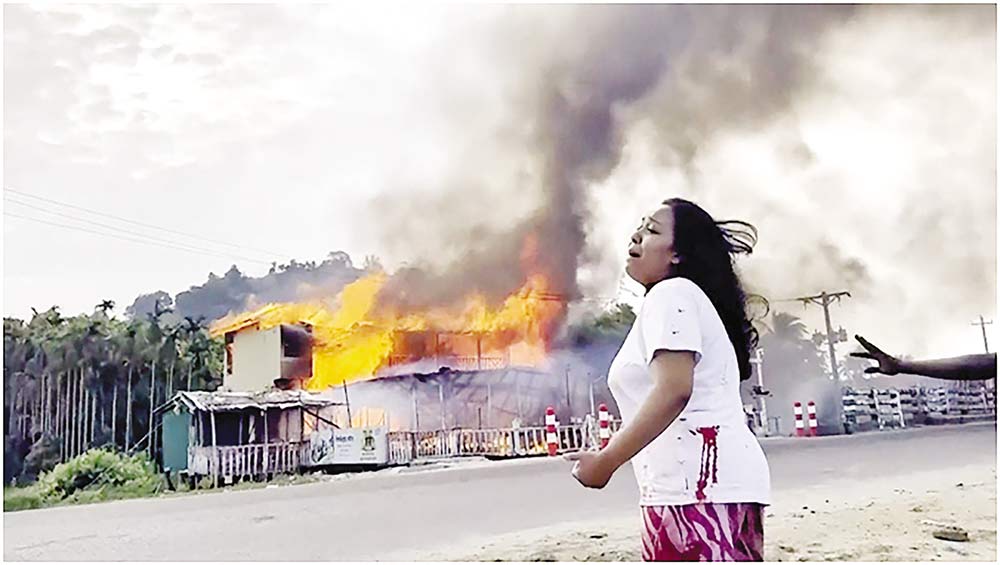 Ten people went on holiday to Cox’s Bazar. They never returned home.
Trapped inside a burning wooden resort that authorities had reportedly declared hazardous months earlier, they became victims of a tragedy that raises a devastating question: how many more lives must be lost before Bangladesh takes tourist safety seriously?
The October 17 fire at TupTup Resto & Resort in Patuartek, near Inani Beach, killed 10 people and injured several others. The Fire Service and Civil Defence said the resort had been warned of fire risks in June but continued operating without a fire safety licence.
The tragedy exposes more than the negligence of a resort operator. It lays bare the failure of a regulatory system that allowed a property flagged as hazardous to continue accommodating holidaymakers. For families who have lost loved ones, official inquiries and promises of action offer little comfort. Their grief demands answers, accountability and measures that prevent another family from enduring the same nightmare.
Worse, the inferno was not an isolated warning. On the Cox’s Bazar�"Teknaf Marine Drive, around 250 establishments were reported to lack required approvals from the development authority, Fire Service or Department of Environment. More than 1,000 establishments operate along the 80-kilometre stretch, according to local reporting.
The question is painfully simple: why has the government allowed tourism infrastructure to multiply without ensuring that basic safety requirements keep pace?
Bangladesh’s tourism industry should be a source of livelihood, pride and happiness. Rising incomes, a growing middle class and improved transport links have encouraged millions to explore the country’s beaches, forests, hills and waterfalls. Hotels, resorts and eco-cottages have mushroomed across Cox’s Bazar, Sylhet, the Chittagong Hill Tracts and other destinations, bringing economic opportunities to local communities.
Yet the rush to attract visitors and generate revenue has too often overshadowed the duty to protect them.
The dangers extend far beyond resort fires. At Sitakunda in Chattogram, eight tourists reportedly died at waterfalls over two years. Locals allege that fire Service recommendations for improved safety measures were not fully implemented. Inadequate warning signs, dangerous pools and insufficient supervision have repeatedly exposed visitors to fatal risks.
In June 2026, at Jaflong in Sylhet, strong currents and hidden underwater hazards have claimed lives. A teenage tourist drowned there, while another young visitor died in the same area in March 2025.
Cox’s Bazar’s beaches pose their own dangers. Red flags and warnings mean little when visitors disregard them and lifeguard coverage is inadequate. In the hills, steep roads, reckless driving, overcrowded vehicles and unfit local four-wheel-drive vehicles add to the risks faced by tourists travelling to places such as Sajek and Thanchi.
Even resort safety has repeatedly come under scrutiny. In January 2025, a fire on St Martin’s Island damaged three resorts, destroying one. Another fire damaged a resort near Cox’s Bazar beach in May 2026. Neither incident caused reported fatalities, but both should have prompted stronger inspections and enforcement before the October disaster.
The government cannot claim to promote tourism successfully while leaving visitors exposed to preventable hazards. Tourism is not merely about constructing resorts, advertising destinations or collecting revenue. It is a public responsibility involving human lives, emergency preparedness and environmental protection.
Every hotel, resort and cottage must obtain the required fire, structural and environmental clearances before opening. Regular inspections must be backed by meaningful penalties, including closure and licence cancellation for serious violations. Warnings must trigger enforcement, not become paperwork that operators can ignore.
High-risk beaches, waterfalls and rivers need adequate lifeguards, trained rescue teams, clear warning signs and emergency medical facilities. Mountain transport operators must face strict vehicle fitness checks, driver training and passenger limits. Visitor numbers at ecologically fragile destinations must be controlled according to their carrying capacity, while remote resorts need reliable emergency communication and evacuation plans.
Tourists also have a responsibility to obey warnings and avoid reckless behaviour. But personal caution cannot replace government oversight. Visitors cannot be expected to know that a resort has ignored an official notice or that a dangerous waterfall lacks adequate safeguards.
The government must publish the findings of the TupTup investigation, establish accountability and conduct urgent safety audits across tourist destinations nationwide. Those responsible for violations must face consequences, regardless of commercial influence or local connections.
Bangladesh’s natural beauty is an extraordinary national asset. Its tourism industry could generate jobs, sustain local businesses and bring prosperity to communities far beyond the major cities. But that promise will remain fragile if families must fear for their lives whenever they travel.
A holiday should end with photographs, memories and the joy of returning home�"not funeral prayers and unanswered questions. Until the authorities put safety before unchecked commercial expansion, Bangladesh’s tourism boom will continue to carry a tragic cost.

Loading...
Loading...
Also read



Editor : Iqbal Sobhan Chowdhury
Published by the Editor on behalf of the Observer Ltd. from Globe Printers, 24/A, New Eskaton Road, Ramna, Dhaka.
Editorial, News and Commercial Offices : Aziz Bhaban (2nd floor), 93, Motijheel C/A, Dhaka-1000.
Phone: PABX- 41053001-06; Advertisement: 41053012; 01793317829, 01550707291, E-mail: [email protected], [email protected] Online: email: [email protected] 41053014; 01550707297 Advertisement: 01550707296


