



| HEADLINE |

|

Israeli youth shift toward right-wing politics ahead of election
Published : Sunday, 25 October, 2026 at 9:03 AM
Observer Online Report


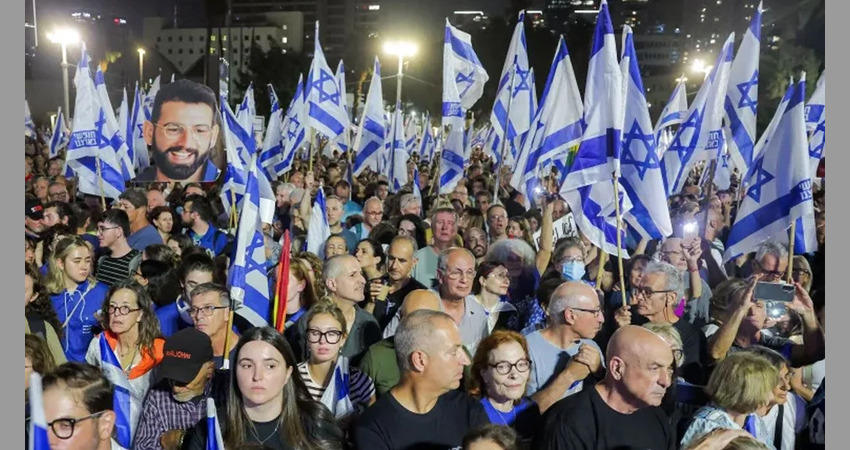
Collected Photo
Israeli young voters are increasingly leaning toward right-wing and far-right politics as over 500,000 first-time voters prepare to cast their ballots in the upcoming Knesset election.
Security concerns following the October 7, 2023 attacks, the growing influence of far-right leaders, and social media exposure have significantly driven this political shift among the younger generation, according to analysts.
An Al Jazeera analysis published on Saturday highlighted a trend contrasting with global patterns where young voters often skew left. A survey conducted by Israel's Channel 12 revealed that nearly three-quarters of first-time Jewish voters identify as right-wing or center-right.
Over 500,000 voters aged 18 to 22 have joined the voter list for the election scheduled for Tuesday (October 27). Surveys indicate that 80 per cent of these new voters plan to cast their ballots. The election is critical for Prime Minister Benjamin Netanyahu's political future and the continued influence of his right-wing policies.
Critics argue that Netanyahu has emboldened far-right leaders to maintain his hold on power. By appointing figures such as National Security Minister Itamar Ben-Gvir and Finance Minister Bezalel Smotrich to key positions, their political agendas and anti-Palestinian rhetoric have entered mainstream Israeli politics.
Al Jazeera cited a video by Israeli satirist Lior Schlein illustrating the trend, showing a youth expressing anti-Arab sentiments and asserting that Arabs should not live in Israel. Schlein later took down the video following public criticism.
However, not all Israeli youths share these far-right views. Speaking at a meeting of the left-leaning Democrats party in Tel Aviv, 18-year-old Gili noted that deep fears generated after the October 7 attacks have made it difficult for people to believe that peace is attainable.
A poll by the Israel Democracy Institute showed that a large portion of young Jews believe they can influence the nation's future through voting.
Social media platforms alongside messaging applications like WhatsApp and Telegram continue to play a primary role in shaping their political views, with many absorbing content directly from social feeds rather than actively seeking out information.
-SA

Loading...
Loading...
Also read









Editor : Iqbal Sobhan Chowdhury
Published by the Editor on behalf of the Observer Ltd. from Globe Printers, 24/A, New Eskaton Road, Ramna, Dhaka.
Editorial, News and Commercial Offices : Aziz Bhaban (2nd floor), 93, Motijheel C/A, Dhaka-1000.
Phone: PABX- 41053001-06; Advertisement: 41053012; 01793317829, 01550707291, E-mail: [email protected], [email protected] Online: email: [email protected] 41053014; 01550707297 Advertisement: 01550707296


