



| HEADLINE |

|

Every minute counts: Recognising stroke symptoms
Published : Thursday, 29 October, 2026 at 11:44 AM
Observer Online Report


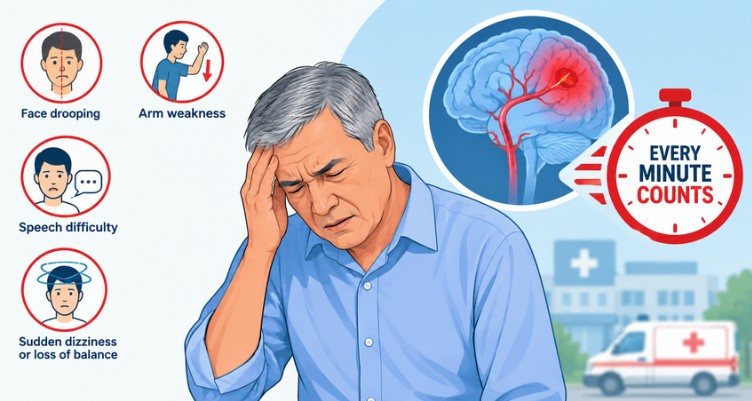
On World Stroke Day, health experts urge the public to recognise warning signs, seek emergency care without delay and avoid dangerous home remedies.
Stroke is a medical emergency in which every minute matters. Sudden facial drooping, weakness or numbness on one side of the body, slurred speech or difficulty speaking can signal a stroke. Getting a patient to hospital quickly can reduce the risk of death and permanent disability.
Yet many people delay seeking medical attention even after symptoms appear, waiting at home, turning to traditional or home remedies, or attempting other forms of treatment before going to hospital. Such delays can have devastating consequences.
Recognise the warning signs: BE FAST
The first priority when stroke symptoms appear is to arrange emergency medical care immediately. Patients should be taken as quickly as possible to a hospital equipped with brain imaging facilities, including CT scans or MRI, and appropriate stroke treatment services.
The BE FAST acronym offers a simple way to remember the main warning signs:
B — Balance: Sudden loss of balance, dizziness or difficulty walking.
E — Eyes: Sudden loss of vision or blurred vision.
F — Face: Drooping or unevenness on one side of the face.
A — Arms: Sudden weakness in an arm or leg, particularly on one side.
S — Speech: Slurred speech or difficulty speaking or understanding others.
T — Time: Do not waste time. Seek emergency medical care immediately.
The sudden onset of even one of these symptoms should raise suspicion of a stroke. Symptoms that disappear after a few minutes must not be ignored, as they may indicate a transient ischaemic attack (TIA), a temporary interruption of blood flow to the brain that can serve as a warning of a future stroke.
Why every minute matters
When a blood vessel supplying the brain becomes blocked, the affected area receives less blood and oxygen, causing brain cells to deteriorate rapidly. In a large-vessel ischaemic stroke, approximately 1.9 million neurons may be lost every minute.
The longer treatment is delayed, the greater the risk of brain damage, disability and death.
Rapid hospital admission can allow eligible patients to receive treatments that restore blood flow, including intravenous thrombolysis and mechanical thrombectomy. Recognising symptoms and arranging immediate transport to an appropriately equipped hospital can therefore make a critical difference.
In stroke care, time is brain — and time can mean life.
Identifying the type of stroke is the first step
Stroke is broadly divided into two main types.
Ischaemic stroke occurs when a blood clot blocks a blood vessel supplying the brain. Haemorrhagic stroke occurs when a blood vessel ruptures, causing bleeding in or around the brain.
The treatments for these two conditions differ significantly. A CT scan or, when indicated, an MRI is therefore essential to establish the diagnosis and determine the appropriate course of treatment.
Giving aspirin, clopidogrel or other blood-thinning medication without medical advice can be dangerous before the type of stroke is established. Such drugs may worsen bleeding in patients with haemorrhagic stroke.
Effective treatments available for blocked blood vessels
For patients with ischaemic stroke, prompt treatment can limit brain damage and improve the chances of recovery.
Eligible patients may receive intravenous thrombolysis, a treatment that dissolves blood clots. It is generally administered within 4.5 hours of symptom onset, subject to clinical assessment, imaging results and other eligibility criteria. Selected patients may qualify for treatment beyond this standard window when advanced imaging supports its use.
Another important treatment is mechanical thrombectomy, particularly for patients with a large-vessel occlusion (LVO), in which a major artery supplying the brain becomes blocked.
During the procedure, doctors typically insert a catheter through an artery in the groin or wrist and guide it to the blocked vessel in the brain. Specialised devices are then used to remove the clot and attempt to restore blood flow.
For eligible patients, timely thrombectomy can reduce the risk of death and long-term disability. Selected patients may benefit from the procedure up to 24 hours after symptom onset, depending on clinical and imaging findings.
However, not every patient qualifies. Rapid vascular imaging, such as CT angiography, and assessment by specialists are essential to determine eligibility.
Treating haemorrhagic stroke
When a stroke is caused by bleeding in the brain, treatment focuses on controlling blood pressure, preventing further bleeding, managing pressure inside the skull and determining whether surgery or an endovascular procedure is necessary.
In some cases, bleeding results from an aneurysm or another abnormality of the blood vessels. Depending on the patient's condition, doctors may use procedures such as surgical clipping or endovascular coiling to secure the source of the bleeding.
Patients with severe haemorrhagic stroke may require treatment in a specialised stroke unit or intensive care unit.
What to do before reaching hospital
While arranging emergency transport, caregivers should take several precautions:
●Do not give the patient food, water or oral medication, as swallowing difficulties may cause choking or aspiration into the lungs.
●Do not attempt to lower blood pressure rapidly unless directed by a medical professional.
●Avoid making the patient walk, massaging the affected limbs or wasting time on unproven remedies.
●Note the exact time symptoms began, or the last time the patient was known to be well.
●Inform medical staff about the patient's symptoms, current medications and medical history, including diabetes, hypertension and heart disease.
●If the patient is unconscious, monitor their breathing and seek emergency assistance immediately.
Reducing stroke risk requires controlling high blood pressure, diabetes and cholesterol, avoiding smoking, exercising regularly and maintaining a healthy diet.
Detecting and treating irregular heart rhythms, particularly atrial fibrillation, is also important because the condition can increase the risk of blood clots and stroke.
At the same time, effective stroke care depends on hospitals being equipped with rapid diagnostic imaging, trained medical teams and access to thrombolysis and thrombectomy for eligible patients.
Public awareness is equally important. Recognising the warning signs and knowing where to seek emergency care can help prevent avoidable delays.
The message on World Stroke Day is clear: do not wait for stroke symptoms to pass. Seek emergency medical care immediately. Rapid hospital admission, timely diagnosis and appropriate treatment can improve the chances of survival and recovery, helping more patients return to independent lives.
Stroke is a medical emergency in which every minute matters. Sudden facial drooping, weakness or numbness on one side of the body, slurred speech or difficulty speaking can signal a stroke. Getting a patient to hospital quickly can reduce the risk of death and permanent disability.
Yet many people delay seeking medical attention even after symptoms appear, waiting at home, turning to traditional or home remedies, or attempting other forms of treatment before going to hospital. Such delays can have devastating consequences.
Recognise the warning signs: BE FAST
The first priority when stroke symptoms appear is to arrange emergency medical care immediately. Patients should be taken as quickly as possible to a hospital equipped with brain imaging facilities, including CT scans or MRI, and appropriate stroke treatment services.
The BE FAST acronym offers a simple way to remember the main warning signs:
B — Balance: Sudden loss of balance, dizziness or difficulty walking.
E — Eyes: Sudden loss of vision or blurred vision.
F — Face: Drooping or unevenness on one side of the face.
A — Arms: Sudden weakness in an arm or leg, particularly on one side.
S — Speech: Slurred speech or difficulty speaking or understanding others.
T — Time: Do not waste time. Seek emergency medical care immediately.
The sudden onset of even one of these symptoms should raise suspicion of a stroke. Symptoms that disappear after a few minutes must not be ignored, as they may indicate a transient ischaemic attack (TIA), a temporary interruption of blood flow to the brain that can serve as a warning of a future stroke.
Why every minute matters
When a blood vessel supplying the brain becomes blocked, the affected area receives less blood and oxygen, causing brain cells to deteriorate rapidly. In a large-vessel ischaemic stroke, approximately 1.9 million neurons may be lost every minute.
The longer treatment is delayed, the greater the risk of brain damage, disability and death.
Rapid hospital admission can allow eligible patients to receive treatments that restore blood flow, including intravenous thrombolysis and mechanical thrombectomy. Recognising symptoms and arranging immediate transport to an appropriately equipped hospital can therefore make a critical difference.
In stroke care, time is brain — and time can mean life.
Identifying the type of stroke is the first step
Stroke is broadly divided into two main types.
Ischaemic stroke occurs when a blood clot blocks a blood vessel supplying the brain. Haemorrhagic stroke occurs when a blood vessel ruptures, causing bleeding in or around the brain.
The treatments for these two conditions differ significantly. A CT scan or, when indicated, an MRI is therefore essential to establish the diagnosis and determine the appropriate course of treatment.
Giving aspirin, clopidogrel or other blood-thinning medication without medical advice can be dangerous before the type of stroke is established. Such drugs may worsen bleeding in patients with haemorrhagic stroke.
Effective treatments available for blocked blood vessels
For patients with ischaemic stroke, prompt treatment can limit brain damage and improve the chances of recovery.
Eligible patients may receive intravenous thrombolysis, a treatment that dissolves blood clots. It is generally administered within 4.5 hours of symptom onset, subject to clinical assessment, imaging results and other eligibility criteria. Selected patients may qualify for treatment beyond this standard window when advanced imaging supports its use.
Another important treatment is mechanical thrombectomy, particularly for patients with a large-vessel occlusion (LVO), in which a major artery supplying the brain becomes blocked.
During the procedure, doctors typically insert a catheter through an artery in the groin or wrist and guide it to the blocked vessel in the brain. Specialised devices are then used to remove the clot and attempt to restore blood flow.
For eligible patients, timely thrombectomy can reduce the risk of death and long-term disability. Selected patients may benefit from the procedure up to 24 hours after symptom onset, depending on clinical and imaging findings.
However, not every patient qualifies. Rapid vascular imaging, such as CT angiography, and assessment by specialists are essential to determine eligibility.
Treating haemorrhagic stroke
When a stroke is caused by bleeding in the brain, treatment focuses on controlling blood pressure, preventing further bleeding, managing pressure inside the skull and determining whether surgery or an endovascular procedure is necessary.
In some cases, bleeding results from an aneurysm or another abnormality of the blood vessels. Depending on the patient's condition, doctors may use procedures such as surgical clipping or endovascular coiling to secure the source of the bleeding.
Patients with severe haemorrhagic stroke may require treatment in a specialised stroke unit or intensive care unit.
What to do before reaching hospital
While arranging emergency transport, caregivers should take several precautions:
●Do not give the patient food, water or oral medication, as swallowing difficulties may cause choking or aspiration into the lungs.
●Do not attempt to lower blood pressure rapidly unless directed by a medical professional.
●Avoid making the patient walk, massaging the affected limbs or wasting time on unproven remedies.
●Note the exact time symptoms began, or the last time the patient was known to be well.
●Inform medical staff about the patient's symptoms, current medications and medical history, including diabetes, hypertension and heart disease.
●If the patient is unconscious, monitor their breathing and seek emergency assistance immediately.
These steps can help reduce additional risks and provide doctors with information that may influence treatment decisions.
Prevention and emergency preparedness go hand in hand
Reducing stroke risk requires controlling high blood pressure, diabetes and cholesterol, avoiding smoking, exercising regularly and maintaining a healthy diet.
Detecting and treating irregular heart rhythms, particularly atrial fibrillation, is also important because the condition can increase the risk of blood clots and stroke.
At the same time, effective stroke care depends on hospitals being equipped with rapid diagnostic imaging, trained medical teams and access to thrombolysis and thrombectomy for eligible patients.
Public awareness is equally important. Recognising the warning signs and knowing where to seek emergency care can help prevent avoidable delays.
The message on World Stroke Day is clear: do not wait for stroke symptoms to pass. Seek emergency medical care immediately. Rapid hospital admission, timely diagnosis and appropriate treatment can improve the chances of survival and recovery, helping more patients return to independent lives.

Loading...
Loading...
Also read







Editor : Iqbal Sobhan Chowdhury
Published by the Editor on behalf of the Observer Ltd. from Globe Printers, 24/A, New Eskaton Road, Ramna, Dhaka.
Editorial, News and Commercial Offices : Aziz Bhaban (2nd floor), 93, Motijheel C/A, Dhaka-1000.
Phone: PABX- 41053001-06; Advertisement: 41053012; 01793317829, 01550707291, 01550707296
E-mail: [email protected], [email protected]. [email protected], [email protected], [email protected], [email protected], Online-email: [email protected]


