



| HEADLINE |

|

Hanif given death penalty for crimes against humanity
3 others get life imprisonment until death
Published : Thursday, 29 October, 2026 at 12:10 PM
Observer Online Report


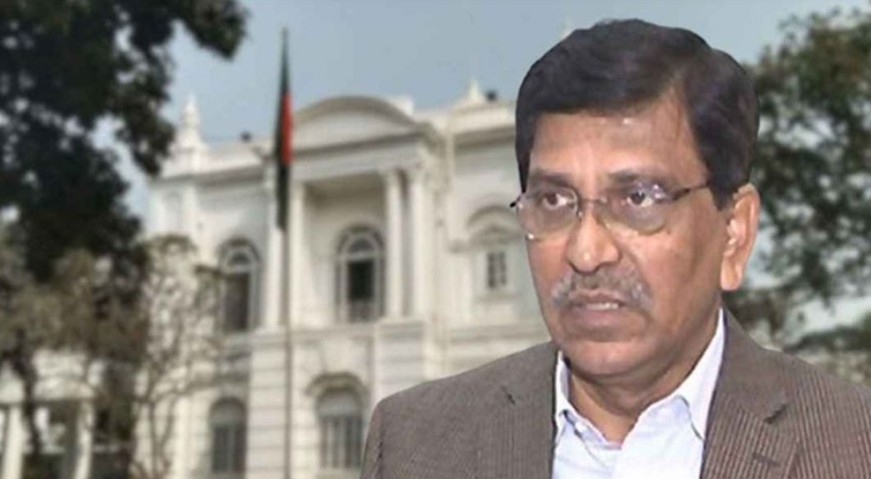
The International Crimes Tribunal-2 on Thursday sentenced Mahbubul Alam Hanif, joint general secretary of the banned Awami League, to death in a crimes against humanity case over the killings of six people in Kushtia during the July uprising.
A three-member tribunal, headed by Justice Nazrul Islam Chowdhury, delivered the verdict at noon. The other members were Justices Md Manjurul Baseed and Nur Mohammad Shahriar Kabir.
The tribunal also sentenced Sadar Uddin Khan, Azgar Ali and Ataur Rahman Ata to life imprisonment until death.
Justice Chowdhury read out a brief verdict before announcing the sentences. Chief Prosecutor Aminul Islam, alongwith prosecutors Mizanul Islam, Gazi MH Tamim, Faruq Ahmed, Shahidul Islam Sardar and Zahirul Amin, among others, was present in court. State-appointed defence lawyer Amir Hossain represented the absent accused.
The prosecution brought three charges against the four accused, alleging incitement and assistance in the suppression of the July uprising, orders to use maximum force against protesters in Kushtia, and involvement in the killing of six people in the town on August 5, 2024.
The first charge alleged that Hanif incited, instigated and aided the violent suppression of the uprising through his statements and political activities. According to the prosecution, he was present alongside then Awami League General Secretary Obaidul Quader on July 15, 17 and 30, and August 3, 2024, and endorsed statements made at those meetings.
The prosecution also cited a speech Hanif delivered at a discussion meeting at the National Press Club on July 29, in which he allegedly labelled protesters as members of Jamaat, terrorists and communal forces, thereby encouraging violence and repression against them.
Prosecutors further alleged that Hanif supported plans to use lethal weapons against protesters to consolidate and prolong the tenure of the government led by then prime minister Sheikh Hasina. These allegedly included identifying protesters and determining their locations and targets using drones, as well as firing from helicopters to suppress the demonstrations.
The prosecution argued that these actions contributed to the killing and serious injury of protesters across the country.
The second charge centres on a meeting held on July 27, 2024, at the Kushtia district Awami League office, allegedly chaired by Hanif and attended by Sadar Uddin Khan, Azgar Ali, Ataur Rahman Ata and other party leaders.
According to the prosecution, the participants characterised the peaceful student-led movement as terrorist activity, and Hanif instructed party leaders to use maximum force to suppress demonstrations in Kushtia.
Prosecutors alleged that the meeting facilitated incitement and assistance in the use of force, shootings, killings and torture against protesters. All four accused were named in connection with this charge.
The third charge concerns the deaths of six people who were shot in Kushtia on August 5, 2024, as protesters joined the nationwide movement demanding Sheikh Hasina's resignation.
The victims were identified as labourer Ashraful Islam, Suruj Ali Babu, students Abdullah Al Mustakin and Usama, businessman Babul Farazi, and employee Yusuf Sheikh.
According to the prosecution, thousands of students and members of the public gathered near Hospital Intersection in Kushtia at around 10am that day, intending to march peacefully from Chowrhas towards Majampur in solidarity with the nationwide “March to Dhaka” programme.
The prosecution alleged that, following a plan directed by Hanif, Awami League activists opened fire on the demonstrators, with police providing cover. In some instances, party activists allegedly fired alongside police personnel.
The killings took place at different locations across Kushtia between approximately 1:30pm and 4pm, according to the prosecution. Ashraful Islam was shot about 50 yards north of Bok Chattar; Suruj Ali Babu was killed in Burmese Goli; Abdullah Al Mustakin and Usama were shot near Aarong on the road towards Haripur; Babul Farazi was killed in an alley in Tulapatti; and Yusuf Sheikh was shot on the road opposite the fire service station.
Prosecutors maintained that the four accused were linked to the killings and charged them with crimes against humanity through murder, attempted murder, torture, incitement, instigation, assistance and orders to kill.
The tribunal began the trial on November 2, 2025, after formally framing charges against the four accused. The prosecution submitted the formal charges on October 5, 2025, and the tribunal took cognisance of them the following day.
Testimony from 19 witnesses was completed on April 23, 2026, with the cross-examination of the investigation officer. The case was initially kept pending for judgment on June 10 after closing arguments. However, the tribunal reopened arguments after the prosecution submitted additional evidence.
Following the conclusion of arguments and counterarguments on October 7, the tribunal reserved its verdict. October 29 was subsequently fixed for the announcement of the judgment.
All four accused were tried in absentia, as they remain at large.

Loading...
Loading...
Also read





Editor : Iqbal Sobhan Chowdhury
Published by the Editor on behalf of the Observer Ltd. from Globe Printers, 24/A, New Eskaton Road, Ramna, Dhaka.
Editorial, News and Commercial Offices : Aziz Bhaban (2nd floor), 93, Motijheel C/A, Dhaka-1000.
Phone: PABX- 41053001-06; Advertisement: 41053012; 01793317829, 01550707291, 01550707296
E-mail: [email protected], [email protected]. [email protected], [email protected], [email protected], [email protected], Online-email: [email protected]


