



| HEADLINE |

|

Reuters report
US poised to impose new tariffs on 16 partners, including B’desh
Published : Wednesday, 25 November, 2026 at 2:09 PM
Observer Online Report


Collected Photo
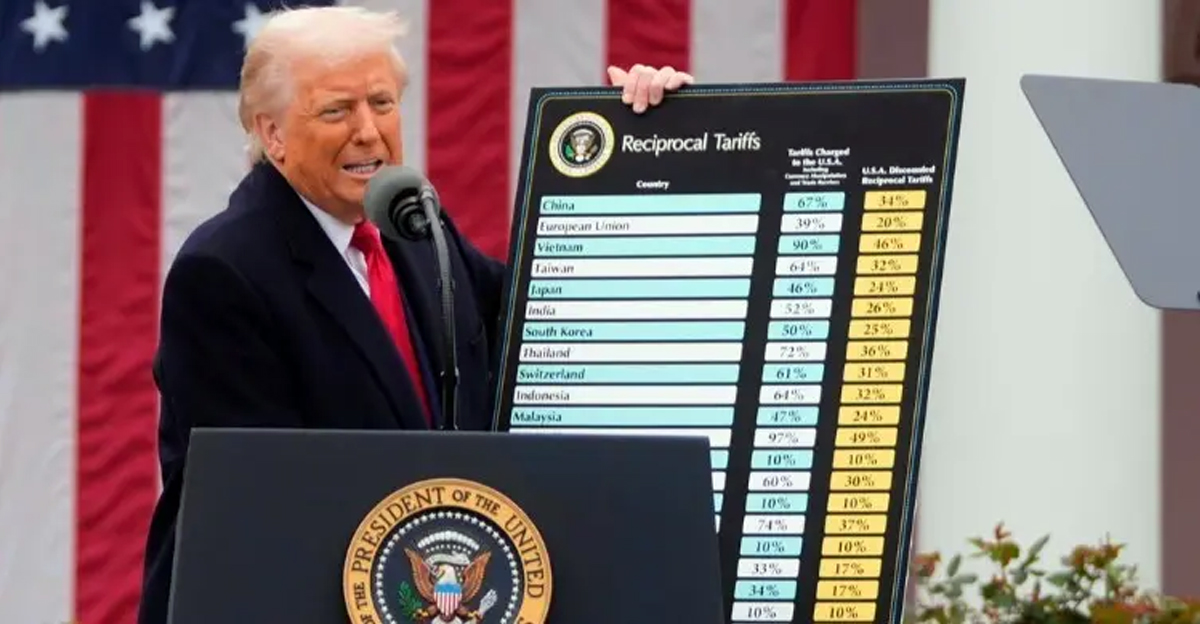
United States is preparing to impose new tariffs on goods from 16 trading partners, including Bangladesh, over allegations of excess industrial production capacity, based on findings from a completed trade investigation, three sources familiar with the matter told Reuters on Tuesday (November 24).
The findings of the investigation were expected to be released on Tuesday afternoon US time—or Wednesday night in Bangladesh—according to the sources.
The Office of the US Trade Representative (USTR) is set to propose new tariffs that would stack on top of duties imposed earlier during President Donald Trump's second term, partially replacing tariffs struck down by the US Supreme Court in February.
Exact tariff rates have not yet been made clear, though one source indicated they would be set on a country-by-country basis following the USTR investigation conducted under Section 301 of the Trade Act of 1974 into major US trading partners.
The White House is expected to honour tariff ceilings established in finalised trade deals, including a cap of 15 per cent on goods from the European Union, Japan, and South Korea, and 19 per cent for Malaysia.
For Chinese goods, Trump's second-term tariffs are slated to remain capped at 20 per cent—provided a trade truce set to expire on January 10 is extended; otherwise, tariffs on Chinese products would rise further.
Neither the White House nor the USTR responded to Reuters' requests for comment.
Former senior US trade official Ryan Majerrus noted that the investigation report could be extensive and recommend tailored tariff measures across the 16 partners.
He said higher tariffs of 15 to 25 per cent could be proposed for countries found to have excess capacity across various sectors, adding onto existing 10 or 12.5 per cent duties tied to alleged enforcement lapses on forced-labour laws. However, he suggested the administration could start with lower rates paired with a mechanism that automatically raises tariffs over time if countries fail to curb excess capacity.
Alongside Bangladesh, the US investigation covers China, India, Japan, South Korea, Mexico, Vietnam, Taiwan, Thailand, Malaysia, Indonesia, Switzerland, Norway, Singapore, Cambodia, and the European Union.
The USTR launched the inquiry in March alongside a separate investigation into weak enforcement of anti-forced-labour laws across 59 countries and the EU, as part of efforts to rebuild the global tariff framework after the Supreme Court invalidated earlier Trump tariffs in February.
-SA

Loading...
Loading...
Also read




Editor : Iqbal Sobhan Chowdhury
Published by the Editor on behalf of the Observer Ltd. from Globe Printers, 24/A, New Eskaton Road, Ramna, Dhaka.
Editorial, News and Commercial Offices : Aziz Bhaban (2nd floor), 93, Motijheel C/A, Dhaka-1000.
Phone: PABX- 41053001-06; Advertisement: 41053012; 01793317829, 01550707291, 01550707296
E-mail: [email protected], [email protected]. [email protected], [email protected], [email protected], [email protected], Online-email: [email protected]


