



| HEADLINE |

|

Street Children at Risk of Abuse and VICTIMISATION
Published : Saturday, 31 October, 2026 at 12:00 AM
Rahul Deb Nath


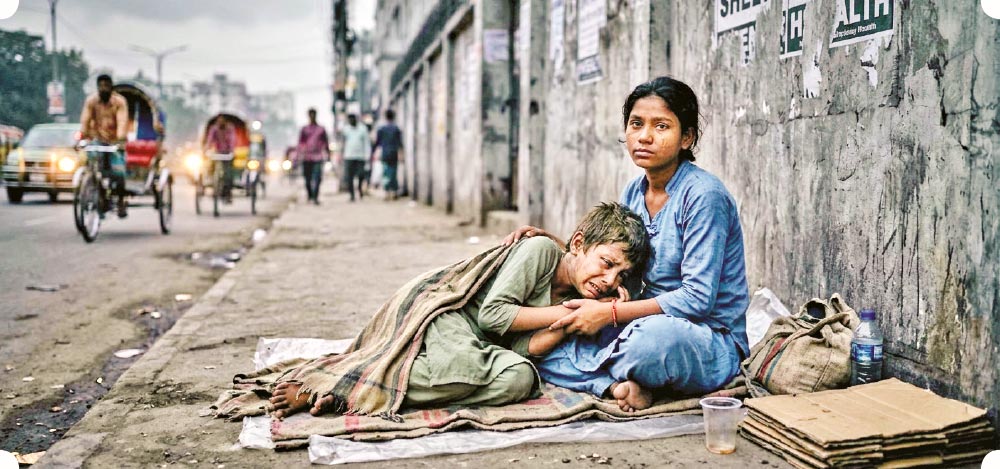 Children sleeping on streets, adolescent girls growing up on sidewalks, teenage boys earning a living on the streets, and homeless people spending nights under the open sky are realities we see daily but often ignore. Why are they forced to live this way? Does lacking family, shelter or a reliable livelihood diminish their rights as citizens?
Struggle to Survive
Poverty, domestic violence, neglect and abuse force many children to leave their families and live or work on the streets, deprived of education, nutritious food, safe water, healthcare, hygienic toilets and secure shelter. Many survive by collecting waste, working in shops or workshops, or begging, while others face criminal exploitation. They should not be branded as criminals because of their circumstances, which reflect wider poverty, inequality and failures in social protection.
UNICEF Bangladesh’s 2024 qualitative study, Children Living in Street Situations in Bangladesh, reports that more than 3.4 million children live on the streets without parental care. Based on the experiences of more than 400 children and relevant individuals, it highlights concerns over child protection, education, healthcare, social security and human dignity.
Girls face additional risks of sexual harassment, physical violence, trafficking and exploitation. Without safe shelter, many lack secure places to sleep, bathe or seek emergency help. Adolescent girls often lack nutritious food, reproductive healthcare, menstrual hygiene products and reliable health advice, increasing risks of illness, psychological distress and dropping out of education. Early marriage and forced labour further compound their vulnerability.
They need safe, gender-sensitive shelters, female social workers, healthcare, mental health support, free sanitary products, educational opportunities and secure channels to report abuse. Their privacy must be protected, and they must never be blamed for abuse. Street girls have dreams, opinions and potential; the state and society must hear their voices and safeguard their rights, safety and dignity.
The State’s Role
The Constitution of Bangladesh guarantees basic necessities, education, equality and social welfare. Article 15 requires the state to strive to ensure food, shelter, education, healthcare and social security, while Article 17 provides for free and compulsory education. Flexible schooling, free materials, nutritional support and vocational training can help street children.
Article 27 guarantees equality before the law, and Article 28(4) permits special measures for children, women and disadvantaged groups. Street life does not diminish anyone’s rights or dignity; evictions must follow the law, with alternative shelter and rehabilitation considered where applicable.
The Children Act, 2013, provides a framework for child protection and welfare. Neglected, abused or separated children need coordinated support from social services, child protection institutions, law enforcement agencies, courts and NGOs.
Long-term action must ensure safe shelter, healthcare, education, mental health support and protection from exploitation. Girls need gender-sensitive services and reproductive healthcare; family reunification should occur where safe, with alternative care when necessary.
Laws against child exploitation must be enforced, while homeless adults need shelter, employment, healthcare and social security. Stronger family support, school retention, employment and disaster assistance can prevent children from being forced onto the streets.
Beyond Charity, Towards Dignity
Poverty, abuse, lack of education, unsafe shelter and criminal networks may push street children into theft, drug transportation or other crimes. Authorities must investigate their circumstances, identify exploiters and address failures in child protection. Punishment alone cannot solve the problem; children need education, counselling, safe shelter, family tracing, skills training and rehabilitation, alongside legal action against exploiters.
Society must uphold children’s dignity, report abuse and support education and rehabilitation through reliable organisations. The media, educational institutions, civic groups and businesses can help through awareness campaigns, skills training and employment opportunities while protecting children’s privacy.
A country’s development depends on how it protects vulnerable people, not merely its economy and infrastructure. Street children, homeless adults, elderly people and persons with disabilities deserve safety, healthcare and social protection. Upholding their rights is a shared state and societal responsibility rooted in constitutional principles and social justice, and essential to building a just society.

Loading...
Loading...
Also read





Editor : Iqbal Sobhan Chowdhury
Published by the Editor on behalf of the Observer Ltd. from Globe Printers, 24/A, New Eskaton Road, Ramna, Dhaka.
Editorial, News and Commercial Offices : Aziz Bhaban (2nd floor), 93, Motijheel C/A, Dhaka-1000.
Phone: PABX- 41053001-06; Advertisement: 41053012; 01793317829, 01550707291, 01550707296
E-mail: [email protected], [email protected]. [email protected], [email protected], [email protected], [email protected], Online-email: [email protected]


