



| HEADLINE |

|

Jannater Sobuj Pakhi
(The Green Bird of Paradise)
Published : Saturday, 31 October, 2026 at 12:00 AM
Nazmul Huda Majnu


 Reviewed by Aminul Islam
A truly memorable book does more than just provoke thought-it strikes a chord deep within the soul. Nazmul Huda Majnu’s latest poetry collection, Jannater Sobuj Pakhi, delivers precisely that: a serene, uplifting reading experience.
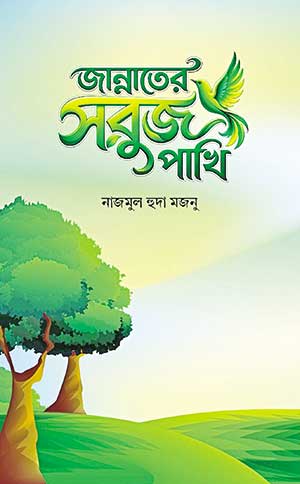
The book makes an immediate impression with its visual appeal. Styled in a harmonious palette of light and deep green, the cover design is both elegant and meaningfully aligned with the collection’s themes.
Printed on fine-quality paper with clean typography, the 102-page volume is priced at 200 BDT-a thoughtful and commendable effort by the publisher to offer a well-crafted edition to poetry lovers.
At its core, the collection is driven by spiritual devotion and reflective life observations. In nearly every stanza, Majnu channels sincere longing, reverence, and earnest prayer towards the Divine. Yet the work is far from narrow; alongside its spiritual depth, it captures the everyday realities, varied emotions, and subtle nuances of human existence. Selecting the opening poem as the title track sets a clear, resonant tone for the entire volume.
Stylistically, Majnu favours simplicity. Unburdened by dense jargon or convoluted metaphors, his language remains fluid, accessible, and direct, making it easy for readers to connect emotionally with his verse. If there is room for growth, a more deliberate ordering of the poems could have created a stronger narrative flow, further elevating the book’s overall cohesion.
Beyond the spiritual and philosophical, the collection carries a warm personal touch. Dedicated to the poet's wife, Salma Begum, the verses reflect genuine affection and domestic warmth. What stands out most, however, is the authenticity of the voice: there is no disconnect between Majnu’s literary ideals and his lived values. His poetry feels like an honest reflection of the life he leads.
Ultimately, Jannater Sobuj Pakhi is a heartfelt and thoughtful collection. It deserves a wide audience and a lasting presence in contemporary poetry. Congratulations to Nazmul Huda Majnu on delivering a work of such quiet depth.

Loading...
Loading...



Editor : Iqbal Sobhan Chowdhury
Published by the Editor on behalf of the Observer Ltd. from Globe Printers, 24/A, New Eskaton Road, Ramna, Dhaka.
Editorial, News and Commercial Offices : Aziz Bhaban (2nd floor), 93, Motijheel C/A, Dhaka-1000.
Phone: PABX- 41053001-06; Advertisement: 41053012; 01793317829, 01550707291, 01550707296
E-mail: [email protected], [email protected]. [email protected], [email protected], [email protected], [email protected], Online-email: [email protected]


