



| HEADLINE |

|

BD Flying Club: Reviving a legacy, shaping the future of aviation
Published : Tuesday, 3 November, 2026 at 12:00 AM
Ether Fariel Hamid


 As Bangladesh's aviation industry continues to expand, one fundamental question deserves national attention: Are we adequately investing in the institutions that train our future pilots?
With Biman Bangladesh Airlines pursuing fleet modernization, discussions underway with Boeing and Airbus regarding aircraft procurement, and private airlines such as US-Bangla Airlines expanding their operations, the demand for skilled pilots and aviation professionals is expected to grow. Meeting this demand requires not only modern aircraft and airports but also strong domestic training institutions.
Established in 1948, Bangladesh Flying Club holds a distinguished place in the country's civil aviation history. For decades, it has contributed to pilot training and the development of aviation professionals. Its revival is therefore not merely an institutional concern; it is a matter of national interest.
The Cost of Lost Infrastructure: Bangladesh Flying Club once operated on several acres of land on the southern side of Hazrat Shahjalal International Airport in Dhaka. Its facilities included a hangar and essential aviation infrastructure that supported flight training and generated revenue through hangar rentals, aircraft parking, and maintenance-related activities.
During the construction of the airport's Third Terminal, the land used by the institution was acquired by the Civil Aviation Authority of Bangladesh (CAAB). Alternative arrangements, including a replacement hangar at Rajshahi Airport, aircraft acquisition, and other necessary facilities, were expected to support its continued operations. However, these arrangements have yet to be fully implemented.
The loss of its previous infrastructure significantly weakened the institution's revenue-generating capacity. Although academic activities were subsequently established in Nikunja using its own resources, the financial burden of operating without its former income sources created additional challenges.
This situation highlights the importance of ensuring that institutions affected by major national infrastructure projects receive appropriate arrangements to maintain their operational sustainability.
Pilot Training Requires Strategic Investment: Pilot training is expensive, involving aircraft fuel, maintenance, instructors, and strict safety and regulatory requirements. Consequently, many talented young Bangladeshis struggle to pursue their dream of becoming pilots because of financial constraints.
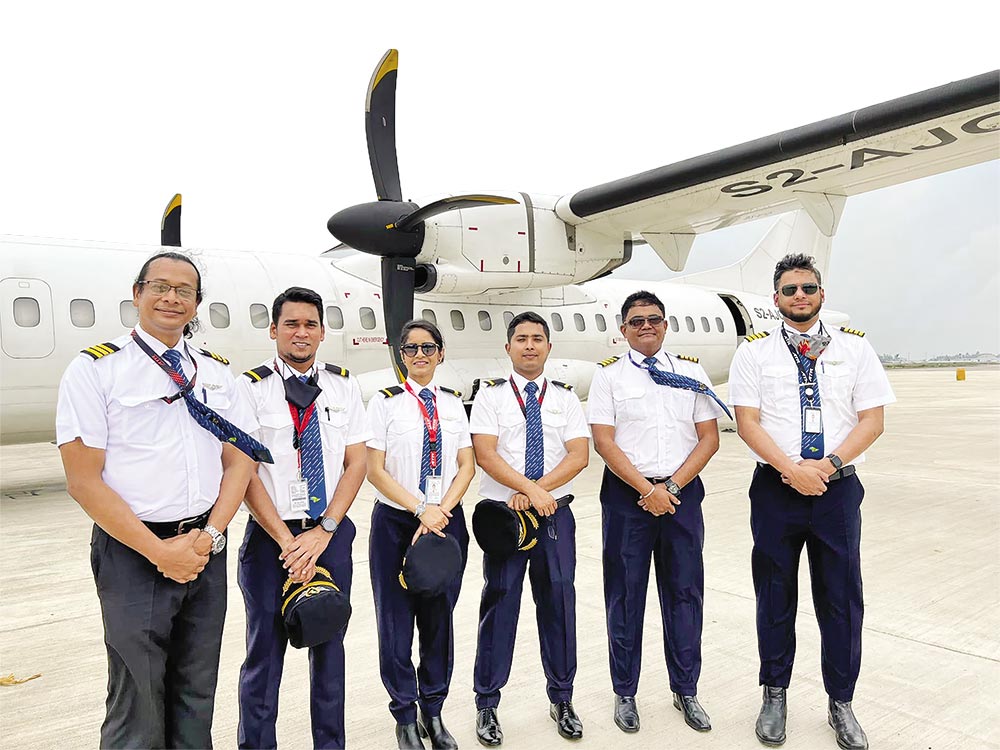 In the past, financial assistance and subsidies from CAAB helped support training operations. Renewed consideration of appropriate financial assistance, aircraft acquisition, fuel support, and scholarships could help make pilot training more accessible while strengthening institutional sustainability.
Developing quality training opportunities at home would reduce dependence on overseas training, create employment opportunities, and help Bangladesh build a skilled aviation workforce. The professional achievements of pilots trained in Bangladesh who have pursued careers at home and abroad demonstrate the potential of domestic aviation education.
Pilot training should be viewed as a strategic investment in the country's aviation future, not merely an operational expense.
A Collective Responsibility: Reviving Bangladesh Flying Club requires coordinated efforts from the Ministry of Civil Aviation and Tourism, CAAB, Biman Bangladesh Airlines, US-Bangla Airlines, and other relevant stakeholders.
A practical recovery plan should prioritise restoring essential infrastructure, ensuring access to suitable training aircraft, strengthening financial management, improving training standards, and introducing scholarships for deserving students.
Partnerships with airlines and aviation organisations could also help align training programmes with industry requirements. Any government support should be transparent, accountable, and linked to measurable improvements in training quality, safety, and operational performance.
Let Bangladesh Flying Club Fly Again: My connection with Bangladesh Flying Club is both personal and professional. Having received pilot training through this institution, I understand its importance in shaping the aspirations and careers of future aviators.
Preserving this historic institution is about more than honouring the past. It is about creating opportunities for the next generation and strengthening Bangladesh's ability to meet its growing aviation workforce needs.
As the country invests in aircraft and airport infrastructure, equal importance must be given to developing the skilled professionals who will sustain that progress.
The future of Bangladesh's aviation sector must be built not only on the aircraft we acquire but also on the talent we develop at home.
Bangladesh Flying Club deserves not only to survive but to rise again as a centre of excellence in pilot training. Its revival would preserve a proud aviation legacy while contributing to a more capable, self-reliant, and sustainable aviation industry.
The writer is a pilot, instructor and aviation specialist, Member, Executive Committee (Academic and Engineering), Bangladesh Flying Club)

Loading...
Loading...
Also read



Editor : Iqbal Sobhan Chowdhury
Published by the Editor on behalf of the Observer Ltd. from Globe Printers, 24/A, New Eskaton Road, Ramna, Dhaka.
Editorial, News and Commercial Offices : Aziz Bhaban (2nd floor), 93, Motijheel C/A, Dhaka-1000.
Phone: PABX- 41053001-06; Advertisement: 41053012; 01793317829, 01550707291, 01550707296
E-mail: [email protected], [email protected]. [email protected], [email protected], [email protected], [email protected], Online-email: [email protected]


