



| HEADLINE |

|

Kanchanjangha, world’s third-highest mountain, is a must-see
Published : Tuesday, 10 November, 2026 at 12:00 AM
Our Correspondent, Panchagarh


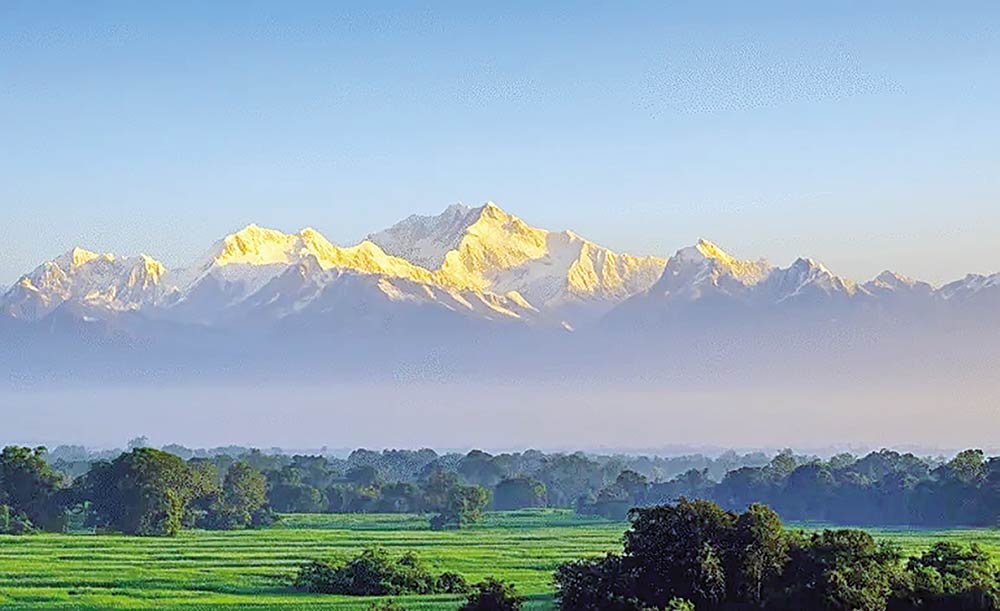 They travelled hundreds of kilometres with one dream-to stand on the northern edge of Bangladesh and witness the majestic, snow-covered Kanchanjunga rising against the Himalayan horizon. Some came from Dhaka, Chattogram and Sylhet, while others travelled from different districts with family, friends and colleagues.
But for many visitors arriving in Tetulia, Panchagarh, the much-anticipated mountain view has remained elusive. Persistent clouds and light fog have concealed the world's third-highest mountain for days, leaving tourists waiting anxiously for a glimpse of its snow-covered peaks. Some are returning home disappointed, while others are extending their stay in the hope that the weather will improve.
The disappointment, however, has not diminished the appeal of Bangladesh's northernmost upazila. Its winter mornings, sprawling tea gardens, the Mahananda River and the peaceful border landscape continue to attract visitors. Yet the growing popularity of Tetulia has exposed another problem: a serious shortage of accommodation and basic tourist facilities.
Every year, the arrival of autumn and the onset of winter bring a rush of domestic tourists to Tetulia. Generally, October and November offer favourable conditions for viewing Kanchanjunga, when the sky remains relatively clear and visibility improves. This year, the mountain briefly appeared on October 13 and 14. Images of the spectacular Himalayan peaks quickly circulated through news outlets and social media, encouraging more people to visit the area.
The 8,586-metre mountain is renowned for its five prominent peaks and extensive snow-covered slopes. Although hundreds of kilometres away, its magnificent silhouette can be seen from parts of Panchagarh under favourable atmospheric conditions.
At 8,586 metres, Kanchanjunga is the world's third-highest mountain, after Mount Everest and K2. Located along the Nepal-India border, it is renowned for its five prominent peaks and extensive snow-covered slopes. Although hundreds of kilometres away, its magnificent silhouette can be seen from parts of Panchagarh under favourable atmospheric conditions.
The banks of the Mahananda River in Tetulia, particularly around the Dak Bungalow area, are among the most popular viewing points. Visitors often arrive before sunrise, hoping to watch the mountain gradually emerge as daylight spreads across the northern horizon.
"We came with a lot of expectations of seeing Kanchanjunga, but we could not get a glimpse of it. I am very disappointed and returning home," said Alauddin Islam, who travelled from Kishoreganj in Nilphamari with several friends.

Saiful Alam, who came from Kushtia with a group of teachers, said they were still waiting for the weather to improve.
"We travelled together with the hope of seeing the mountain. Unfortunately, the weather was not favourable. We are deeply disappointed, but we are still waiting and hoping to see it," he said.
More than a mountain view: For those unable to see Kanchanjunga, Tetulia offers plenty of reasons to explore its natural surroundings. The cool morning breeze, mist-covered countryside, green tea plantations and the tranquil Mahananda River create an atmosphere rarely found in the country's crowded urban centres.
The tea gardens are among the region's most attractive features. Panchagarh has developed into an important tea-producing district outside the traditional tea-growing areas of Sylhet and Chattogram. Its extensive lowland tea plantations have transformed the rural landscape into stretches of green, attracting visitors throughout the tourism season.
The Mahananda River is another major attraction. Its riverbank offers opportunities to enjoy sunrise, take photographs and experience the distinctive beauty of the Bangladesh-India border. Across the river, visitors can see parts of India's landscape, including tea gardens.
Jafor Ilias, who travelled from Chattogram, said the mountain's absence had not entirely disappointed him.
"Although Kanchanjunga is not visible, there are many places worth visiting in Tetulia. The Mahananda River and the Indian tea gardens across it are particularly beautiful. We have also been impressed by the security arrangements," he said.
He, however, pointed to the difficulty of finding accommodation. His group managed to arrange only two rooms in a local house, while many other visitors were reportedly spending the night moving around different areas in search of shelter.
Beyond Tetulia, Panchagarh has considerable potential for historical and cultural tourism. Banglabandha Zero Point, near the international borders with India, Nepal and Bhutan, is a distinctive destination. The nearby Banglabandha Land Port is an important regional trade gateway and adds to the geographical significance of the area.
Bhitargarh, one of the country's important archaeological sites, offers visitors an opportunity to explore the remains of an ancient fortified settlement. Other notable attractions include Maharaja Dighi, Mirzapur Shahi Mosque, Golokdham Temple in Debiganj, Bodeshwari Temple in Boda and the Rocks Museum in Panchagarh town.
Together, these attractions could help establish the district as a destination for nature, heritage and cultural tourism rather than a place visited only during the Kanchanjunga viewing season.
Accommodation shortage: The growing number of visitors, however, has placed considerable pressure on the limited accommodation facilities in Tetulia.
According to local sources, the upazila has around 35 to 40 government and privately operated hotels, resorts, bungalows and guesthouses. These include Tetulia District Council Dak Bungalow, Berong Complex, the Roads and Highways Department bungalow, Tea Valley Green Resort, Meghkunja Resort, Kazi Brothers Residential Hotel and Hotel Simanter Par, alongside several newly established facilities.
Most accommodation facilities remained fully booked through October 31, particularly during the extended holidays surrounding Durga Puja and weekly weekends.
Many tourists who arrived without advance reservations struggled to find rooms. Some approached local residents for accommodation, while others spent the night around the Mahananda riverbank, Tetultala and other open spaces.
Jainal Abedin, who travelled from Shibganj in Bogura with his family, said they had primarily come to see the mountain.
"Although we could not see Kanchanjunga because of the fog, we enjoyed the surroundings and the winter morning. The weather itself was a different experience," he said.
Local entrepreneur Ujjal said the sudden rise in tourist arrivals following reports of Kanchanjunga becoming visible highlighted the need for planned tourism infrastructure.
"Accommodation alone is not enough. We need adequate public toilets, parking facilities, information centres and other essential services to manage the growing number of visitors," he said.
He added that tourism could generate employment and income for local communities through transport services, restaurants, small businesses, tea-related activities and accommodation facilities.
New facilities planned: Panchagarh Deputy Commissioner Shukria Parveen acknowledged that accommodation shortages become particularly acute during the peak tourism season.
"The tourism season in Panchagarh generally begins in late September and continues until February. Kanchanjunga is one of the main attractions, but visitors also come to enjoy the tea gardens and the distinctive winter atmosphere," she said.
She said the district and upazila administrations had jointly taken initiatives to expand accommodation facilities. "We have started constructing two additional accommodation rooms and hope they will be completed within the next one to one-and-a-half months. We have also submitted a proposal to the Bangladesh Parjatan Corporation for establishing a modern rest house in the district," she said.
The administration is also considering the construction of a watchtower to provide visitors with a better opportunity to enjoy the surrounding landscape and mountain views.
For now, tourists continue to look towards the distant Himalayan horizon, waiting for the clouds to part and Kanchanjunga to reveal its magnificent snow-covered peaks. But the growing crowds in Tetulia suggest that the mountain is only part of Panchagarh's tourism story. Its rivers, tea gardens, archaeological heritage and border landscape offer attractions that deserve greater attention throughout the year.
With improved accommodation, visitor facilities, proper planning and investment, Panchagarh could transform its seasonal popularity into a sustainable tourism industry-one that offers visitors much more than the fleeting sight of a distant Himalayan mountain.

Loading...
Loading...
Also read



Editor : Iqbal Sobhan Chowdhury
Published by the Editor on behalf of the Observer Ltd. from Globe Printers, 24/A, New Eskaton Road, Ramna, Dhaka.
Editorial, News and Commercial Offices : Aziz Bhaban (2nd floor), 93, Motijheel C/A, Dhaka-1000.
Phone: PABX- 41053001-06; Advertisement: 41053012; 01793317829, 01550707291, 01550707296
E-mail: [email protected], [email protected]. [email protected], [email protected], [email protected], [email protected], Online-email: [email protected]


