



| HEADLINE |

|

Govt mandates video recording for all mobile court drives
Published : Tuesday, 10 November, 2026 at 12:19 PM
Observer Online Report


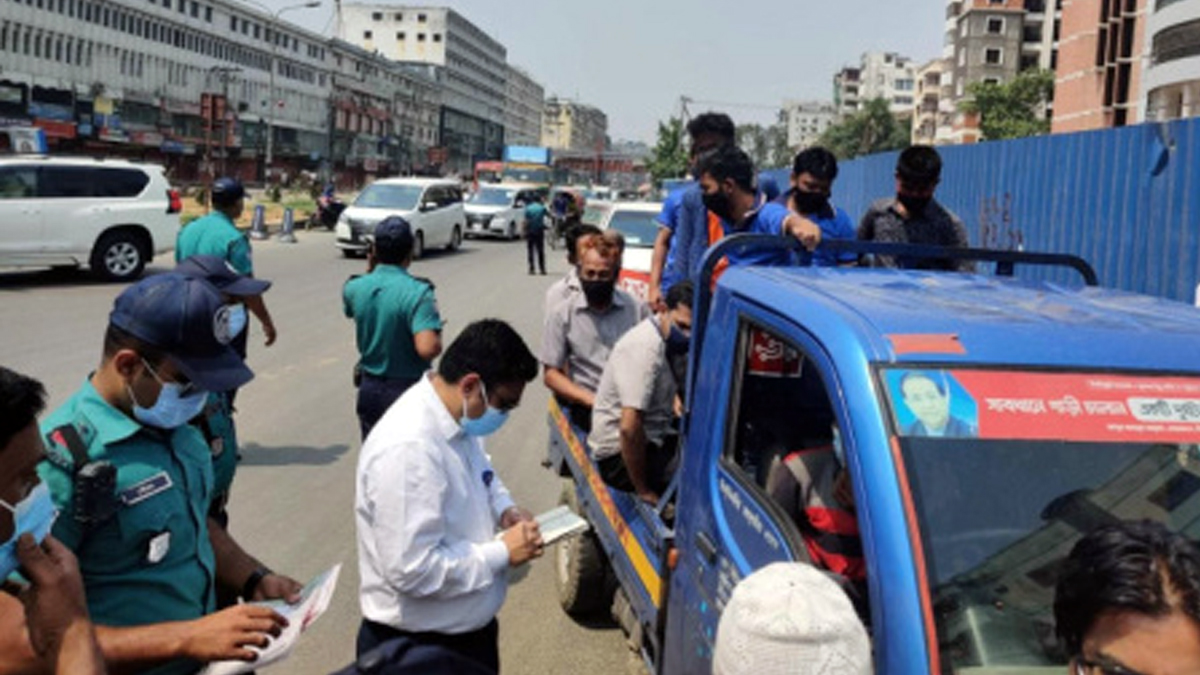
Symbolic Photo
The government has taken a series of comprehensive steps to ensure transparency, accountability, and increased effectiveness in mobile court operations across the country, according to two circulars issued by the Cabinet Division on November 1 and 2, which mandate that all mobile court drives and operations must be video recorded.
The latest policy directives stem from decisions made during an October 4 meeting chaired by the Prime Minister, which reviewed and implemented recommendations formulated by a committee led by the Adviser for Public Administration.
Key Measures and Operational Guidelines
Mandatory Video Documentation: Every mobile court operation must be video-recorded. These recordings will be systematically preserved in the JM branch of the District Magistrate's office and relevant departments according to case numbers and dates. Under amended evidence laws permitting digital content as admissible evidence, these videos will be presented in appellate courts as proof against convictions. Copies will also be provided to newly established media cells.
District Media Cells: Each district will form a specialized media cell—convened by an Additional District Magistrate or Additional Deputy Commissioner—to collect, edit, and publicize videos, photographs, and information regarding mobile court operations across government websites, mass media, and social media platforms to foster public awareness.
Secure Seized Goods Management: Designated secure rooms and facilities must be established in every district administration and relevant office to store seized items. A dedicated register will track the chain of custody, requiring monthly physical verification and countersignatures by responsible officials. Perishable items will be disposed of promptly under existing legal frameworks.
Streamlined Appeal Proceedings: To robustly handle appeals against mobile court verdicts, District Magistrates will consult Public Prosecutors (PP) to assign specific cases to dedicated government lawyers (PPs, Additional PPs, and Assistant PPs) for lower and sessions courts.
Monthly Executive Magistracy Coordination Meetings: Districts are instructed to hold monthly coordination meetings—convened by the Additional District Magistrate and chaired by the District Magistrate—to review case disposal rates, monitor Mobile Court Act operations, oversee the Land Crime Prevention and Remedy Act, and resolve inter-departmental administrative challenges.
Staff Training: Divisional Commissioners, in consultation with the Cabinet Division, will arrange specialized training programs within a month for designated court assistants and peshkars handling mobile court documentation.
-SA

Loading...
Loading...
Also read








Editor : Iqbal Sobhan Chowdhury
Published by the Editor on behalf of the Observer Ltd. from Globe Printers, 24/A, New Eskaton Road, Ramna, Dhaka.
Editorial, News and Commercial Offices : Aziz Bhaban (2nd floor), 93, Motijheel C/A, Dhaka-1000.
Phone: PABX- 41053001-06; Advertisement: 41053012; 01793317829, 01550707291, 01550707296
E-mail: [email protected], [email protected]. [email protected], [email protected], [email protected], [email protected], Online-email: [email protected]


