



| HEADLINE |

|

Climate Shock Threatens to Wipe Out Bangladesh’s Growth
Published : Wednesday, 11 November, 2026 at 12:00 AM
Faruk Ahmed


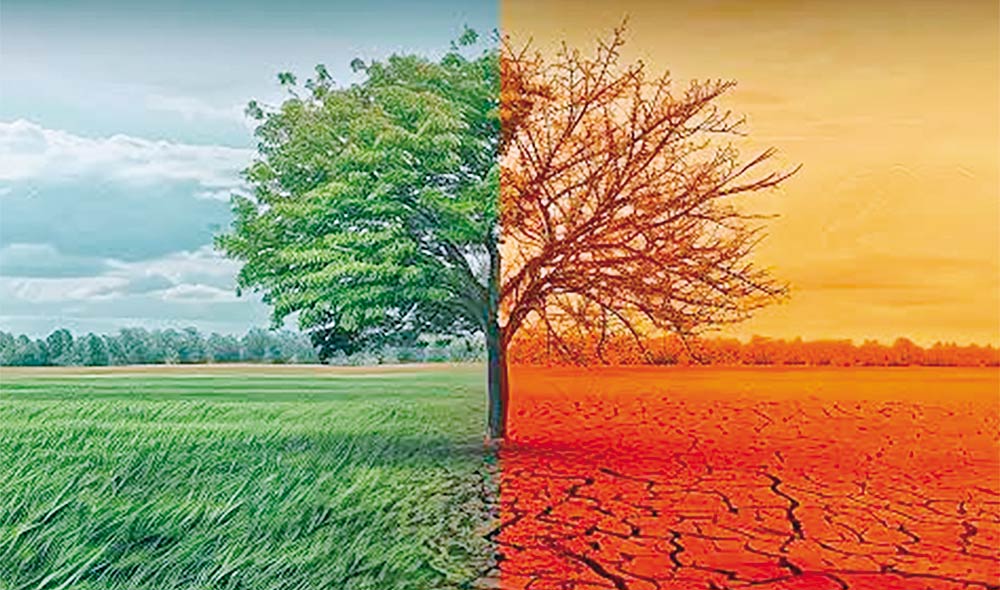 Bangladesh is losing billions of dollars annually to a climate crisis it did little to create. Natural disasters already cost the country an estimated US$3 billion a year, while rising temperatures, devastating floods, cyclones and coastal erosion threaten to inflict an even heavier economic toll, undermining growth, industrial competitiveness and millions of livelihoods.
The World Bank paints an alarming future: climate-related flooding and declining agricultural and labour productivity could cost Bangladesh 2 per cent of GDP by 2050 under a moderate climate scenario and nearly 4 per cent under a severe scenario. A separate assessment warns that severe flooding alone could reduce GDP by as much as 9 per cent against the baseline.
The damage is already mounting. The government has cited an estimated US$15.2 billion in annual climate-related economic losses, while a recent Knowledge Hub Institute study puts the annual economic burden of climate-sensitive health risks at US$20.7 billion, equivalent to 4.6 per cent of GDP in 2024. These estimates cover different aspects of climate damage and should not be added together, but both expose the staggering cost of the crisis.
As world leaders gather in Antalya, Türkiye, for COP31, Bangladesh is demanding climate justice, predictable grant-based financing, technology transfers and stronger international support for adaptation and loss and damage. Yet the pressing question is whether Dhaka can mobilise sufficient resources and translate its ambitious climate plans into effective economic protection.
The Knowledge Hub Institute's study, released in Dhaka on October 29, estimates that heat exposure alone cost Bangladesh US$15.8 billion in lost economic output in 2024, with 29.3 billion potential working hours lost. Farmers and agricultural workers accounted for nearly two-thirds of the lost hours.
A separate World Bank study published in September 2025 estimated that heat-related health problems caused 250 million lost workdays in 2024, costing the economy up to US$1.78 billion. The Bank also found that maximum temperatures had increased by 1.1 degrees Celsius since 1980, while perceived temperatures had risen by 4.5 degrees.
The disaster burden is equally devastating. The World Bank estimates average annual losses from tropical cyclones alone at around US$1 billion, equivalent to 0.7 per cent of GDP. Its climate assessment warns that climate variability and extreme weather could wipe out one-third of agricultural GDP by 2050. Around 13.3 million people could become internal climate migrants as livelihoods, water availability and coastal communities come under increasing pressure.
These are no longer distant projections. Salinity intrusion, erratic rainfall, prolonged flooding and extreme heat are threatening agricultural production, food security and rural employment. Floods and cyclones disrupt roads, ports, power supplies and industrial operations.
Prime Minister Tarique Rahman is expected to highlight Bangladesh's disproportionate vulnerability and demand greater responsibility from major carbon emitters.
Bangladesh's updated climate commitments target a 20.31 per cent reduction in greenhouse gas emissions by 2035, requiring approximately US$116.18 billion over 2026-2035, including US$90.23 billion in international support.
The government has also announced plans to plant 250 million trees over five years, excavate around 20,000 kilometres of rivers and canals, pursue the Padma Barrage and implement the Teesta Barrage master plan. It aims to generate 20 per cent of electricity demand from renewable sources by 2030.
These initiatives could strengthen water security, agricultural productivity and energy independence. But ambitious announcements will mean little without adequate financing, transparent procurement, institutional coordination and timely implementation. Delayed projects, weak monitoring and limited institutional capacity remain serious obstacles.
The private sector is another underutilised source of climate investment. Banks, insurers and industrial groups could finance renewable energy, energy-efficient factories, resilient infrastructure and sustainable agriculture. Yet high borrowing costs, regulatory uncertainty and inadequate long-term financing continue to discourage investment.
Bangladesh must also avoid financing its climate emergency through additional debt. Vulnerable economies need predictable grants, technology transfers and accessible international funds rather than loans that further strain public finances.
The challenge is particularly serious as Bangladesh prepares for its transition from least developed country status. It cannot finance climate adaptation entirely through domestic resources while simultaneously funding industrialisation, infrastructure, employment and social protection.
COP31 must deliver more than diplomatic declarations. For Bangladesh, the real test is whether major emitters turn their commitments into accessible finance and practical assistance before further climate shocks erode the country's development gains.
Climate change is no longer merely an environmental emergency; it is an economic assault on national income, industrial competitiveness, food security and millions of livelihoods. Every year of delayed adaptation increases the eventual bill.
Bangladesh needs climate justice from the world, but it also needs accountable institutions, disciplined spending and urgent action at home. Its economic future increasingly depends on winning both battles.

Loading...
Loading...
Also read



Editor : Iqbal Sobhan Chowdhury
Published by the Editor on behalf of the Observer Ltd. from Globe Printers, 24/A, New Eskaton Road, Ramna, Dhaka.
Editorial, News and Commercial Offices : Aziz Bhaban (2nd floor), 93, Motijheel C/A, Dhaka-1000.
Phone: PABX- 41053001-06; Advertisement: 41053012; 01793317829, 01550707291, 01550707296
E-mail: [email protected], [email protected]. [email protected], [email protected], [email protected], [email protected], Online-email: [email protected]


