



| HEADLINE |

|

Tarique Rahman proposes 5-point plan to address climate crisis
Published : Thursday, 12 November, 2026 at 6:02 PM
Jahid Biplob, Antalya (Turkey)


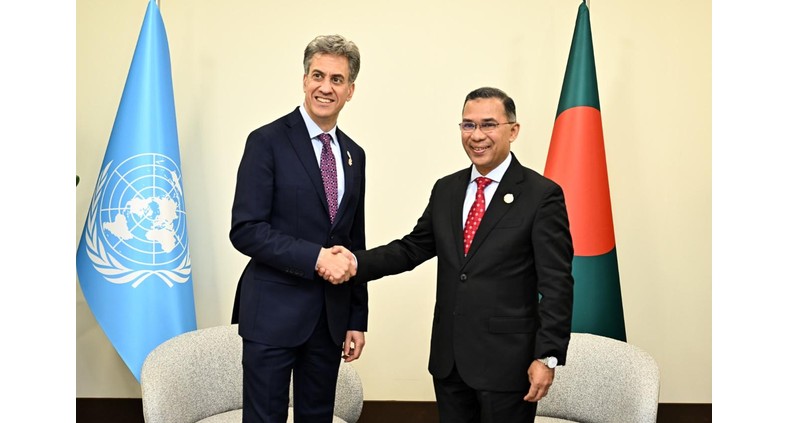
Prime Minister Tarique Rahman has called for reforms to the existing global climate financing system, demanding grant-based assistance instead of loans for countries vulnerable to climate change.
He also presented a five-point proposal focusing on climate adaptation, technology transfer, debt relief facilities, the transition to renewable energy and capacity development. The Prime Minister also announced a plan to plant 250 million trees across the country over the next five years to build a climate-resilient economy.
He made these proposals while addressing a high-level session of the United Nations Climate Change Conference, COP31, in Antalya, Turkey, on Thursday.
The Prime Minister said Bangladesh is responsible for less than 0.5 percent of global greenhouse gas emissions, yet the country is facing the devastating impacts of climate change.

Countries on the frontlines of climate change need reliable financial assistance, access to modern technology and strong support for adaptation initiatives. Climate-related losses and damages, coupled with growing debt burdens and limited financial resources, are making the situation even more difficult for these countries. Therefore, vulnerable countries should receive grants instead of being burdened with additional loans, he said.
Tarique Rahman said at least 50 percent of international climate finance should be allocated to adaptation initiatives.
He also called for introducing climate-resilient debt clauses and debt-relief facilities such as debt-for-climate swaps, ensuring equitable access to environmentally friendly technologies, providing affordable financing for the transition to renewable energy and undertaking capacity-building initiatives. He also proposed the adoption of a 'Belém-Antalya Action Mechanism' at COP31 based on fair financing and trade.
Referring to Bangladesh's one-trillion-dollar ambition to build a climate-resilient and sustainable economy, the Prime Minister said economic growth and environmental protection must go hand in hand.
Highlighting various government initiatives to address climate change, he said the government has set a target of meeting 20 percent of the country's electricity demand from renewable sources by 2030. An initiative has been taken to generate 4,000 megawatts of solar power through special tax incentives. In addition, work is underway to generate energy from waste, expand electric vehicles and environmentally friendly transportation systems, and develop a national framework for carbon trading.
The Prime Minister said Bangladesh currently has around 300 LEED-certified garment factories. The government has planned to plant 250 million trees over the next five years. In addition, initiatives have been undertaken under the Padma and Teesta Barrage Master Plans and through the excavation of 20,000 kilometres of rivers and canals to conserve water, reduce flood risks, restore wetlands and raise groundwater levels. Mangrove forest restoration work is also underway in coastal areas.
Referring to the philosophy of 'Bangladesh First', Tarique Rahman said nature must be protected and ecological balance maintained throughout the industrialisation and development process. He also emphasised engaging women and young people in climate action, creating decent green jobs and reducing global greenhouse gas emissions.
Thanking the Turkish government for hosting COP31, the Prime Minister also expressed his appreciation to Australia for its leadership in the negotiation process. He said Bangladesh expects a successful COP31, particularly one that delivers meaningful, balanced and ambitious outcomes for countries most vulnerable to climate change. He called for turning commitments into action and strengthening global solidarity.
Prime Minister Seeks Australian Cooperation on Investment and Rohingya Repatriation
Meanwhile, Prime Minister Tarique Rahman held a bilateral meeting with Australian Prime Minister Anthony Albanese on the sidelines of COP31 in Antalya. The meeting took place at around 10:30 am on Thursday. Hasan Shiplu, Deputy Press Secretary to the Prime Minister, confirmed the development.
He said the two leaders discussed various issues of mutual interest, including addressing the impacts of climate change, expanding Australian investment in Bangladesh and repatriating Rohingyas to their homeland.
During the meeting, Tarique Rahman invited the Australian Prime Minister to visit Bangladesh. In response, Anthony Albanese expressed hope that he would visit Bangladesh at a convenient time next year.
The Bangladeshi Prime Minister emphasised prioritising the needs of developing and particularly climate-vulnerable countries in addressing the impacts of climate change. He also sought Australia's cooperation in increasing Australian investment in Bangladesh and ensuring the safe repatriation of Rohingyas.
Praising Australia's leadership role in the ongoing COP31 negotiation process, Tarique Rahman said Bangladesh offers significant opportunities for foreign investment. The two Prime Ministers also discussed the development of the agricultural sector.
Emphasising the need for a lasting solution to the Rohingya crisis through their safe repatriation to Myanmar, the Prime Minister called on Australia to intensify its diplomatic efforts. He said the Rohingya crisis originated in Myanmar, and its lasting solution also lies in Myanmar.
During the meeting, the Prime Minister also highlighted Bangladesh's plans for the renewable energy sector. He said the government has taken an initiative to meet 20 percent of the country's total electricity demand from renewable sources by 2030. He also outlined various government programmes to protect the environment and address the impacts of climate change, including planting 250 million trees across the country and excavating canals.
Prime Minister Visits Bangladesh's Jute Pavilion
Earlier on Thursday, Prime Minister Tarique Rahman visited Bangladesh's Jute Pavilion in the Green Zone of the COP31 conference. He toured the environmentally friendly jute products displayed there. During the visit, he also spoke with a group of students from the University of Chicago in the United States.
The Prime Minister arrived at the pavilion at around 10:00 am local time, where he was welcomed by State Minister for Foreign Affairs Shama Obaed and State Minister for Environment, Forest and Climate Change Sheikh Faridul Islam.
After viewing various Bangladeshi jute products at the pavilion, the Prime Minister asked the students about their interest in these products. The students expressed their interest in learning more about Bangladesh's environmentally friendly jute products and studying the subject further.
At the time, the Prime Minister said everyone must work together to protect the environment and ensure that people can live healthy and better lives.
Officials responsible for the pavilion informed the Prime Minister that 129 types of jute products, including bags, shoes and blazers, were being displayed there. These environmentally friendly products have significant potential in international markets. Representatives from different countries have visited the pavilion and expressed interest in importing the products.
Foreign Minister Khalilur Rahman, Minister for Environment, Forest and Climate Change Abdul Awal Mintoo, and State Minister for Foreign Affairs Humayun Kabir were also present.
Climate Finance and Urban Resilience Take Centre Stage on Fourth Day of COP31
Meanwhile, on the fourth day of the ongoing COP31 conference in Antalya, discussions among world leaders focused on climate finance, implementation of the Paris Agreement, climate resilience of cities and infrastructure, clean energy and reducing greenhouse gas emissions.
Heads of state and government from different countries, United Nations representatives, international organisations, climate experts and policymakers took part in the day's discussions. The main theme of the day was 'Resilient Cities and Built Environment'. Emphasis was placed on new investments and effective measures in urban planning to address floods, heatwaves, water shortages, rising sea levels and infrastructure-related risks.
Against the backdrop of the Paris Agreement entering its second decade, one of the day's major topics was the implementation of commitments and ensuring developing countries' access to climate finance. A high-level roundtable titled 'The Second Decade of the Paris Agreement: Accelerating Implementation and Access to Finance' was held on the issue.
In addition, a high-level dialogue titled 'Urban Resilience, Adaptation and Climate Action' focused on strengthening the climate resilience of cities, controlling waterlogging and floods, improving water management, developing sustainable infrastructure and protecting the livelihoods of urban residents.
At the event titled 'Global Grids Accelerator: Power for Future—Grids for Energy Security and Prosperity', organised at the initiative of the UN Secretary-General, discussions focused on modernising electricity transmission and distribution systems, cross-border electricity connectivity, increasing the use of renewable energy and aligning energy security with climate targets.
A Leaders' Summit on non-carbon dioxide greenhouse gases highlighted the need to reduce emissions of methane and other potent greenhouse gases and strengthen international cooperation in this regard. At the same time, a discussion titled 'REDD+ as a Catalyst' was held on results-based financing in the forest and land-use sectors.
The future of mountains, glaciers and snow-covered regions was also discussed in important sessions. At a session titled 'Advancing the Mountain Agenda', participants discussed glacier melting, changes in water availability, risks faced by mountain communities and sustainable financing for adaptation.
In addition, high-level meetings were held on promoting clean cooking fuels in Africa and strengthening African leadership in climate adaptation and sustainable development.
Overall, the conference discussions are placing emphasis on implementing climate commitments, ensuring fairness in climate financing and strengthening the adaptation capacity of countries vulnerable to climate change.

Loading...
Loading...
Also read






Editor : Iqbal Sobhan Chowdhury
Published by the Editor on behalf of the Observer Ltd. from Globe Printers, 24/A, New Eskaton Road, Ramna, Dhaka.
Editorial, News and Commercial Offices : Aziz Bhaban (2nd floor), 93, Motijheel C/A, Dhaka-1000.
Phone: PABX- 41053001-06; Advertisement: 41053012; 01793317829, 01550707291, 01550707296
E-mail: [email protected], [email protected]. [email protected], [email protected], [email protected], [email protected], Online-email: [email protected]


