



| HEADLINE |

|

Putin wants 150 yr lifespan
Published : Friday, 13 November, 2026 at 8:15 AM
Observer Online Report


Collected Photo
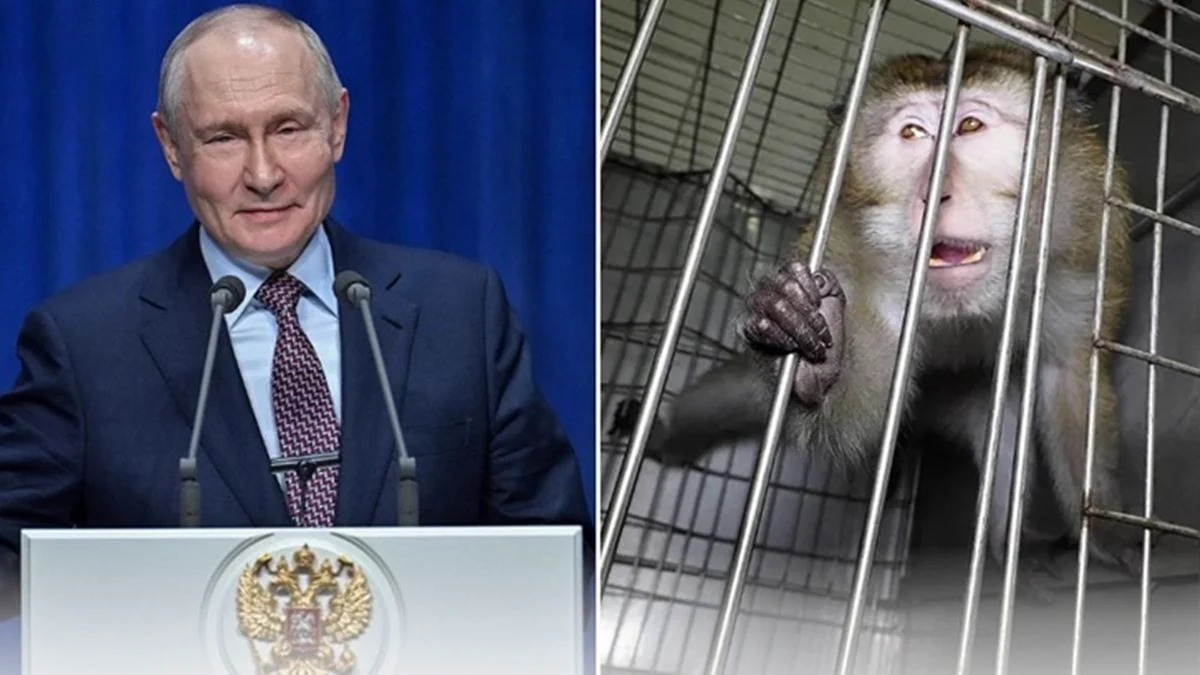
Russian scientists are conducting extensive tests on ageing monkeys to unlock the secrets of longevity, aligning with President Vladimir Putin’s ambition to extend the human lifespan to 150 years.
The mysterious scientific mission revolves around the 74-year-old Russian leader's desire for a prolonged life, placing thousands of primates at the centre of research aimed at discovering formulas to extend human longevity. Nothing is being left off the testing list, from their blood, brains, and blood vessels to their internal organs.
According to reports from international media outlets including British newspapers the Daily Mail and The Sun, the research is led by 80-year-old Mikhail Kovalchuk, a close associate and informal science adviser to Putin. The Kurchatov Institute, one of Russia’s premier research facilities headed by Kovalchuk, houses over 7,000 monkeys across 22 species. The study specifically focuses on a group of long-lived primates aged between 18 and over 30 years.
Studying primate biology and biobanks
Speaking recently at the Kurchatov Genome Forum in Moscow, Kovalchuk stated that various stages of ageing in these monkeys are being closely monitored. Researchers are examining their biochemical components, vascular health, brains, and internal organs, alongside conducting comprehensive health check-ups including brain scans.
He explained that because primates share the closest physiological similarities with humans, studying these monkeys could help lay the foundation for extending human lifespans.
Beyond physical testing, Russian researchers have established a dedicated biobank to preserve blood samples from long-lived monkeys. The project is being run jointly with the Petrovsky Russian Scientific Centre of Surgery.
According to the centre's director, Konstantin Kotenko, analysing these jjjsamples could yield crucial insights into the biological mechanisms of ageing.
Putin’s 150-year ambition and broader state funding
Speculation linking the research to Putin’s personal desire for longevity has gained traction across various circles. During a visit to China in September 2025, Putin was overheard on a hot mic discussing the possibility of humans living up to 150 years with Chinese President Xi Jinping. The conversation touched upon extending human life—and potentially achieving immortality—through organ transplants and advancements in biotechnology.
Later, at an artificial intelligence exhibition in Moscow, Putin remarked that living to 150 could be possible for humans, though he opined that even such an age would not be enough.
Primate studies are not Russia’s only scientific initiative aimed at extending human life. Ongoing research also includes 3D bioprinting of living tissues and organs, growing human organs inside genetically modified miniature pigs, and gene therapies designed to slow down cellular ageing. Authorities have drawn up plans to allocate approximately 18 billion roubles towards longevity and health-preservation technology projects between 2027 and 2029.
Putin’s daughter, Maria Vorontsova, an endocrinologist by profession, is also involved in these life-extension efforts. She recently appeared on state television to discuss plans for developing anti-ageing medications.
While Putin aims to challenge the natural limits of human lifespan through science, there is still no guarantee that uncovering ageing mechanisms in monkeys will enable humans to live to 150. Only time will tell how successful Russia's mission to outsmart mortality will prove to be.
-SA

Loading...
Loading...
Also read






Editor : Iqbal Sobhan Chowdhury
Published by the Editor on behalf of the Observer Ltd. from Globe Printers, 24/A, New Eskaton Road, Ramna, Dhaka.
Editorial, News and Commercial Offices : Aziz Bhaban (2nd floor), 93, Motijheel C/A, Dhaka-1000.
Phone: PABX- 41053001-06; Advertisement: 41053012; 01793317829, 01550707291, 01550707296
E-mail: [email protected], [email protected]. [email protected], [email protected], [email protected], [email protected], Online-email: [email protected]


