



| HEADLINE |

|

World this week: Top global stories
Nov 7-13, 2026
Published : Friday, 13 November, 2026 at 5:35 PM
Observer Online Report



Global tensions intensified this week as Iran and its allies targeted US and Saudi interests, Israeli strikes killed civilians in Gaza, diplomatic efforts continued over the Ukraine war, and major developments in AI, trade, inflation and oil markets shaped the international agenda.
1. Iran claims strike on US military radar in Bahrain
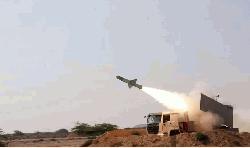
Iran's Islamic Revolutionary Guard Corps (IRGC) has claimed that it targeted a US early-warning radar system in Bahrain, marking the first reported claim of an attack on American military assets in a Gulf country since early September. Iranian state media said the operation was retaliation for a US airstrike on a telecommunications tower in southern Iran, although neither Washington nor Bahrain immediately confirmed the claim.
2. Houthis target Riyadh as Saudi Arabia intercepts missiles and drones
Yemen's Houthi movement launched missiles and drones towards Riyadh, Mecca and other Saudi regions on Wednesday (November 11), prompting Saudi air defences to intercept the attacks as tensions between the Iran-aligned group and the kingdom intensified. The Houthis also claimed attacks on Saudi energy infrastructure, including an oil pumping station at Yanbu, although Riyadh did not confirm the claim.
3. Israeli airstrike on Gaza hospital kills six despite ceasefire
An Israeli airstrike on the surgical wing of Nasser Hospital in southern Gaza killed at least six people, including a surgeon and a 13-year-old boy, and damaged operating rooms and patient wards, according to Palestinian health authorities. Israel said it targeted a Hamas commander allegedly operating from the hospital but did not provide evidence to support the claim. AP News
4. US seeks largest-ever prisoner exchange as Russia-Ukraine talks resume
The United States is working towards what could become the largest prisoner exchange of the Russia-Ukraine war, potentially reuniting thousands of people with their families, US envoy Jared Kushner said on Friday (November 13). Washington also secured agreement to include European countries in the next round of peace negotiations, although Moscow and Kyiv remain divided over territorial issues and security guarantees.
5. US, China discuss nuclear disarmament ahead of potential trilateral summit
The United States and China have discussed the importance of high-level negotiations on nuclear disarmament and international security, raising the possibility of a trilateral meeting involving Russian President Vladimir Putin. US Secretary of State Marco Rubio and Chinese Foreign Minister Wang Yi held discussions on Wednesday (November 11), as Washington sought to advance preparations for upcoming meetings involving Donald Trump and Xi Jinping. ReutersFeed
6. Nvidia CEO Jensen Huang resigns amid controversy over alleged ties
Nvidia chief executive Jensen Huang has resigned after 33 years leading the artificial intelligence chipmaker, following controversy surrounding his reported personal relationships and an alleged connection to a suspected Chinese spy. Chief Financial Officer Colette Kress has been named interim CEO, while the departure has raised questions about the company's leadership and the wider AI investment boom.
7. EU leaders launch first AI summit to challenge US and China
European Union leaders gathered in Dublin on Friday (November 13) for the bloc's first dedicated artificial intelligence summit, seeking to strengthen Europe's position in the global AI race through greater investment, improved funding and closer cooperation among member states.
8.US inflation accelerated to 4% year-on-year in October from 3.7% in September, raising concerns over further monetary tightening as rising prices spread across goods and services, including food, insurance and electronics. Federal Reserve officials have signalled that faster or larger interest rate increases may be necessary to bring inflation under control, potentially increasing borrowing costs for households and businesses.
9. China's trade surplus surpasses $1 trillion for first time
China's trade surplus exceeded $1 trillion for the first time, highlighting the country's strong export performance despite trade tensions and uncertainty surrounding global demand. The milestone comes as Beijing seeks to strengthen its manufacturing and export sectors amid competition with the United States and other major economies.
10. Brent crude falls below $90 as hopes grow for end to Iran war
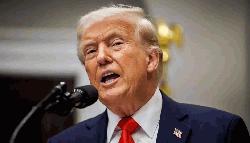
Brent crude prices fell below $90 a barrel for the first time since August as diplomatic efforts raised hopes of ending the nine-month Iran war and easing disruptions to global energy supplies. The decline followed signals from US President Donald Trump favouring negotiations, although continuing security risks around Gulf shipping routes remain a concern for oil markets.
Source: Reuters, BBC, Al Jazeera
-AH

Loading...
Loading...
Also read





Editor : Iqbal Sobhan Chowdhury
Published by the Editor on behalf of the Observer Ltd. from Globe Printers, 24/A, New Eskaton Road, Ramna, Dhaka.
Editorial, News and Commercial Offices : Aziz Bhaban (2nd floor), 93, Motijheel C/A, Dhaka-1000.
Phone: PABX- 41053001-06; Advertisement: 41053012; 01793317829, 01550707291, 01550707296
E-mail: [email protected], [email protected]. [email protected], [email protected], [email protected], [email protected], Online-email: [email protected]


