



| HEADLINE |

|

Iran-US tensions escalate as IAEA raises nuclear concerns
IRGC chief warns US of ‘devastating strikes’
Published : Saturday, 14 November, 2026 at 12:00 AM


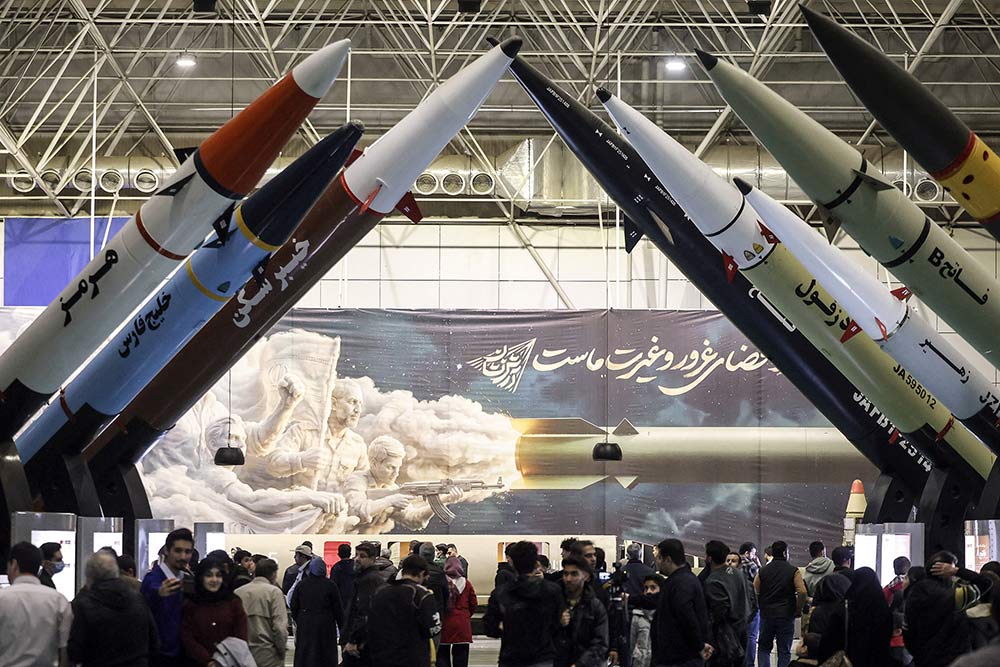 VIENNA, Nov 13: Iran has warned that any US aggression will trigger “devastating and painful strikes” as tensions continue to escalate across the Middle East, while the United Nations nuclear watchdog has expressed growing concern over Tehran’s refusal to allow inspections of a newly declared uranium-enrichment facility at Isfahan.
The International Atomic Energy Agency (IAEA) said in a confidential report to member states on Friday that it was “increasingly concerned” about the Isfahan Fuel Enrichment Plant (IFEP), which Iran declared to the agency in June 2025 but has not allowed inspectors to visit. The watchdog said it remained unaware of the facility’s exact location, operational status or whether it contained nuclear material.
The agency had planned to inspect the facility on June 13, 2025, but a bombing campaign by Israel and the United States began that day, preventing the visit. The strikes destroyed or severely damaged several of Iran’s uranium-enrichment facilities, including sites at Isfahan.
The IAEA also reiterated its demand that Iran provide information about the condition of its enrichment facilities and its stockpile of highly enriched uranium, including material close to weapons-grade levels. It warned that the lack of access to nuclear materials and facilities posed a serious proliferation concern and needed to be addressed urgently.
IAEA chief Rafael Grossi said in March that the agency believed a significant quantity of Iran’s most highly enriched uranium was stored in the tunnel complex at Isfahan. However, a senior diplomat said the location and status of the newly declared enrichment plant remained unknown.
Meanwhile, Iran's Islamic Revolutionary Guard Corps (IRGC) chief, Ahmad Vahidi, warned that any US attack would be met with severe retaliation.
“The enemy must learn from its repeated defeats, or it will face even greater lessons,” Vahidi said, according to Iranian media. His remarks followed an Iranian claim that its forces had struck a US early-warning radar system in Bahrain in retaliation for an American attack on a telecommunications tower in the southern Iranian port city of Sirik.
The US military said it had intercepted two Iranian attack drones heading towards Bahrain, which hosts the US Navy's Fifth Fleet and has been among the strongest critics of Tehran. Iran's Revolutionary Guard said the radar strike was intended as a warning to Washington to stop its attacks and aerial provocations.
The claims surrounding the radar attack could not be independently verified. Bahrain's Ministry of Information did not immediately respond to requests for comment.
IRGC Deputy Commander Major-General Mostafa Izadi also said the belief that US military bases guaranteed security had collapsed, describing American military power as a “paper tiger”. He warned that Iranian forces would confront threats at every level, without geographical limitations.
Iran has repeatedly targeted US military installations in neighbouring Gulf countries during the conflict, while some attacks have also affected energy and other infrastructure.
Tensions have also intensified around the strategically important Strait of Hormuz, a critical route for international oil and gas shipments. The IRGC Navy said a liquefied petroleum gas (LPG) tanker exploded after striking a naval mine while attempting to cross the eastern part of the waterway.
According to Iranian state media, the vessel ignored repeated warnings against using an unauthorised southern passage through the strait. The IRGC said the tanker had relied on protection from US fighter jets despite warnings about the dangers of the route.
The Revolutionary Guard warned that any vessel violating Iranian regulations and attempting to use unauthorised shipping routes could face similar consequences. However, the reported tanker explosion could not be independently verified, and there was no immediate confirmation from the United Kingdom Maritime Trade Operations, which monitors maritime security incidents.
�" AGENCIES

Loading...
Loading...
Also read



Editor : Iqbal Sobhan Chowdhury
Published by the Editor on behalf of the Observer Ltd. from Globe Printers, 24/A, New Eskaton Road, Ramna, Dhaka.
Editorial, News and Commercial Offices : Aziz Bhaban (2nd floor), 93, Motijheel C/A, Dhaka-1000.
Phone: PABX- 41053001-06; Advertisement: 41053012; 01793317829, 01550707291, 01550707296
E-mail: [email protected], [email protected]. [email protected], [email protected], [email protected], [email protected], Online-email: [email protected]


