



| HEADLINE |

|

Scientists’ 2026 doomsday prediction fails to come true


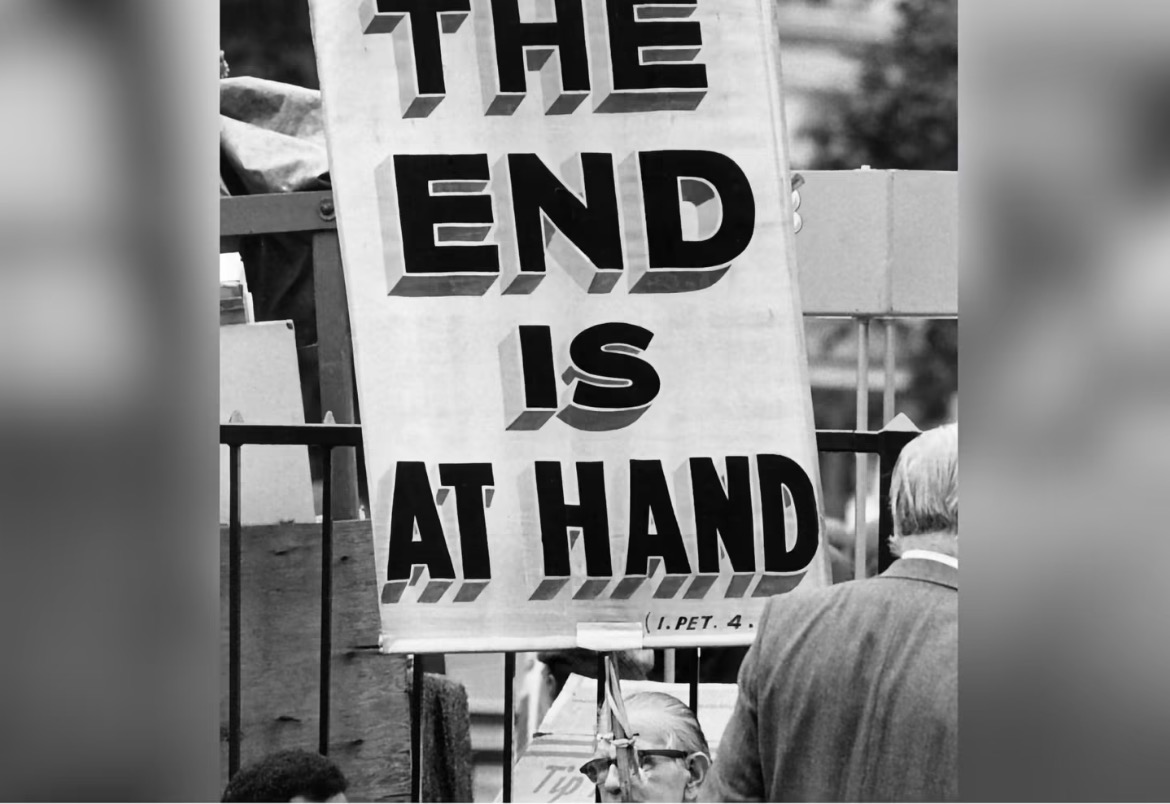
A 1960 scientific prediction that the world would reach doomsday on November 13, 2026, has failed to materialise, as the assumptions behind the mathematical model no longer reflect today’s population trends.
The prediction was made by Austrian-American physicist Heinz von Foerster and two colleagues in a paper published in the journal Science in November 1960, titled “Doomsday: Friday, 13 November, A.D. 2026.”
The researchers used historical population estimates spanning nearly 2,000 years to develop a mathematical model suggesting that the world’s population would approach infinity in November 2026 if growth continued at the same rate.
However, the specific date was partly a joke, according to mathematical biologist Joel Cohen, a professor at Rockefeller University.
“November 13 is von Foerster’s birthday. It was a joke,” Cohen told Newsweek.
He said the science did not support the exact date, adding that the model’s estimated doomsday had an error margin of plus or minus five and a half years.
Why was doomsday predicted?
The paper did not suggest that humanity would run out of food, land or energy. Instead, its authors warned that unchecked population growth could eventually leave people with insufficient space.
“Our great-great-grandchildren will not starve,” the researchers wrote. “They will be squeezed to death.”
At the time, population growth was becoming a major scientific and political concern. Falling death rates, driven by improvements in medicine, sanitation and food production, combined with high birth rates, raised fears that the world’s population would outgrow available resources.
These concerns gained wider public attention following the publication of Paul and Anne Ehrlich’s book The Population Bomb in 1968.
When the paper was published, the global population was approximately 3 billion. It has since surpassed 8 billion, but demographic trends have changed significantly.
Many countries are now facing declining birth rates, ageing populations and shrinking workforces rather than uncontrolled population growth.
A recent Federal Reserve analysis also highlighted this shift in the global debate, noting that concerns have increasingly moved towards falling birth rates despite the world’s population exceeding 8 billion.
A prediction that lost accuracy
Alan MacEachern, a professor of history at Western University and a fellow of the Royal Society of Canada, said the paper combined serious demographic analysis with a deliberately dramatic presentation.
He told Newsweek that he did not believe the researchers genuinely expected the world to end on November 13, 2026.
According to MacEachern, the mathematical model produced relatively accurate global population projections from the 1960s through the 1980s. However, its accuracy began to decline around 1993, roughly halfway to the predicted doomsday.
Cohen said the model failed to account for the possibility that people would choose to have fewer children.
“That’s what has happened,” he said.
More than six decades after the prediction, the world is facing demographic challenges quite different from those anticipated by the researchers, with declining fertility and ageing populations emerging as major concerns.
Source: Newsweek
Original report: Scientists Predicted Doomsday for November 13, 2026—They Got It All Wrong by Alice Gibbs, published November 13, 2026.
sks









Published by the Editor on behalf of the Observer Ltd. from Globe Printers, 24/A, New Eskaton Road, Ramna, Dhaka.
Editorial, News and Commercial Offices : Aziz Bhaban (2nd floor), 93, Motijheel C/A, Dhaka-1000.
Phone: PABX- 41053001-06; Advertisement: 41053012; 01793317829, 01550707291, 01550707296
E-mail: [email protected], [email protected]. [email protected], [email protected], [email protected], [email protected], Online-email: [email protected]


