



| HEADLINE |

|

UN warns at COP31
AI data centres could triple power use of 650mn people
Published : Monday, 16 November, 2026 at 3:18 PM
Shahnaj Begum from Antalya, Turkey



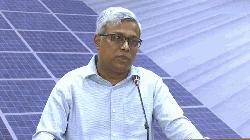
Symbolic Photo
Data centres, the global infrastructure powering AI, could consume 945 terawatt-hours of electricity annually by 2030 – nearly triple the combined annual electricity use of Pakistan, Bangladesh, and Nigeria, the home to more than 650 million people, a new study from UN University (UNU) said at a discussion on the “Artificial Intelligence” day at COP31 here.
Experts said this is just the tip of the iceberg. On top of the carbon footprint, every unit of electricity used by data centres also carries a “water footprint” for cooling and energy production, and a “land footprint” associated with power generation and supply chains.
“AI and other frontier technologies are a double-edged sword. The task ahead is to blunt their dangerous edges, sharpen their catalytic ones, and put these technologies responsibly to work. We cannot ask people to accept higher bills, more planet-heating pollution, and deeper inequality today, in exchange for promises of a better tomorrow. AI’s benefits must outweigh its growing costs. And those benefits must reach every country,” UN Climate Change Executive Secretary Simon Stiell told at the High-level Green Digital Action Roundtable on AI.
He also called on CEOs and boards to step-up, and align business and investment plans with the world’s agreed climate goals. Key quotes include saying that the UN Paris Agreement is the only way to prevent an economic and human trainwreck that would crush every company in every sector, including big tech. So, all firms should set credible climate targets and deliver on them.
The AI and wider tech industry must confront its growing energy and emissions footprint. Demand from data centres is straining electricity systems. Where fossil fuels meet that growing demand, pollution grows and our climate goals get further away, not closer. Where infrastructure costs are passed on, households and businesses must pay, he added.
According to a new study from UN University (UNU), AI-related water consumption could equal the basic annual domestic needs of 1.3 billion people by the end of the decade, while its land footprint may exceed 14,500 square kilometres — roughly twice the size of the Jakarta metropolitan area.
The report highlights a critical gap in how AI’s environmental impact is measured. Greenhouse gas emissions, particularly those linked to training large models, tend to be prioritised, but this approach overlooks other environmental costs.
The climate crisis requires us to reduce our energy consumption and switch to renewable energy sources. Yet in communities across the nation, AI companies are relying on dirtier energy and jeopardizing their climate pledges.
These companies are directly contributing and accelerating a climate and affordability crisis, threatening access to the basic resources we rely upon to survive. AI is strip mining our planet and ourselves because it is built upon surveillance without compensation for our personal data, it reads.
“We’ve heard repeated promises from leaders like Sam Altman, who says AI will solve climate and affordability crises, if only we feed it enough water, energy and minerals. As technologists who have worked on machine learning tools, we know this to be a fantasy. Machine learning and language models can be helpful tools, but they cannot rewrite the basic facts of material reality,” Simon added.
We are at an inflection point. There is a better way to build technology that protects our data and benefits the earth, but it requires reigning in some of the most powerful and profitable companies in the history of the world. It’s high time for us to collectively act. Technology doesn’t need to destroy our planet and empty our pocketbooks. Rather it can be designed to enhance the protection of both.
Solutions seen as “green” in one sense may worsen pressures in others, particularly in regions already facing resource scarcity. For example, switching to certain renewable energy sources may reduce carbon emissions but can significantly increase water consumption and land use.
Public debate has largely centred on the energy required to train advanced AI models, but the study finds that day-to-day usage accounts for roughly 80 to 90 per cent of total energy demand.
The scale is striking one widely used AI service is estimated to process around 2.5 billion prompts per day, consuming hundreds of gigawatt-hours of electricity each year.
Energy use also varies widely depending on the task. Generating a single AI image can require more than a thousand times the energy of simple text classification, while video generation demands even greater resources.
Efficiency improvements alone are unlikely to offset these rising demands. The report points to the so-called rebound effect, in which lower costs and improved performance drive higher usage, ultimately increasing total resource consumption.
The environmental impacts of AI infrastructure are not evenly distributed. While the benefits of the technology are global, its costs are often concentrated in specific regions.
In some countries, data centres already account for a significant share of national electricity consumption, placing pressure on energy systems. In others, expanding facilities are drawing heavily on water supplies, sometimes amid drought conditions.
Some developers are turning to gas plants on their own sites to bypass grid constraints.
Taking fossil fuels off the grid does not take their emissions out of the atmosphere - and unchecked global heating would destroy the economies on which AI companies depend.
What’s more, AI that spreads disinformation, undermines science, divides societies and concentrates wealth, damages the public trust on which the industry relies.
AI companies’ licence to operate is already on thin ice, right across political spectrums in many countries. And under that thin ice lie some potentially very deep regulatory waters, as political landscapes shift.
So, CEOs and boards need to step-up, and align business and investment plans with the world’s agreed climate goals. Those goals are not there for virtue-signalling, Simon said.
Later they handover the Award of the UN Climate Change AI for Climate Action Award, this year’s winner, CLIMAID, developed by Tanzania’s Upendo Ernest Lyimo, combines AI, satellite information and local data, to support both climate risk assessment and adaptation planning. It underscores why developing countries must help shape this technology’s future and share its gains.
-SA

Loading...
Loading...
Also read








Editor : Iqbal Sobhan Chowdhury
Published by the Editor on behalf of the Observer Ltd. from Globe Printers, 24/A, New Eskaton Road, Ramna, Dhaka.
Editorial, News and Commercial Offices : Aziz Bhaban (2nd floor), 93, Motijheel C/A, Dhaka-1000.
Phone: PABX- 41053001-06; Advertisement: 41053012; 01793317829, 01550707291, 01550707296
E-mail: [email protected], [email protected]. [email protected], [email protected], [email protected], [email protected], Online-email: [email protected]


