



| HEADLINE |

|

Patients suffer as government hospital in Pirojpur faces doctor shortage
Published : Monday, 16 November, 2026 at 4:57 PM
Observer Correspondent


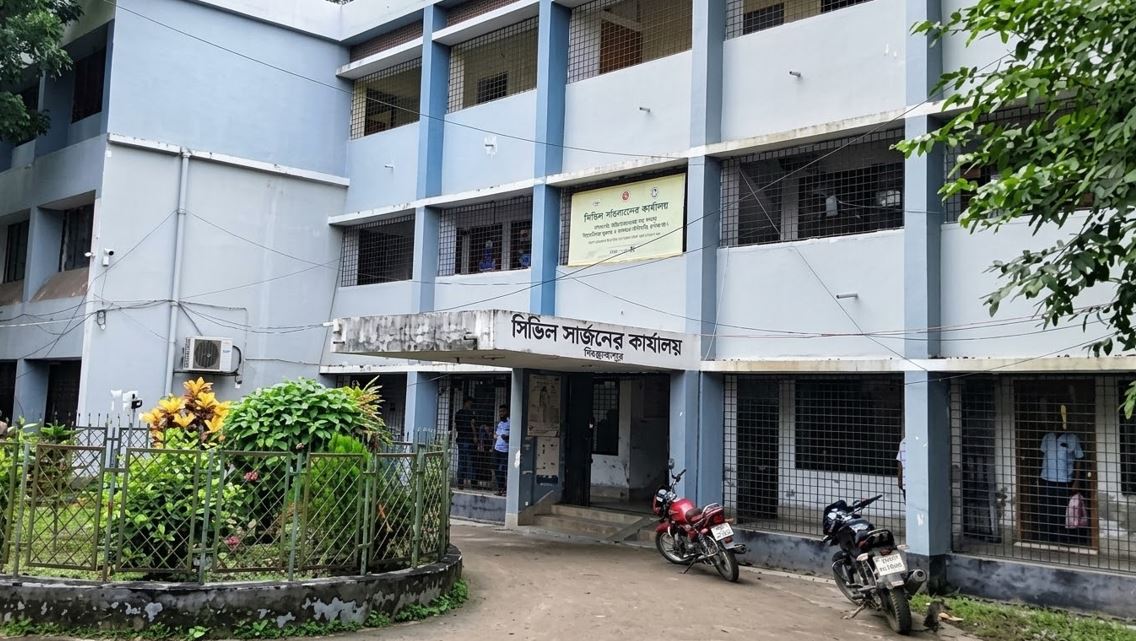
Government hospitals in Pirojpur are struggling due to a shortage of doctors, non-functional medical equipment, and infrastructural limitations. Across the district’s seven government hospitals, only 110 doctors are currently employed against an approved strength of 281, leaving 171 positions vacant.
Furthermore, the pathology departments in most of these hospitals lack the essential equipment required for diagnostics. In some facilities, X-ray and ultrasound machines are out of order, while in others, surgical procedures have been suspended for long periods due to the absence of specialist doctors. Consequently, patients from various parts of the district are being deprived of necessary medical care.
According to relevant sources, the seven government hospitals in the district have a combined capacity of 381 beds, yet they are currently accommodating nearly 700 patients. As noted, only 110 doctors are working against the 281 sanctioned posts. Additionally, there are 555 staff members employed against 722 sanctioned positions, with only 21 personnel engaged through outsourcing.
At the 100-bed Pirojpur District Hospital, only 17 doctors are employed against an approved total of 62. There are 137 staff members against 152 sanctioned posts, and only 21 personnel are employed via outsourcing.
Dr. Nizam Uddin, the Resident Medical Officer (RMO) of the District Hospital, stated that the facility faces a severe shortage of both doctors and support staff (Class III and Class IV employees). Although the hospital has a capacity of 100 beds, it often accommodates over 400 patients, along with their accompanying relatives. This places immense pressure on the hospital’s water management, sanitation, and restroom facilities.
He further mentioned that the Public Works Department’s ongoing project to upgrade the hospital to a 250-bed facility is nearing completion. A dengue ward and an emergency department have already been opened in the new building. Once the entire project is finished, the hospital will become fully operational.
Addressing the staff shortages would further improve the quality of healthcare services provided. At the 50-bed Nesarabad Upazila Health Complex, only 20 doctors are currently employed against 31 sanctioned posts, while 115 staff members are working against 180 sanctioned positions. Although limited diagnostic testing is available, surgical procedures have been suspended due to the shortage of doctors.
Md. Azizul Islam, a resident of Rahutkathi village in Nesarabad, stated that the hospital typically admits over a hundred patients daily. Due to the shortage of both medical and support staff, the facility remains unhygienic, and diagnostic services are inadequate, leaving patients deprived of proper medical care. He and others have called for the opening of a new 100-bed building for the hospital.
Dr. Md. Asaduzzaman, the Health and Family Planning Officer at the Nesarabad Upazila Health Complex, noted that Nesarabad is a densely populated area, and the facility also serves a large number of patients from the neighboring upazilas of Wazirpur, Nazirpur, and Kawkhali. Regrettably, although the hospital is designated as a 50-bed facility, it is currently operating with only 19 beds. This is because the original 31-bed building, dating back to 2000, became unusable, was declared abandoned, and has since been demolished.
Currently, 120 to 130 patients are admitted to this 19-bed facility; as there are not enough beds, patients are often forced to receive care on the floor or on staircases. Addressing the shortage of space is an urgent priority. Furthermore, there is a severe lack of third and fourth-class staff, cleaners, in particular, are essential for maintaining hygiene. These challenges prevent the hospital from providing adequate care.
Similarly, while the Nazirpur Upazila Health Complex is a 50-bed facility, the sanctioned posts for third and fourth-class staff were created for a 31-bed capacity. Only 17 doctors are currently employed against 42 sanctioned posts, and there are only 29 staff members against 46 sanctioned positions. Although the hospital offers some diagnostic tests and performs surgeries such as Caesarean sections and appendectomies, ultrasonography services remain unavailable.
Marjia Mihi, a student from Shankharikathi village in Nazirpur, says that the presence of touts (middlemen) at the Nazirpur hospital has become a major source of distress. Furthermore, the condition of the road leading to the hospital is in a poor state; improving the roads across the upazila would make it much easier to access the facility.
The Upazila Health Complex in Mathbaria, one of the district’s largest upazilas, is also facing a severe shortage of doctors. On average, 70 to 80 patients are admitted to this hospital daily. Against 49 sanctioned positions for doctors, only 13 are currently filled, while 47 staff members are employed against 60 sanctioned posts. Although limited diagnostic tests are available, no surgeries are performed, and there is no X-ray machine.
Dr. Soumitra Singha Roy, the hospital’s Resident Medical Officer (RMO), stated that about 50 percent of the construction work on the new hospital building remains incomplete. Once the new building becomes operational, it will be possible to provide comprehensive healthcare services. Currently, there are not enough beds for all the admitted patients. Additionally, all 10 consultant positions at the hospital remain vacant. It is particularly urgent to fill the consultant roles for orthopedics, pediatrics, ENT (ear, nose, and throat), and ophthalmology.
At the 31-bed Kaukhali Upazila Health Complex, an average of 50 to 60 patients is admitted daily. Only 10 doctors are currently working against 23 sanctioned positions, and there are 71 staff members against 102 sanctioned posts. While limited diagnostic services are available, there is no X-ray machine, and the ultrasonogram machine is out of order, rendering that service unavailable as well.
Dr. Subrata Karmakar, the Health and Family Planning Officer at the Kaukhali Upazila Health Complex, noted that the hospital has long been neglected. A proposal has been submitted to upgrade the facility from 31 beds to 101 beds, and work on this is currently underway. At present, due to the lack of a main hospital building, operations are being conducted in a temporary structure. This, combined with the shortage of doctors and staff, makes it difficult to provide adequate healthcare services. The core problem is that we lack a proper building. Furthermore, we do not have the necessary staff to operate a hospital; we are missing cleaning staff, ward boys, and security guards.
Approximately 70 patients receive treatment daily at the Bhandaria Upazila Health Complex. Out of 33 sanctioned positions for doctors, only 18 are currently filled, while 104 staff members are employed against 122 sanctioned posts. Diagnostic services are available on a limited scale, and the only surgical procedure currently performed is the Caesarean section.
Dr. Md. Ibrahim Molla, the Health and Family Planning Officer at the Bhandaria Upazila Health Complex, stated that the hospital faces a severe staff shortage. He stated, “There are only two cleaning staff members, and we are doing our best to keep the facility as clean as possible with their help. If the authorities fill the vacant Class III and Class IV staff positions, we would be able to provide better healthcare services.”
In the river-surrounded Upazila of Jianagar, which has a population of approximately 200,000, the 50-bed health complex admits about 60 patients daily. Only 8 doctors are currently working against 22 sanctioned positions, and there are 52 staff members against 60 sanctioned posts. While limited diagnostic services are available, the shortage of doctors and broken equipment has led to the suspension of surgical procedures, X-rays, and ultrasound services.
Al Amin Shikdar, a school teacher and resident of Bhabanipur village in Jianagar, noted that doctors are not always available at the hospital. Diabetes testing is not conducted, and pregnancy registration cards are not issued. Furthermore, the hospital’s restrooms are unhygienic and unfit for use. Local residents are demanding that the Jianagar hospital be made fully operational.
Dr. Noni Gopal Roy, the Health and Family Planning Officer for Jianagar Upazila, explained that although the hospital’s inpatient department opened in 2022, all surgical procedures, including Caesarean sections, remain suspended. Additionally, due to a lack of essential equipment in the pathology department, it is not possible to conduct the necessary tests for accurate diagnosis. Furthermore, the hospital faces a shortage of doctors and staff. There are only three cleaning personnel, making it difficult to keep such a large facility clean. He adds that these issues need to be addressed immediately.
Dr. Md. Motiur Rahman, the Civil Surgeon of Pirojpur, stated that they are continuing to provide services at the district’s hospitals, despite a significant shortage of doctors and healthcare workers. This lack of personnel poses a major challenge; nevertheless, they are striving to ensure patient care to the best of their ability. The matter has been reported to the higher authorities, and it is hoped that these staffing gaps will be filled very soon.
- ZF/NS

Loading...
Loading...
Also read







Editor : Iqbal Sobhan Chowdhury
Published by the Editor on behalf of the Observer Ltd. from Globe Printers, 24/A, New Eskaton Road, Ramna, Dhaka.
Editorial, News and Commercial Offices : Aziz Bhaban (2nd floor), 93, Motijheel C/A, Dhaka-1000.
Phone: PABX- 41053001-06; Advertisement: 41053012; 01793317829, 01550707291, 01550707296
E-mail: [email protected], [email protected]. [email protected], [email protected], [email protected], [email protected], Online-email: [email protected]


