



| HEADLINE |

|

Banned AL caused greater economic damage in 17yrs than Pakistan: Info Minister Partho
Published : Monday, 16 November, 2026 at 5:15 PM
Observer Special Report


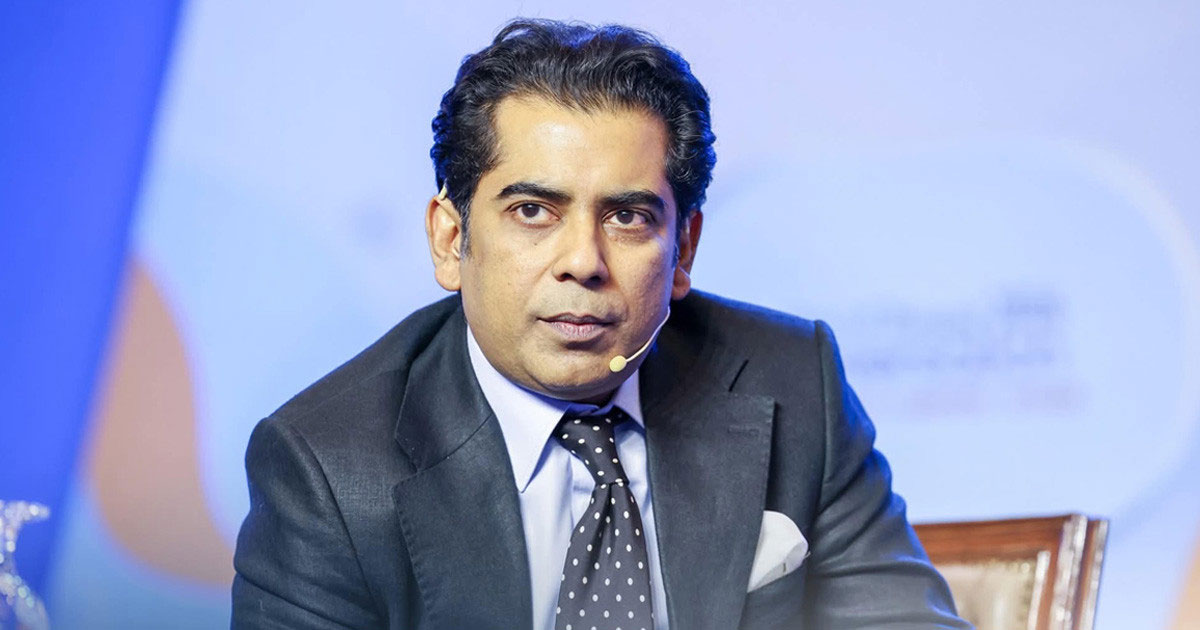
File Photo
Information and Broadcasting Minister Andaleeve Rahman Partho has stated that the Awami League caused greater damage to Bangladesh's economy over the past 17 years than Pakistan did between 1947 and 1971.
He made the remarks while briefing journalists following a meeting with the Online Editors' Forum at the Secretariat on Monday (November 16).
However, according to official and international data; alongside the scars left behind by the previous regime, banking sector stress and sluggish growth have persisted under the current government as well.
Speaking after the meeting, the Information Minister said the government has yet to make the nation fully understand the extent of the damage inflicted by the previous administration. He alleged that the former government plundered the balance sheets of the banking sector and signed power agreements tied to oil and gas clauses that have forced the country to purchase electricity at exorbitant rates.
He further claimed that no bank looting or power sector corruption has taken place over the past eight months, nor have any new "Darbesh" or "S Alam" scandals occurred—though these claims regarding the current administration's track record could not be independently verified.
Earlier, according to Bangladesh Sangbad Sangstha (BSS), he had similarly stated on September 2 that the previous government weakened the economy during its 17-year rule and that Prime Minister Tarique Rahman assumed office at a critical juncture.
Banking sector haemorrhage and ground reality
According to Bangladesh Bank data, distressed assets in the banking sector stood at Tk around 5 lakh crore in December 2023. The World Bank's October edition of the ‘Bangladesh Development Update’ noted that the ratio of non-performing loans (NPLs) climbed from 20.2 per cent at the end of 2024 to 33.2 per cent in June 2026.
In December 2024, Janata Bank filed a loan default lawsuit against S Alam Group in Chattogram involving approximately Tk 1,964 crore. Data from Janata Bank and Bangladesh Bank show that the conglomerate took out Tk 8,216 crore in loans from a single branch, accounting for 90 per cent of that branch's total disbursed credit.
A member of the government-formed economic review committee alleged that the then-central bank governor had obstructed the classification of the group's defaulted loans. However, final verdicts in these cases are yet to be delivered.
Growth and statistical distortions
The same review committee formed by the interim government concluded that Gross Domestic Product (GDP) growth figures had been inflated since 1995, with the practice escalating sharply after the 2012-13 fiscal year.
According to the committee, while official statistics placed inflation between 9 and 11 per cent, actual inflation may have ranged from 15 to 17 per cent, while the tax-to-GDP ratio hovered around 8 to 9 per cent.
The panel noted that growth figures were overstated across successive administrations. An independent analysis described the committee's findings as broadly accurate, though it noted that the commentary regarding the country's overall progress was overly negative.
The committee also reported that roughly $3 billion changed hands as bribes in power plant contracts, though these remain observations and allegations requiring separate legal proof for each case.
Debt burden and the IMF equation
When the Awami League government left office, total public debt stood at Tk 13.06 trillion, which has now surpassed Tk 14.09 trillion, according to reports published in media, with the bulk of the increase occurring after August 2024.
According to a written parliamentary response by the Finance Minister, foreign debt stood at $78.22 billion at the end of March 2026. Ministry of Finance data indicate that the country will need to repay $12.29 billion in principal alone on external debt over the next three fiscal years.
Meanwhile, speaking in Cox's Bazar on November 15, Finance and Planning Minister Amir Khasru Mahmud Chowdhury said the government is not pulling out of the International Monetary Fund (IMF) programme, but is rather aligning its conditions with current economic realities and the Five-Year Plan.
He noted that two working groups are addressing areas of disagreement and expressed hope that the process would conclude by January or February. According to the minister, the existing agreement was signed under the previous administration, and implementing all conditions simultaneously would increase pressure on citizens and businesses.
What statistics say in comparison with Pakistan
Pakistan currently leads across several indicators of macroeconomic stability. According to the Pakistan Economic Survey and The Express Tribune, the country's fiscal deficit for FY2026 is projected to hit a 21-year low, with a primary surplus of roughly 3.2 to 3.5 per cent of GDP.
Data from Pakistan's Finance Ministry show that international credit rating agencies Fitch and Moody's have upgraded the country's ratings, while the IMF agreed in October to disburse an additional $1.21 billion loan.
Pakistan's economic growth for FY2026 is projected at 3.6 to 3.7 per cent, compared to the World Bank's forecast of 3.4 per cent for Bangladesh—a figure the World Bank noted is well below Bangladesh's decade-long average of 5.6 per cent, though the two figures originate from different sources and are not directly comparable. In FY2026, Pakistan received a record $41.6 billion in remittances, against Bangladesh's record of $35.5 billion.
However, Bangladesh remains well ahead in terms of income and economic scale. According to World Bank data, Bangladesh's per capita GDP stands at $2,593 compared to Pakistan's $1,479, while its overall economy is larger at $450.1 billion versus $371.6 billion.
Bangladesh's remittance inflow grew by 17.3 per cent in FY2026 compared to Pakistan's 8.6 per cent, with Pakistan's higher aggregate remittance figure attributable to its population of roughly 250 million against Bangladesh's 175 million. According to The Express Tribune, Pakistan secured $27.2 billion in external loans during FY2026.
-SA

Loading...
Loading...
Also read









Editor : Iqbal Sobhan Chowdhury
Published by the Editor on behalf of the Observer Ltd. from Globe Printers, 24/A, New Eskaton Road, Ramna, Dhaka.
Editorial, News and Commercial Offices : Aziz Bhaban (2nd floor), 93, Motijheel C/A, Dhaka-1000.
Phone: PABX- 41053001-06; Advertisement: 41053012; 01793317829, 01550707291, 01550707296
E-mail: [email protected], [email protected]. [email protected], [email protected], [email protected], [email protected], Online-email: [email protected]


