



| HEADLINE |

|

Buying phones in instalment risky
Published : Tuesday, 17 November, 2026 at 12:00 AM
Walid Khan


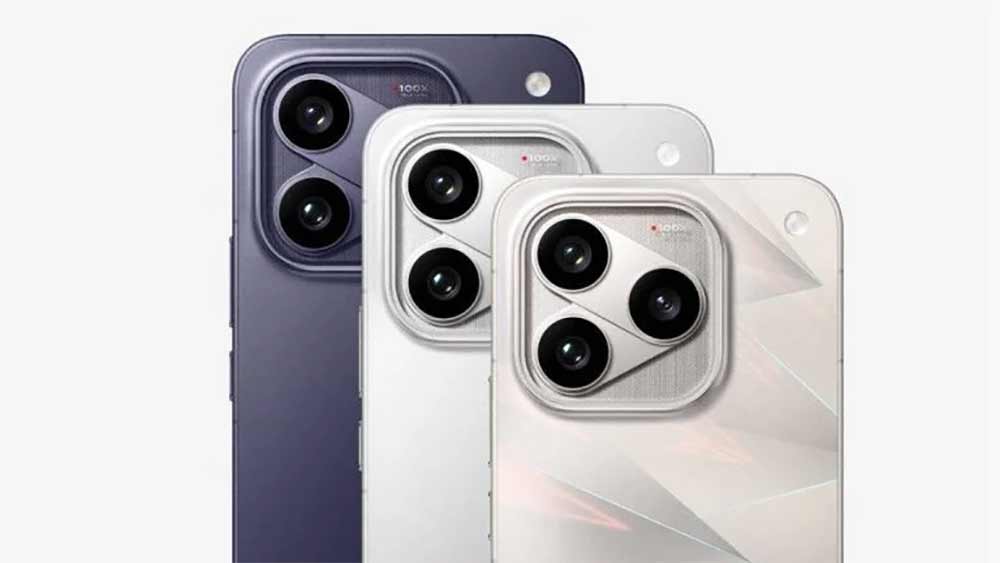 Smartphones are becoming easier to buy in Bangladesh through instalment schemes offered by fintech companies. But the attractive offers are creating financial and privacy risks for customers, particularly those with low incomes.
High interest rates, additional charges and the threat of phone locking over missed payments are raising concerns about these schemes. Special apps installed on these phones allow companies to manage instalments and retain control over the devices.
Four companies PalmPay, TOPPAY, MomoPay and SohojPay have emerged in the market to provide smartphone financing.
Customers can buy smartphones without credit cards by submitting their National Identity (NID) cards, a guarantor's NID and a small down payment. However, many buyers do not clearly understand the total cost, interest rates, additional fees or conditions under which their phones can be locked.
According to Sakib, a sales representative at a mobile phone showroom in Dhaka, PalmPay facilitates purchases of Tecno, Infinix and Itel phones, while TOPPAY covers Oppo, Realme and OnePlus. MomoPay handles Vivo phones, and SohojPay is associated with Walton.
PalmPay started operations in Bangladesh in 2024. Instead of providing cash loans, it finances purchases of selected smartphone brands through designated retail outlets. Customers must submit their own NID cards and those of guarantors, while an app is used to manage instalment payments.
Arafat Rahman an employee of a private company bought a Realme smartphone priced at Tk 25,000 on an instalment plan. He has to pay the instalments within four months, along with an additional Tk 3,500 in interest. This means I have to pay 14 per cent more than the original price in just four months. On a simple annualised basis, the interest rate comes to 42 per cent.
He told the Daily Observer that, paying such a high amount of interest over such a short period is very difficult for ordinary customers like us. Although instalment facilities make it easier to buy smartphones, such high interest rates are creating additional financial pressure on us,” said Arafat Rahman.
Bangladesh Bank approved PalmPay for a one-year pilot programme to finance 10,000 smartphones, targeting low-income people who do not own smartphones.
Under its initial scheme, customers had to pay 15 per cent of the phone's price as a down payment. The remaining amount could be paid over a maximum of nine months, with monthly interest of 2 per cent on the outstanding balance, according to the approval documents.
Under a separate cardless instalment offer in partnership with Grameenphone, PalmPay requires a minimum 5 per cent down payment, with repayment periods of four, six or nine months.
However, Grameenphone's published terms allow phones to be locked if customers fail to pay instalments on time.
A delay of three days may lead to the suspension of outgoing calls and access to various over-the-top (OTT) apps. After 20 days of non-payment, both incoming and outgoing calls may be blocked. The phone is expected to be unlocked within 48 to 72 hours after outstanding payments are cleared.
According to the BTRC's 2024-25 annual report, SIM/network locking and device locking for smartphones sold through instalment schemes were authorised on November 4, 2025. However, customers who clear all instalments or outstanding dues ahead of schedule must have their SIM slots unlocked to use SIM cards from any operator.
TOPPAY also uses a dedicated app to manage instalments. Its website lists requirements that may include the NID cards of customers and guarantors, transaction records for the previous three months from bKash, banks or other mobile financial services, and employment information. Service, security and processing fees may also be added.
Explaining the financing costs, Sakib said, “If a customer makes a Tk 20,000 down payment on a phone priced at Tk 60,000, the remaining Tk 40,000 is covered by the financing company, which assumes the associated risk. To account for this, these companies charge an effective annual interest rate ranging from 20 to 25 per cent.”
For many low-income customers, the monthly payments are becoming an additional burden.
Abdur Rashid, who works in Dhaka for a monthly salary of Tk 20,000 while his family lives in his village home, is struggling to manage instalments for a smartphone purchased by his wife.
Although the family already had a mobile phone, his wife bought another, more expensive handset through an instalment scheme. They now have to pay Tk 4,300 every month for six months.
The payment alone accounts for 21.5 per cent of his monthly salary.
“We already had a mobile phone at home. However, because it was available on an instalment plan, my wife bought another, more expensive phone. We have to pay Tk 4,300 each month. This is a significant sum relative to my salary,” Rashid said.
“After covering my living expenses in Dhaka and supporting my family, it has become extremely difficult to manage these payments. Although the phone was purchased out of necessity, it has now become an additional financial burden. I struggle every month to arrange the money for the instalment,” he added.
Data privacy is another concern. Information on the Google Play Store indicates that apps used for these financing services may collect personal and financial information.
According to the company's privacy policy, collected information may include the phone's IMEI number, SIM card details, mobile network data, operating system and browser-related information. Location data may also be collected in some cases, subject to customer consent.
Financing companies also collect customers' and guarantors' identification documents, financial transaction records and employment details to assess loan applications.
However, questions remain about how long the information is stored, who can access it and whether it is shared with third parties.
Phone locking could also disrupt customers' daily lives. Many people depend on smartphones for work, online businesses, education, banking and mobile financial services. Losing access to a device over a missed payment could affect their income and essential activities.
Customers may also face further difficulties if technical problems delay the unlocking of their phones even after payments are made.
Consumer protection concerns are growing over the need for greater transparency in smartphone financing. Customers should be clearly informed about the total repayment amount, interest rates, additional charges, phone-locking conditions and the personal data collected through financing apps.
Stronger regulatory monitoring is also needed to protect customers' personal information and ensure that device-locking practices do not cause unnecessary hardship.

Loading...
Loading...
Also read



Editor : Iqbal Sobhan Chowdhury
Published by the Editor on behalf of the Observer Ltd. from Globe Printers, 24/A, New Eskaton Road, Ramna, Dhaka.
Editorial, News and Commercial Offices : Aziz Bhaban (2nd floor), 93, Motijheel C/A, Dhaka-1000.
Phone: PABX- 41053001-06; Advertisement: 41053012; 01793317829, 01550707291, 01550707296
E-mail: [email protected], [email protected]. [email protected], [email protected], [email protected], [email protected], Online-email: [email protected]
Published by the Editor on behalf of the Observer Ltd. from Globe Printers, 24/A, New Eskaton Road, Ramna, Dhaka.
Editorial, News and Commercial Offices : Aziz Bhaban (2nd floor), 93, Motijheel C/A, Dhaka-1000.
Phone: PABX- 41053001-06; Advertisement: 41053012; 01793317829, 01550707291, 01550707296
E-mail: [email protected], [email protected]. [email protected], [email protected], [email protected], [email protected], Online-email: [email protected]


