



| HEADLINE |

|

Hasina must be extradited: Dr. Zahed
Published : Tuesday, 17 November, 2026 at 12:47 PM
Observer Online Report


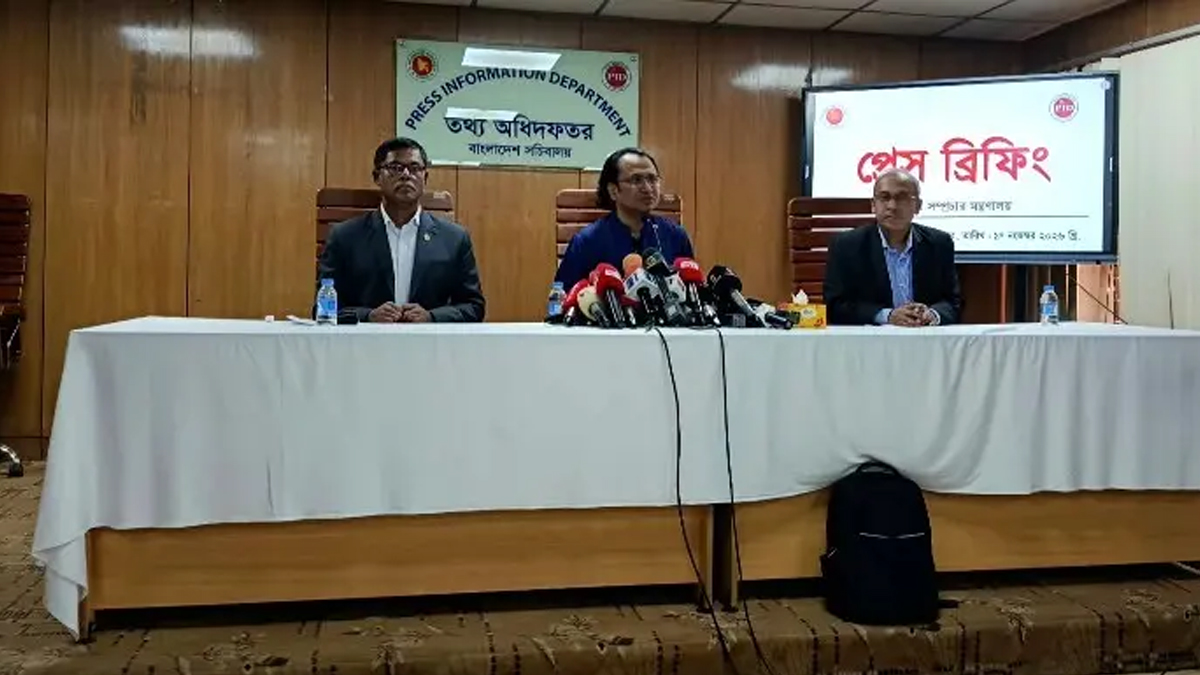
Collected Photo
Prime Minister's Adviser on Information and Broadcasting Dr Zahed Ur Rahman stated on Tuesday that the government's position on seeking Sheikh Hasina's extradition from India is unambiguous and that she must be returned to face trial under Bangladeshi law.
Speaking at a press briefing on November 17 regarding the progress of various government activities, the adviser responded to several questions from journalists concerning extradition procedures, political stability, and law and order.
Addressing queries about Awami League's alleged involvement in violence in Gopalganj and party leaders hiding under different identities, Dr Rahman said the Awami League attempts to exploit legitimate movements for subversive activities. He noted that while the readymade garment workers' protest was legitimate, the Awami League tried to take advantage of it.
He stated that the government maintains the highest level of surveillance over identified Awami League activists, including Sayeed Khokon and party members disguising themselves as public servants. "I assure you, we will be able to manage these matters quickly. This is a major headache for the government, and the government will certainly resolve it," he said.
Regarding an Indian media report claiming New Delhi set two conditions for returning Sheikh Hasina—specifically transferring her militarily and granting her a fresh trial or appeal—Dr Rahman dismissed the report as an official stance.
"A newspaper report cannot be considered the official position of the Indian government," he said, adding that no formal communication had been received from New Delhi. He affirmed that the Foreign Minister and relevant coordinators had already addressed the issue and that Bangladesh faces no pressure from India.
"Bangladesh is no longer the Bangladesh of the past. The reality changed after August 5," Dr Rahman asserted, stating that while Dhaka wants dialogue with all nations based on mutual need, it will not accept unfair pressure or conditions where it stands on firm legal ground.
Responding to technical questions about whether Bangladesh's diplomatic note sent to India on July 23, 2024, complied with Sub-sections 1 and 2 of Article 7 of the bilateral extradition treaty, the adviser said Dhaka submitted its formal application strictly in light of the signed agreement.
On questions regarding Article 12 of the treaty and assurances against the death penalty, Dr Rahman noted that such matters would be discussed at the state level, though the government's bottom line remains that Sheikh Hasina will be tried under Bangladeshi law.
Citing the Law Minister, he noted that the law denying her the scope for appeal was originally enacted by her father and the government is simply following that existing statute. He concluded that there is no inconsistency among ministers regarding the demand to bring Sheikh Hasina back through extradition.
-SA

Loading...
Loading...
Also read






Editor : Iqbal Sobhan Chowdhury
Published by the Editor on behalf of the Observer Ltd. from Globe Printers, 24/A, New Eskaton Road, Ramna, Dhaka.
Editorial, News and Commercial Offices : Aziz Bhaban (2nd floor), 93, Motijheel C/A, Dhaka-1000.
Phone: PABX- 41053001-06; Advertisement: 41053012; 01793317829, 01550707291, 01550707296
E-mail: [email protected], [email protected]. [email protected], [email protected], [email protected], [email protected], Online-email: [email protected]


