



| HEADLINE |

|

How to recycle ablution water and turn mosque wastewater into a green oasis
Published : Tuesday, 17 November, 2026 at 1:35 PM
Amir Uddin Mahmud


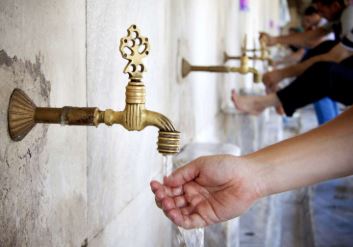
Muslims perform ablution, known as wudu, several times a day, washing their hands, faces and feet before prayer. Across thousands of mosques, this daily practice generates a considerable amount of wastewater. Instead of allowing it to flow directly into the sewerage system, the water can be collected, treated and put to further use.
The recycling process begins with installing separate drainage pipes beneath the ablution area. These pipes collect used washing water and carry it to a designated storage or treatment tank, keeping it separate from toilet wastewater and other sewage.
Once collected, the water passes through a series of filtration stages. First, a screening unit removes larger particles, such as dirt, hair and other solid materials. The water then enters a settling tank, where heavier particles sink to the bottom through natural sedimentation.
The next stage involves filtration through several layers of gravel, coarse sand and fine sand. These layers help remove suspended particles and impurities, making the water clearer and more suitable for reuse.
Depending on the intended use and the quality of the collected water, additional treatment, such as disinfection, may be necessary. Regular water-quality testing is also important to ensure that the treated water meets the safety requirements for its intended purpose.
After treatment, the recycled water can be stored in a separate tank and distributed through a dedicated pipe system. A drip irrigation network can then deliver the water directly to the roots of trees, plants, bushes and flowerbeds surrounding the mosque.

This method reduces water loss through evaporation and helps maintain green spaces without depending entirely on fresh drinking water.
One advantage of recycling ablution water is that it generally contains fewer chemicals than ordinary household wastewater, as soap and detergents are not normally used during wudu. This can make treatment relatively straightforward, although the water still requires proper filtration and, where necessary, disinfection.
The system can be introduced in both small and large mosques. A basic arrangement requires separate collection pipes, a settling tank, filtration chambers, a storage reservoir and an irrigation network. Larger mosques may install more advanced treatment facilities to handle greater volumes of wastewater.
However, proper maintenance is essential. Filters need regular cleaning, accumulated sediment must be removed, and storage tanks should be kept covered to prevent contamination. Untreated or inadequately treated water should not be used where it could expose people to health risks.
Beyond reducing water consumption, the initiative can help mosques create greener and more pleasant surroundings while promoting environmental responsibility among worshippers.
As water scarcity becomes an increasingly important concern, recycling ablution water offers a practical way for religious institutions to conserve resources. What once flowed directly into drains can instead help nurture trees, maintain gardens and contribute to a more sustainable environment.
-MT

Loading...
Loading...
Also read








Editor : Iqbal Sobhan Chowdhury
Published by the Editor on behalf of the Observer Ltd. from Globe Printers, 24/A, New Eskaton Road, Ramna, Dhaka.
Editorial, News and Commercial Offices : Aziz Bhaban (2nd floor), 93, Motijheel C/A, Dhaka-1000.
Phone: PABX- 41053001-06; Advertisement: 41053012; 01793317829, 01550707291, 01550707296
E-mail: [email protected], [email protected]. [email protected], [email protected], [email protected], [email protected], Online-email: [email protected]


