



| HEADLINE |

|

The Economist Report
World ahead 2027: In simpler terms
Published : Wednesday, 18 November, 2026 at 11:22 AM
Observer Special Report


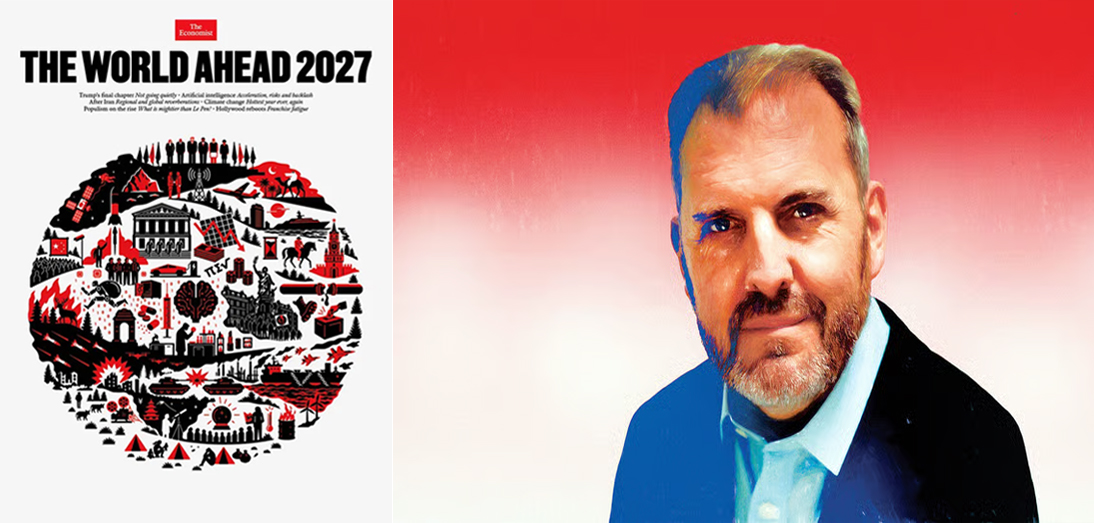
A volatile mix of post-Trump political shifts in Washington, mounting government debt, artificial intelligence financial risks, and flashpoints over Taiwan and Iran will define the global landscape in 2027, according to The Economist’s annual future-gazing report, The World Ahead 2027.
Launched this week ahead of its November 21 print edition and November 26 newsstand release, the flagship publication—edited by The Economist Deputy Editor Tom Standage—outlines 10 major geopolitical, economic, and technological trends expected to test governments and markets over the coming year.
A Volatile 'Post-Trump' Era Begins
Following the November 2026 midterm elections in which the Democrats won control of both chambers of the US Congress, the Trump administration faces severe legislative constraints. However, Standage warns that President Donald Trump will not fade into a passive "lame duck" role, comparing him instead to a "destructive Angry Bird".
As the race to succeed him in the 2028 presidential election kicks off, analysts expect Trump to rely heavily on executive orders, legal battles, grandiose projects, and potential military interventions to cement his legacy—leaving US allies questioning Washington's long-term reliability.
Geopolitical Flashpoints: Iran and Taiwan
The report highlights two major security crises threatening global stability:
Aftershocks from Iran: While a clean resolution to the conflict with Iran appears unlikely, its economic fallout will ripple globally in 2027. Disrupted energy flows and acute fertiliser shortages threaten agricultural output and food security, particularly for import-dependent nations. Inside Iran, the regime is expected to tighten its grip.
Taiwan’s Deadline: Chinese President Xi Jinping has reportedly instructed the People’s Liberation Army to be ready for a potential operation to seize Taiwan by 2027. However, lessons from modern conflicts in Ukraine and Iran—where smaller forces used drones and asymmetric defences to hold off larger militaries—may complicate Beijing's calculus, leaving open whether China will act militarily or wait for Taiwan's 2028 elections.
Debt Market Pressure and European Political Shifts
Global financial markets face mounting strain as wealthy nations continue running large budget deficits while higher interest rates drive up borrowing costs. The Economist warns that unchecked fiscal profligacy, compounded by renewed energy-driven inflation, could eventually trigger a sharp correction in sovereign bond markets.
Political risks in Europe will compound these economic anxieties. All eyes will turn to France’s spring 2027 presidential election, where far-right National Rally leader Marine Le Pen has a strong chance of victory. A Le Pen win could disrupt the traditional Franco-German alliance that drives European Union decision-making and spook investors over France's heavily indebted public finances.
AI Financial Bubble and Cyber Threats
Rapid expansion in artificial intelligence carries growing financial and security hazards. Technology firms are funding massive data centre and computing build-outs through complex, opaque debt deals, raising the risk of a market crash. More advanced AI models are also expected to fuel a wave of sophisticated cyberattacks and heighten concerns over supply-chain security.
Notably, however, The Economist asserts that widespread fears of mass AI-driven job losses and unsustainable water or electricity consumption by data centres are currently exaggerated and unsupported by hard data.
Climate Records and Emerging Opportunities
Environmental pressures will intensify as a developing "super El Niño" is projected to make 2027 the hottest year on record, bringing severe heatwaves, droughts, and wildfires. Ironically, volatile fossil fuel markets and energy insecurity are accelerating the global shift toward solar and wind power as nations seek energy independence.
Despite the grim geopolitical and economic warnings, the report identifies three areas of rapid innovation and commercial growth:
The 'Ozempic Effect': Widespread adoption of weight-loss drugs is reshaping retail and consumer habits—sparking "revenge shopping" in apparel, cosmetics, and fitness—while revitalising pharmaceutical research into healthy ageing and longevity.
Cheaper Space Access: Regular satellite launches by SpaceX’s reusable Starship and booster reuse demonstrations by Chinese rocket firms will lower orbital costs, paving the way for the first private space stations and early steps toward space-based data centres.
Hollywood’s Reboot: Major studios will lean heavily on nostalgia in 2027—marking the 50th anniversary of Star Wars alongside new Avengers and James Bond instalments—as traditional cinema fights to retain audiences increasingly drawn to low-budget content created by independent YouTubers.
-SA

Loading...
Loading...
Also read



Editor : Iqbal Sobhan Chowdhury
Published by the Editor on behalf of the Observer Ltd. from Globe Printers, 24/A, New Eskaton Road, Ramna, Dhaka.
Editorial, News and Commercial Offices : Aziz Bhaban (2nd floor), 93, Motijheel C/A, Dhaka-1000.
Phone: PABX- 41053001-06; Advertisement: 41053012; 01793317829, 01550707291, 01550707296
E-mail: [email protected], [email protected]. [email protected], [email protected], [email protected], [email protected], Online-email: [email protected]


