



| HEADLINE |

|

Xi, Trump and Putin meet amid global tensions
Published : Thursday, 19 November, 2026 at 12:00 AM


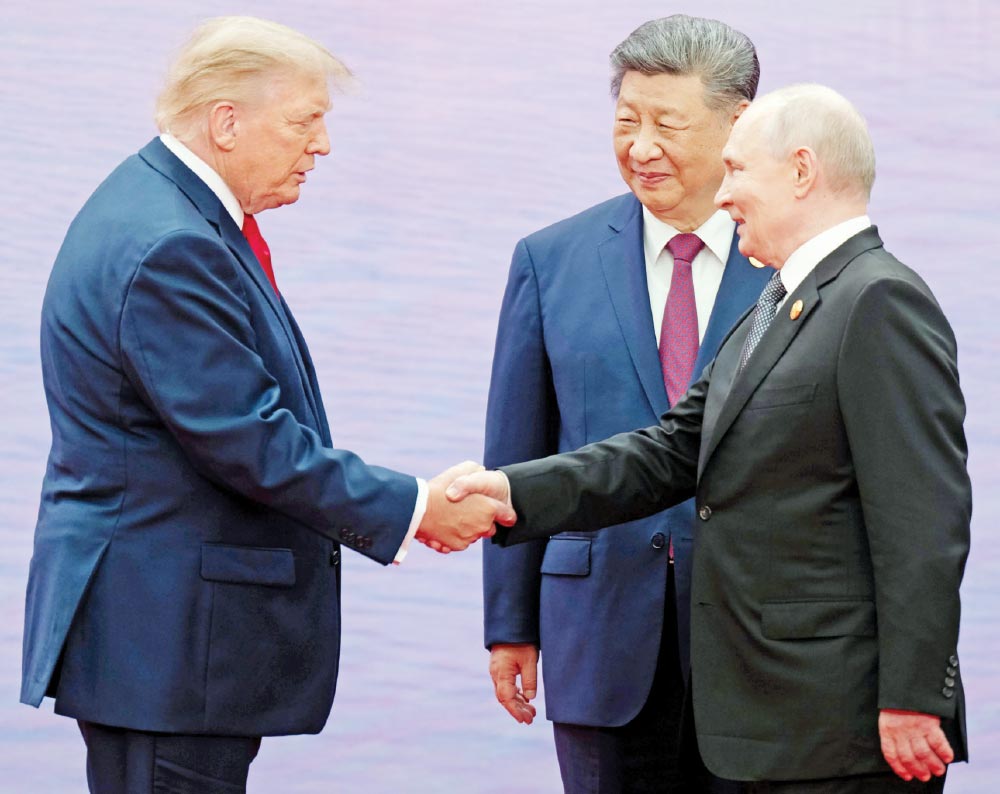 SHENZHEN, Nov 18: The presidents of China, Russia and the US have greeted each other amid the APEC summit in Shenzhen. This comes a day ahead of the trilateral talks between Xi Jinping, Vladimir Putin and Donald Trump.
China's President Xi Jinping on Wednesday pledged to stand up against trade protectionism, but also gave a warm welcome to US President Donald Trump as he arrived ahead of a high-stakes trilateral meeting that will include the Russian leader Vladimir Putin.
Xi greeted Trump at the airport, the first time he had done so with any visiting leader since becoming president, reciprocating his counterpart's gesture at Joint Base Andrews in September when they last met.
Trump's arrival came after Xi and Putin delivered pointed speeches ahead of an Asia-Pacific Economic Cooperation summit in the southern Chinese tech hub of Shenzhen.
In his opening address, Xi urged support for what he called "free and open trade," trying to portray his country as a stable partner on the global stage, in contrast with the US, which has raised tariffs and taken a volatile approach to foreign policy under Trump. In his speech, Putin criticised Western sanctions imposed over Russia's war in Ukraine.
At the Shenzhen airport, Xi and Trump briefly hugged and exchanged words before walking to their motorcades.
"China is a country of etiquette and has a tradition of reciprocating courtesy," Xi was quoted as saying by state news agency Xinhua.
He added he was looking forward to discussing China-US relations, Asia-Pacific cooperation and the global landscape. Trump said every meeting with Xi has been "very pleasant," Xinhua reported.
They then joined Putin and other leaders at the APEC summit venue for handshakes, a group photo and banquet.
The three men will meet on the sidelines on Thursday and potentially discuss Russia's war with Ukraine and the US war in Iran, as well as other flashpoints such as trade, AI and nuclear weapons.
The meeting has drawn comparisons with the 1945 Yalta Conference between the US, Britain and the Soviet Union that formalised spheres of influence, set the stage for the post-World War Two order and became shorthand for great-power deals imposed on smaller countries. �" AGENCIES

Loading...
Loading...
Also read



Editor : Iqbal Sobhan Chowdhury
Published by the Editor on behalf of the Observer Ltd. from Globe Printers, 24/A, New Eskaton Road, Ramna, Dhaka.
Editorial, News and Commercial Offices : Aziz Bhaban (2nd floor), 93, Motijheel C/A, Dhaka-1000.
Phone: PABX- 41053001-06; Advertisement: 41053012; 01793317829, 01550707291, 01550707296
E-mail: [email protected], [email protected]. [email protected], [email protected], [email protected], [email protected], Online-email: [email protected]


