



| HEADLINE |

|

Bangladeshi workers gain growing demand in Japan's farm sector
Published : Monday, 23 November, 2026 at 12:21 PM
Observer Online Report


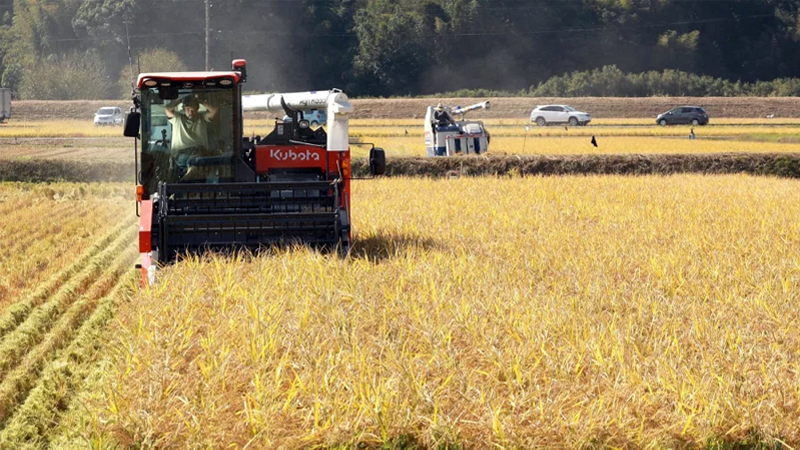
Collected Photo
As Tokyo moves to address a prolonged labour shortage in its agricultural sector, workers from South Asian nations—particularly Bangladesh and Nepal—are steadily gaining ground, outpacing traditional Southeast Asian competitors, according to Tokyo-based news agency Kyodo News.
Mirai, a Tokyo-based organization specializing in training and retaining skilled foreign workers, has recruited Bangladeshi candidates for agricultural roles for the first time. The move signals a shift in Japan's labour sourcing toward South Asia amid declining worker inflows from Vietnam and the Philippines.
Two students from a Mirai-affiliated school in Bangladesh have secured jobs at an agricultural enterprise in Aomori Prefecture after passing Japan's Specified Skilled Worker (SSW) agriculture exam in August. They are scheduled to depart for the northeastern Japanese region in the coming months.
Ahsan Habib, 21, from the northern district of Mymensingh, told Kyodo News that he is eager to learn about Japanese farming practices, apply his experience, and take proper care of poultry. Meanwhile, 20-year-old Siam Ur Rahman from southern Barishal expressed gratitude for the opportunity, adding that he intends to work hard in Japan and is looking forward to experiencing snow for the first time.
According to Japanese government data, the number of foreign agricultural workers holding Class 1 Specified Skilled Worker status rose by 26 per cent year-on-year in June to reach 44,050. Workers under this category—which Ahsan and Siam will join—are generally permitted to stay in Japan for up to five years.
Data from Japan's Immigration Services Agency shows that Indonesia remains the largest supplier of agricultural labour, rising 45 per cent to 18,255 workers. However, South Asian numbers are surging rapidly: workers from Nepal increased by 30 per cent to 916, Sri Lanka jumped 60 per cent to 638, and Bangladesh recorded a 127 per cent surge to 334 workers.
Yuji Nomura, General Manager of the Career Advisory Division at Mirai's parent company Sustainable Holdings, noted that rising wages in Vietnam, the Philippines, and other Southeast Asian nations have made it increasingly difficult for Japan to attract farm workers from those regions.
"We are seeing a shift toward South Asia in terms of labour supply sources," Nomura said in an interview. "Although Bangladesh is not a major industrial power, it is an agrarian country with a population of around 170 million and holds high growth potential."
Sustainable Holdings has been running training and retention programmes across Asia through Mirai since 2018, operating partner schools in the Philippines, Indonesia, Vietnam, Bangladesh, and Myanmar, with Sri Lanka and Nepal added recently. Students ranging from 18 to their 30s train at these centres, where women typically gravitate toward caregiving roles while men opt for agriculture.
In Bangladesh, Mirai operates three partner schools located in Dhaka, Chattogram, and Barishal. Japanese instructor Noriko Nur Nabi, who teaches language and other subjects at the Dhaka centre, expressed delight over Ahsan and Siam passing the Japanese language exam, describing it as a matter of "great joy."
According to Japan's Ministry of Agriculture, Forestry and Fisheries, more than 60 per cent of the 39,234 specified skilled foreign workers currently come from Indonesia and Vietnam. However, evolving economic realities in rapidly growing Southeast Asian countries are opening new doors for South Asians.
Noriyuki Takakura, Director at Sustainable Holdings, said people from Bangladesh, Sri Lanka, and Nepal are known for their seriousness and diligence, earning them strong respect in Japan.
-EM
-EM

Loading...
Loading...
Also read







Editor : Iqbal Sobhan Chowdhury
Published by the Editor on behalf of the Observer Ltd. from Globe Printers, 24/A, New Eskaton Road, Ramna, Dhaka.
Editorial, News and Commercial Offices : Aziz Bhaban (2nd floor), 93, Motijheel C/A, Dhaka-1000.
Phone: PABX- 41053001-06; Advertisement: 41053012; 01793317829, 01550707291, 01550707296
E-mail: [email protected], [email protected]. [email protected], [email protected], [email protected], [email protected], Online-email: [email protected]


