



| HEADLINE |

|

COP31 ends with ‘no deal’
Published : Tuesday, 24 November, 2026 at 12:00 AM
Shahnaj Begum back from Antalya


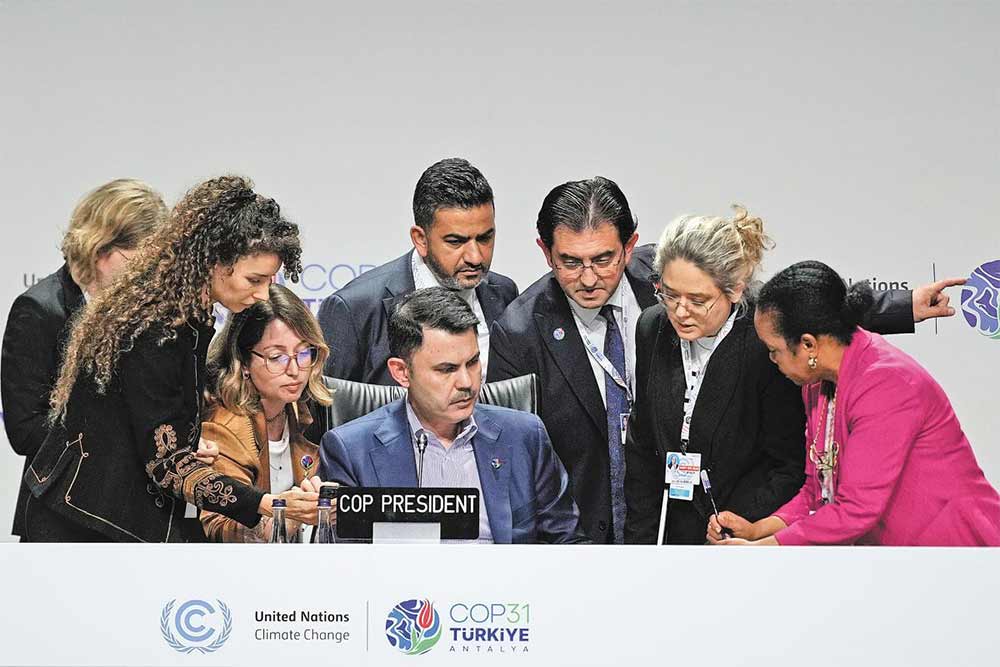 Countries have failed to reach a major new agreement on tackling climate change following deep divisions over fossil fuels and climate finance at the UN COP31 climate talks in Antalya, Türkiye.
Negotiations, which were scheduled to conclude on Friday, continued until Sunday as delegates struggled to find common ground, making it the longest UN climate conference in the history. But, the final agreement proved unacceptable to European Union (EU), Pacific island nations and several other countries because it made no direct reference to fossil fuels, the primary driver of the global warming.
I the meantime, many developing countries expressed dissatisfactions over the absence of clear financial commitments from wealthier nations to help them adapt to the impacts of rising global temperatures.
The failure of COP31 to reach consensus on two key presidency-led decisions has once again exposed persistent divisions over global climate action. UN Climate Chief Simon Stiell warned that the world could not afford further setbacks in the transition away from fossil fuels.
Addressing the closing plenary of the UN climate summit in Antalya on Sunday, Stiell expressed deep disappointment over the lack of consensus, emphasising that the global transition away from fossil fuels must remain central to international efforts to combat climate change.
He noted that the previous rounds of climate negotiations had delivered significant milestones, including commitments to transition away from fossil fuels in a just, orderly and equitable manner. These achievements also included global temperature targets, new climate finance goals and the establishment of a global goal on adaptation.

Loading...
Loading...
Also read



Editor : Iqbal Sobhan Chowdhury
Published by the Editor on behalf of the Observer Ltd. from Globe Printers, 24/A, New Eskaton Road, Ramna, Dhaka.
Editorial, News and Commercial Offices : Aziz Bhaban (2nd floor), 93, Motijheel C/A, Dhaka-1000.
Phone: PABX- 41053001-06; Advertisement: 41053012; 01793317829, 01550707291, 01550707296
E-mail: [email protected], [email protected]. [email protected], [email protected], [email protected], [email protected], Online-email: [email protected]


