



| HEADLINE |

|

Rohingya Repatriation
ICJ verdict arms Dhaka with new diplomatic leverage



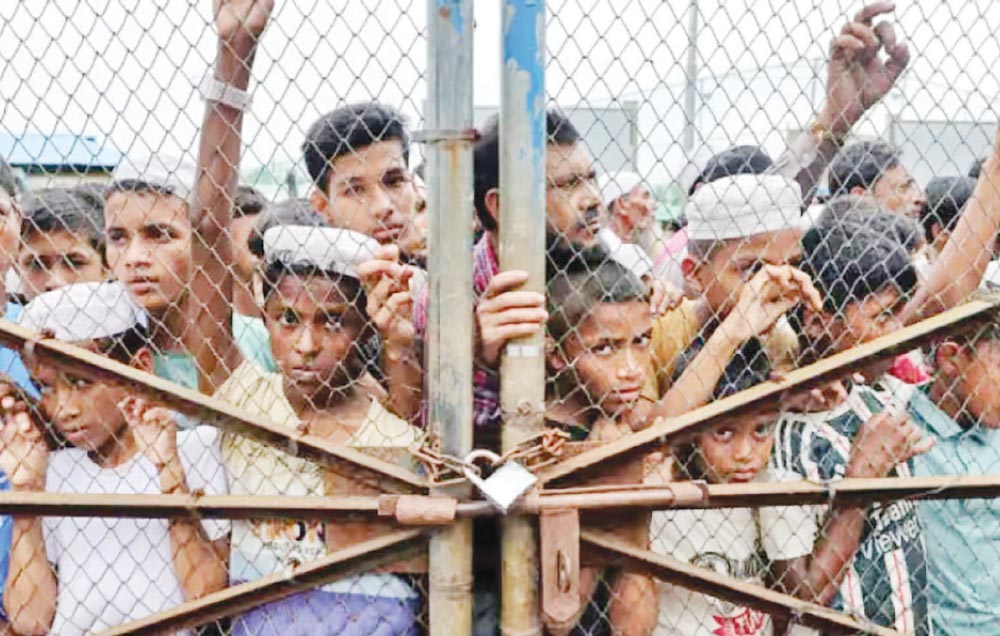 Expert on international relation, Migration and Refugee has said that Dhaka should sustain diplomatic pressure, over the next two years, engaging the US, UK, EU, Japan, South Korea, ASEAN, the OIC and China, to explore military and digital diplomacy, to address the reality that 70-75 per cent of the northern Rakhine state on Myanmar is controlled by the Arakan Army.
“Bangladesh must act before focus shifts to other crises and clearly communicate that it cannot indefinitely host over one million refugees. emphasizing the verdict's potential to shape the narrative and bolster the pursuit of rights, protection, and possible repatriation for the Rohingya community stressed upon the While the decisions of the ICJ are binding and cannot be appealed, the court has no way of enforcing its verdicts. Enforcement could face obstacles, particularly if the matter is referred to the UN Security Council where vetoes are possible,” Parvez Karim Abbasi, Executive Director at Centre for
The International Court of Justice (ICJ) last week delivered a searing guilty verdict, finding Myanmar forces systematically killed, raped and destroyed property of civilians from the mostly Muslim Rohingya during a 2017 crackdown in western Rakhine state.
It ordered Myanmar authorities to prosecute and punish anyone suspected of perpetrating genocide, compensate survivors and facilitate safe passage home for refugees -- more than 700,000 of whom fled to Bangladesh.
“The ICJ’s historic verdict holding Myanmar responsible for genocide against the Rohingya is the first time in the court’s 80-year history that a state has been found to have committed genocide. The ruling confirmed that Rohingya are inhabitants of Myanmar, not migrants from Bangladesh, and that Myanmar’s 2017 “clearance” operations reflected an intention to destroy a substantial part of the Rohingya population. Judges found that security forces killed thousands of civilians, committed widespread sexual violence, used extreme violence against children, and systematically destroyed Rohingya villages, with approximately 10,000 killed,” said Parvez Karim Abbasi.
The court ordered Myanmar to facilitate safe, voluntary and dignified return and family reunification, provide adequate compensation within two years, restore or replace lost property, offer physical and psychological rehabilitation, and investigate and prosecute suspected perpetrators.
While ICJ decisions are binding and cannot be appealed, the court lacks enforcement mechanisms, and Russia and China are likely to veto any Security Council enforcement resolution, so the task of Bangladesh foreign Ministry to taken up the issue to the international community promptly, he added.
He said the global headlines and attention keep changing. The Middle East tensions, Gaza crisis, and Russia-Ukraine war compete for international attention. Sustained engagement is essential before attention diverts elsewhere.
Asif Munir, Independent Expert on Migration and Refugee, highlighted several key aspects of the ICJ's decision. Foremost among them is the court's formal recognition of the Rohingya as an ethnic group, which affirms that the community falls within the protections of the Genocide Convention.
"The court's findings were based on a rigorous due process. The evidence presented by The Gambia and other countries, which included testimonies from victims, survivors, and eyewitnesses as well as UN reports, was deemed admissible and accepted by the court. This validation of victim testimony, despite Myanmar's denial and obstruction of direct access," Munir said.
He noted that while the verdict recognized genocide, the decision was not unanimous, with a vote of 9 to 6 on this specific point, demonstrating thorough deliberation where dissenting opinions were considered.
"Nothing can be achieved very soon, but at least it gives a new strength and impetus," Munir stated, emphasizing the verdict's potential to shape the narrative and bolster the pursuit of rights, protection, and possible repatriation for the Rohingya community.
He also expressed hope that the verdict could help counter negative narratives within Bangladesh, clarifying that the Rohingya did not arrive by choice and cannot return by choice, underscoring the need for a complex, tactful diplomatic solution.
"It also vindicates Bangladesh's diplomatic stance and also again the it now means that again that we have a credible tool to exert maximum possible pressure on our Myanmar's neighbors or the federal government in Myanmar to actually take back the Rohingyas.
So we should continue our diplomatic pressure on Myanmar by advertising the plight of the Rohingyas and again our embassies and high commissions abroad should be actively engaged in sharing again Bangladesh's role in securing this verdict and facilitate the safe and dignified return to their place of residence.

Loading...
Loading...
Also read



Editor : Iqbal Sobhan Chowdhury
Published by the Editor on behalf of the Observer Ltd. from Globe Printers, 24/A, New Eskaton Road, Ramna, Dhaka.
Editorial, News and Commercial Offices : Aziz Bhaban (2nd floor), 93, Motijheel C/A, Dhaka-1000.
Phone: PABX- 41053001-06; Advertisement: 41053012; 01793317829, 01550707291, 01550707296
E-mail: [email protected], [email protected]. [email protected], [email protected], [email protected], [email protected], Online-email: [email protected]


