



| HEADLINE |

|

BBC report: Hasina factor strains Dhaka-Delhi ties; what path will India take?
Published : Friday, 27 November, 2026 at 2:06 PM
Observer Online Report


Collected Photo
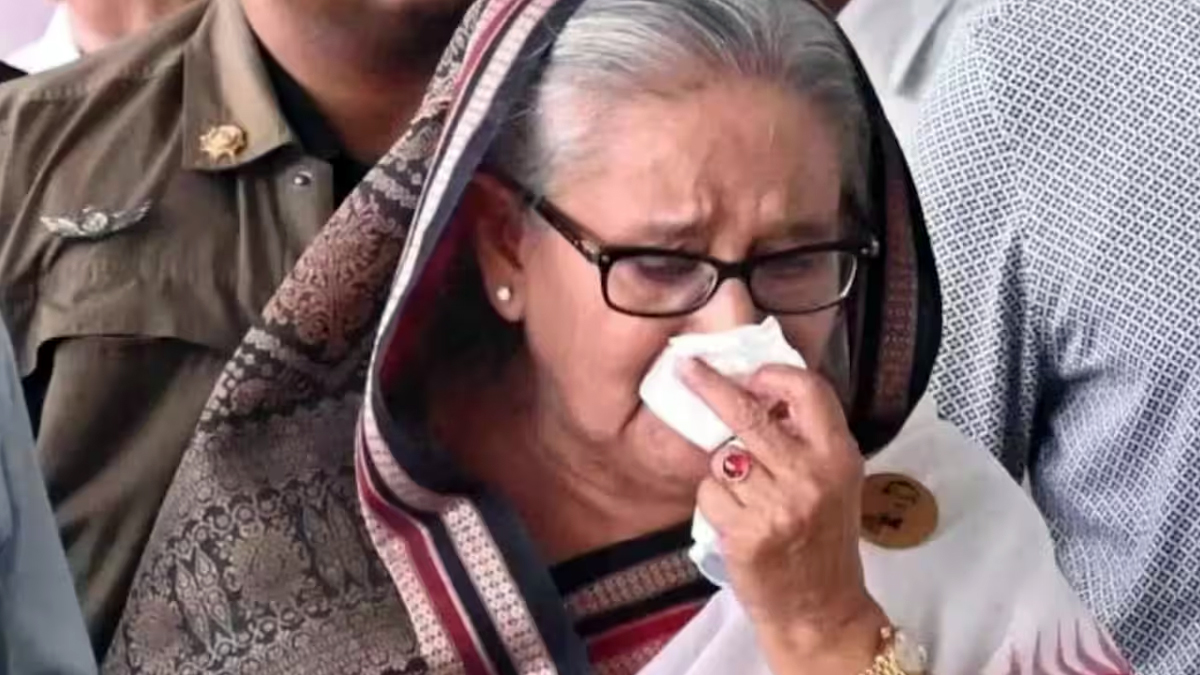
Bangladesh-India relations have come under fresh strain over the activities of ousted and fugitive former Prime Minister Sheikh Hasina, who has expressed a desire to return home on Victory Day, December 16, while Dhaka has vowed to arrest her upon arrival following her death sentence for crimes against humanity.
India, which granted her shelter, also faces diplomatic discomfort as efforts to normalise bilateral ties remain stalled by complexities and Hasina's moves further complicate matters, raising questions over which path New Delhi will take to break the impasse.
Return vow and Dhaka's hard line
According to the BBC, the 79-year-old Hasina fled to Delhi in August 2024 after a mass student-led uprising ended her 15-year rule, with her spokesperson claiming she wants to return on Bangladesh's Victory Day.
A Bangladeshi court sentenced her to death in absentia for involvement in crimes against humanity, and activities of her Awami League party have been banned in Bangladesh, where the United Nations estimates 1,400 people were killed in crackdowns and security force action during the uprising.
The Bangladesh government has sought her extradition from India and stated that she will be arrested as soon as she returns and her death sentence carried out. Hasina now wants Dhaka to send a plane from Delhi for her return, or else intends to come back via a commercial flight or across the land border.
A close associate of Hasina, Abu Obaida Arin, claimed she is ready to enter Bangladesh on foot if necessary, adding that supporters have identified nine possible border-crossing routes along the 4,096-kilometre frontier spanning West Bengal, Assam, Meghalaya, Tripura, and Mizoram in what he called a deliberate plan not to be taken lightly.
Dhaka has responded firmly, insisting she must be returned through extradition. State Minister for Foreign Affairs Humayun Kabir told journalists that reality and desire are not the same, calling her no ordinary commercial passenger and saying she can only be brought back in handcuffs.
On Wednesday, India's Ministry of External Affairs said Bangladesh's extradition request is being reviewed under established processes, though a voluntary return would be a different matter.
Party network and street unrest
Many believe Hasina's announcement is aimed at challenging government authority, regaining space in political debate, and exploiting divisions among political parties that united to oust her, while turning India's unresolved issue of sheltering a former ally into a larger diplomatic crisis. Choosing December 16 also reflects a personal bid to reclaim her place in Bangladesh's liberation history.
Arin said Hasina stays in regular touch with Awami League leaders and activists via Telegram audio calls to keep the party network running from exile, claiming she held over 300 meetings in the past 18 months across all 64 districts, 300 parliamentary constituencies, and 78 organisational units—some lasting four to five hours. He claimed the party can gather five million people for a human chain along her route from the border to Dhaka.
Such claims appear ambitious given that the Awami League is effectively banned and sidelined from mainstream politics, with most top leaders exiled, imprisoned, or in hiding, alongside arrests and thousands of cases. Still, supporters have staged street violence, arson, vandalism, and bomb attacks in several districts, with law enforcement facing particular difficulty in Gopalganj, while highway blockades using felled trees and burning tyres have halted traffic.
According to conflict monitor Armed Conflict Location and Event Data Project (ACLED), Awami League supporters carried out 40 demonstrations and over 140 riots through November 23, with at least 11 people killed in political violence this month—including two civilians and six deaths directly linked to the unrest.
Doubts remain over whether Hasina will truly return, with many viewing the announcement as an effort to lift demoralised activists, though the Awami League has at least returned to political discussion.
Daily Water editor and former interim government press secretary Shafiqul Alam told the BBC the party is exploiting cracks in post-uprising unity, noting that disputes over the July Charter, proposed constitutional reforms, and a referendum have widened rifts between the elected BNP government, rival Jamaat-e-Islami, and the youth-led National Citizen Party (NCP), leading the Awami League to see a chance to hit the streets amid a weakened police force. Analysts say her return could deepen conflict rather than revive the party, while the government treats recent sporadic violence as terrorism.
Delhi's dilemma and outlook
Managing the fallout has grown harder for India despite diplomatic outreach on trade, border security, and normalisation. Strained ties are underscored by Prime Minister Tarique Rahman not yet visiting India nearly 10 months into office, with a planned August trip reportedly derailed after Hasina held a press conference in Delhi.
Avinash Paliwal of SOAS University of London said Hasina's latest statement shifts decision-making pressure onto Dhaka rather than Delhi, arguing India believes it tried hard over the past 10 months—from naming a minister-rank politician as high commissioner to proposing security and trade talks—and now feels frustrated, seeing little reason to stop Hasina from stoking tension if ties stay strained regardless, though he noted permanently excluding the Awami League from Bangladeshi politics also goes against India's interests.
In Dhaka, doubts persist over Delhi's approach. Shafiqul Alam said perceptions exist that India wants to rehabilitate the Awami League while key issues remain unresolved, including Hasina's extradition, unresumed transit facilities helpful to garment exporters, and the nearing expiry of the Ganges water-sharing treaty with little visible progress, noting only tourist and medical visas have resumed.
A Dhaka-based foreign policy analyst speaking on condition of anonymity said both sides remain stuck in mutual frustration around Hasina—an "elephant in the room"—and must find ways to move forward past the issue. Paliwal suggested the least damaging scenario for India could be Hasina returning to face fresh trial while the Awami League rebuilds under different leadership, giving Delhi room to protect long-term interests.
However, her December 16 return remains uncertain, with the unnamed analyst noting it could be delayed at the last minute, and ACLED South Asia analyst Pearl Pandya saying a return is unlikely given the prospect of execution, even though her remarks have clearly energised supporters and further complicated ties with India.
-SA

Loading...
Loading...
Also read







Editor : Iqbal Sobhan Chowdhury
Published by the Editor on behalf of the Observer Ltd. from Globe Printers, 24/A, New Eskaton Road, Ramna, Dhaka.
Editorial, News and Commercial Offices : Aziz Bhaban (2nd floor), 93, Motijheel C/A, Dhaka-1000.
Phone: PABX- 41053001-06; Advertisement: 41053012; 01793317829, 01550707291, 01550707296
E-mail: [email protected], [email protected]. [email protected], [email protected], [email protected], [email protected], Online-email: [email protected]


