



| HEADLINE |

|

Indians still can’t stay away from Pakistani dramas despite ban
Published : Saturday, 28 November, 2026 at 10:49 AM
Observer Online Report


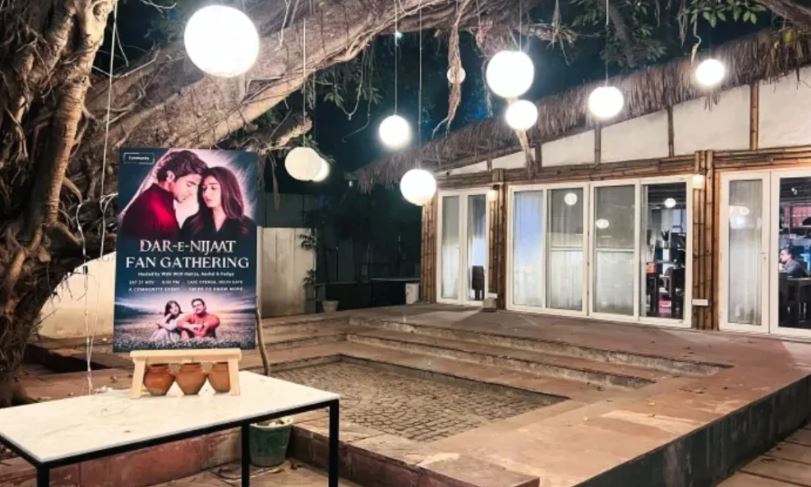
Abu Sufian Khan, a New Delhi-based cultural entrepreneur and curator, was recently surprised by the overwhelming response to a private screening of the Pakistani romantic drama Dar-e-Nijaat in India's capital.
The event was originally planned for a maximum of 45 people. However, more than 700 people contacted him expressing interest in attending.
Like several other Pakistani television programmes and songs, Dar-e-Nijaat is officially banned in India. Despite the restrictions, Indian viewers gather on Instagram every weekend to share scenes, discuss episodes and express their admiration for the drama's lead character, Abu Bakar.
Beyond online platforms, group screenings and private viewing events are also taking place in different parts of India. The drama revolves around a young woman named Zariab, her childhood love Jameel, and Abu Bakar, who later enters her life and fills an emotional void.
As enthusiasm for the drama spreads across Indian cities, authorities have been struggling to prevent its public screenings.
In Bengaluru, at least two screenings were planned for the upcoming weekend. However, both events were cancelled after promotional posters attracted the attention of authorities. Nevertheless, these restrictions have done little to reduce the drama's popularity.
One phrase frequently appearing on fan pages and in comment sections has become a symbol of the craze: “Sabr ka phal nahi, Abu Bakar chahiye” (We don't want the fruits of patience; we want Abu Bakar).
The phrase is a humorous twist on a familiar Urdu proverb and reflects Indian viewers' affection for the fictional Pakistani male character.
Rakshanda Mujib, a fan from Bengaluru, said, "We were all waiting for someone like Abu Bakar. He is so empathetic that I am completely fascinated by him. Most men nowadays lack these qualities."
However, the excitement surrounding Dar-e-Nijaat is only the latest example of a much broader interest in Pakistani entertainment. India's attempts to keep Pakistani content away from its screens have not been particularly successful.
Sufian Khan said, "Indians cannot interact with Pakistani artists on Instagram, listen to Pakistani songs on Spotify, or watch Pakistani dramas on YouTube without using a VPN or proxy."
Yet, for many viewers, the appeal of banned Pakistani culture is so strong that they are willing to risk violating government restrictions.
Despite several wars and almost constant tensions, India and Pakistan have maintained opportunities for cultural exchange for decades, although both countries have imposed restrictions at different times.
Over the past decade, however, informal restrictions on Pakistani artists performing or working in India have become increasingly strict. During this period, Prime Minister Narendra Modi's government has gradually reduced almost all forms of engagement with Pakistan.
The situation took a dramatic turn in April 2025, when gunmen killed 26 tourists in Pahalgam, Indian-administered Kashmir. India blamed Pakistan for the attack, while Islamabad denied any involvement. The two neighbouring countries subsequently engaged in four days of intense fighting before agreeing to a ceasefire.
Since then, India has banned Pakistani songs, films and television dramas across several streaming platforms, including YouTube, citing national security concerns. Earlier this week, India also demanded that Netflix block Pakistan's first programme available to viewers in the country.
China imposed a similar restriction on South Korean popular culture in 2016. The ban remained in place for nearly a decade. However, India's efforts appear to be struggling.
The difference lies in the level of control. China controls the platforms used by its citizens, whereas India does not control YouTube.
Under Section 69A of India's Information Technology Act, the government can direct platforms to block specific content. Such orders are generally kept confidential. YouTube has effectively restricted access to Pakistani channels for users located in India through geographical blocking.
However, geographical restrictions apply to platforms rather than individual viewers. By using a VPN, viewers can make their location appear to be somewhere else. They can also download dramas and re-upload them through accounts operating within India.
According to data from monitoring firm Top10VPN, searches for VPN services in India increased by 72 percent on May 8, 2025, the day streaming platforms were instructed to remove Pakistani content. The firm linked the surge to the reciprocal online content restrictions imposed by the two countries.
The Power of Popularity
VPN downloads in India are also creating commercial benefits for Pakistani television networks, including ARY Digital, the broadcaster of Dar-e-Nijaat.
Jairjis Seja, head of ARY Entertainment, said, "Indian viewers account for 30 to 35 percent of the total views of Pakistani television channels. In today's world, you can make content difficult to access, but you cannot stop people from watching it."
It is difficult to disagree with Seja's assessment. Pakistani dramas such as Tere Bin (2022) and Kabhi Main Kabhi Tum (2024) also enjoyed enormous popularity in India.
Pakistani director Mehreen Jabbar said Indian viewers regularly send her messages about her television series, including Doctor Bahu, Jackson Heights and Durr.
So, why are Pakistani dramas so popular among Indian audiences?
The cultural similarities between India and Pakistan allow viewers on both sides of the border to relate easily to many aspects of Pakistani television dramas.
Seja also pointed to improvements in the production quality of Pakistan's entertainment industry.
He said, "Over the years, our content has become much stronger. It is realistic, rooted in everyday life, thought-provoking and relatable to audiences."
According to Sufian Khan, however, there is another reason behind the popularity of dramas like Dar-e-Nijaat in India.
He believes Muslim characters are often portrayed through stereotypical representations in Indian television dramas and films.
In contrast, one of the attractions of Dar-e-Nijaat is its portrayal of Islam in a refreshing, inclusive and non-judgmental way.
He explained that the drama does not present Islam as something frightening or rely on stereotypical Bollywood-style depictions of religious identity. Instead, religious practices are portrayed with humility and respect.
Culture becomes uncomfortable during wartime politics because it can make an enemy appear familiar. However, technological developments have made it increasingly difficult for governments to isolate entire societies from one another.
Aishwarya Verma, a policy analyst based in Delhi, said, "Over the past few years, a large number of Indians have been watching Pakistani television programmes, listening to their music and following social media influencers from Pakistan. Culture and access to entertainment have become open to everyone. As a result, preconceived notions are breaking down."
She added, "Earlier, we knew very little about our brothers and sisters across the border. They also knew very little about us."
Pakistani actress and singer Hania Aamir is one example of this growing cultural connection. She is popular in India for her music. Her recent song Pablo also features Indian actress Rakhi Sawant.
Verma remarked, "We are all listening to her songs. Who would have imagined that?"
Ajay Bisaria, India's former High Commissioner to Pakistan, said that restrictions of this kind rarely prove fully effective.
He said, "Technology changes. It reduces the significance of both borders and bans. Governments impose restrictions because culture is visible and relatively easy to regulate. Pakistan has done the same. Indian films were banned there for decades."
Nevertheless, Bollywood remained immensely popular in Pakistan through pirated video cassettes.
Bisaria added, "Regardless of whether the two countries wanted it or not, culture has played an enormous role in bringing India and Pakistan together in their bilateral relationship."
And Dar-e-Nijaat demonstrates that culture continues to play that role.
Source: Al Jazeera

Loading...
Loading...
Also read







Editor : Iqbal Sobhan Chowdhury
Published by the Editor on behalf of the Observer Ltd. from Globe Printers, 24/A, New Eskaton Road, Ramna, Dhaka.
Editorial, News and Commercial Offices : Aziz Bhaban (2nd floor), 93, Motijheel C/A, Dhaka-1000.
Phone: PABX- 41053001-06; Advertisement: 41053012; 01793317829, 01550707291, 01550707296
E-mail: [email protected], [email protected]. [email protected], [email protected], [email protected], [email protected], Online-email: [email protected]


