



| HEADLINE |

|

From Idi Amin to Hasina: Leaders who lost power and never returned home
Published : Saturday, 28 November, 2026 at 4:24 PM
Observer Online Report


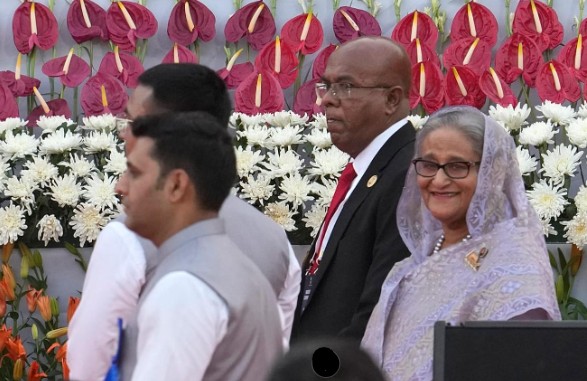
The fall of a powerful ruler does not always end with a change of government. For some leaders, losing power has meant fleeing their countries, spending years in exile and never being able to return home.
With former Bangladesh prime minister Sheikh Hasina announcing plans to return on December 16, the stories of several former leaders who left their countries after being ousted have drawn renewed attention.
Sheikh Hasina was forced to leave Bangladesh on August 5, 2024, following a mass uprising that ended her 15-year rule. She subsequently took refuge in India. She was later sentenced to death in absentia by the International Crimes Tribunal for crimes against humanity. She has rejected the proceedings and announced plans to return to Bangladesh.
History offers several examples of leaders whose political careers ended in exile.
Idi Amin, one of Africa's most notorious dictators, ruled Uganda from 1971 to 1979. His regime was marked by political repression, mass killings and widespread human rights abuses. His downfall came in 1979 after he launched an attack on neighbouring Tanzania. Tanzanian forces, alongside Ugandan rebels, eventually defeated his army and ended his rule.
Amin first fled to Libya and later settled in Saudi Arabia. He never returned to Uganda and died in exile in Jeddah on August 16, 2003.
Ferdinand Marcos ruled the Philippines from 1965 to 1986. His administration initially enjoyed support for development initiatives, but his later years in power were marked by allegations of corruption, repression and human rights violations.
A mass uprising, known as the People Power Revolution, forced him from office in February 1986. Marcos fled with his family to Hawaii in the United States, where he remained in exile until his death on September 28, 1989. His family's subsequent efforts to bring his remains back to the Philippines sparked controversy. His remains were eventually returned to the country.
Afghanistan's former president Ashraf Ghani also left his country after losing power. He served as president from 2014 until 2021, when his government collapsed as Taliban forces advanced across the country following the withdrawal of US-led international troops.
On August 15, 2021, the Taliban entered Kabul, and Ghani left Afghanistan. He subsequently took refuge in the United Arab Emirates. His departure marked the end of the Western-backed government and the return of Taliban rule.
Unlike these former leaders, Sheikh Hasina has publicly expressed her intention to return to Bangladesh.
She has announced December 16 as her planned return date, while the Bangladeshi government has maintained that she would face legal consequences if she came back.
Whether she will be able to return remains uncertain. Her case has once again brought attention to the fate of leaders who lose power and seek refuge abroad.
sks

Loading...
Loading...
Also read





Editor : Iqbal Sobhan Chowdhury
Published by the Editor on behalf of the Observer Ltd. from Globe Printers, 24/A, New Eskaton Road, Ramna, Dhaka.
Editorial, News and Commercial Offices : Aziz Bhaban (2nd floor), 93, Motijheel C/A, Dhaka-1000.
Phone: PABX- 41053001-06; Advertisement: 41053012; 01793317829, 01550707291, 01550707296
E-mail: [email protected], [email protected]. [email protected], [email protected], [email protected], [email protected], Online-email: [email protected]


