



| HEADLINE |

|

Tk 34,000cr LNG subsidies raise energy concerns
Experts warn against new LNG terminals, urge investment in renewables to ease financial pressure
Published : Sunday, 29 November, 2026 at 12:00 AM
Special Correspondent


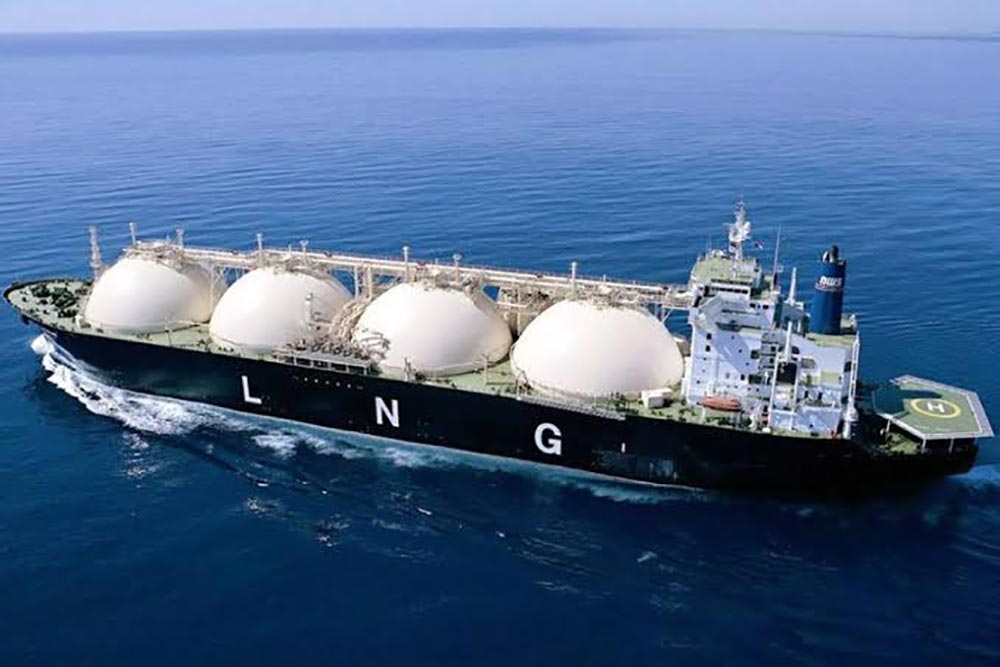 Bangladesh spent Tk34,000 crore in subsidies on liquefied natural gas (LNG) imports between March and September this year, highlighting the growing financial burden of dependence on imported fossil fuels.
Energy experts have urged the government to prioritise renewable energy instead of investing in new LNG terminals, warning that continued reliance on imported fuels will strain public finances and undermine long-term energy security.
The issue came up at the inaugural session of the three-day 4th Bangladesh Energy Conference, themed “Renewables for Energy Security”, at the Bangladesh Military Museum in Dhaka on Saturday.
Speaking as chief guest, Prime Minister's Adviser on Finance and Planning Professor Dr Rashed Al Mahmud Titumir said LNG import subsidies were imposing a substantial burden on the state, making it essential to reduce import dependence and strengthen domestic renewable energy capacity.
He said the government aimed to raise the share of renewables in electricity generation to 20 per cent by 2030 and 30 per cent by 2040.
Bangladesh has faced the cancellation of 55 Liquefied Natural Gas (LNG) cargoes since 18 March amid the ongoing Middle East crisis, forcing the government to procure LNG at higher prices from the international spot market, he added.
"The government inherited a financially strained and import-dependent energy sector," he said, adding that Tk2,81,388 crore had been paid in capacity charges for idle power plants between 2009 and June 2026.
He stressed that increasing power generation alone would not resolve the energy crisis, calling for greater efficiency in generation, transmission and distribution.
The government has allocated Tk1,500 crore to support solar installations through loans at 6 per cent interest, repayable over 12 years, he said. Rural households, rooftop solar projects on public and commercial buildings, and installations on suitable agricultural land offer significant opportunities.
In his welcome address, Bangladesh Working Group on Ecology and Development (BWGED) Member Secretary Hasan Mehedi said the country's renewable energy potential far exceeded existing policy targets.
“Instead of relying on large-scale power plants, we need to bring ordinary people into electricity generation,” he said.
He criticised plans to build five new LNG terminals in environmentally sensitive areas, including Hiron Point near the Sundarbans and Mongla. He argued that investment in renewable energy would deliver greater long-term benefits than spending on imported LNG.
Transparency International Bangladesh (TIB) Executive Director Iftekharuzzaman said domestic and international lobbying had created structural and institutional dominance of fossil fuels in the energy sector.
Renewable energy must be established as a national priority rather than treated merely as an alternative, he said.

Loading...
Loading...
Also read



Editor : Iqbal Sobhan Chowdhury
Published by the Editor on behalf of the Observer Ltd. from Globe Printers, 24/A, New Eskaton Road, Ramna, Dhaka.
Editorial, News and Commercial Offices : Aziz Bhaban (2nd floor), 93, Motijheel C/A, Dhaka-1000.
Phone: PABX- 41053001-06; Advertisement: 41053012; 01793317829, 01550707291, 01550707296
E-mail: [email protected], [email protected]. [email protected], [email protected], [email protected], [email protected], Online-email: [email protected]


