



| HEADLINE |

|

Secret files reveal wider CIA waterboarding at Kabul black site
Published : Sunday, 29 November, 2026 at 10:31 AM
Observer Online Report


Collected Photo
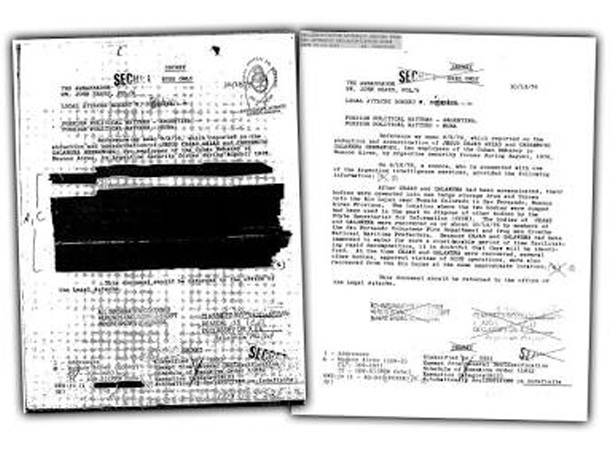
Far more detainees were subjected to waterboarding during the US "war on terror" following the September 11 attacks than the Central Intelligence Agency (CIA) officially acknowledged, according to newly surfaced government records.

The documents indicate that the CIA used the interrogation practice at a secret detention facility north of the Afghan capital Kabul.
Previously, the CIA had acknowledged waterboarding only three detainees: Abu Zubaydah, known as a senior al-Qaeda figure; Khalid Sheikh Mohammed, the alleged main planner of the September 11, 2001 attacks; and Abd al-Rahim al-Nashiri, accused of plotting the 2000 bombing of a US Navy destroyer.

However, secret records obtained by The New York Times through a lawsuit filed under the Freedom of Information Act include a statement from a former CIA contract translator suggesting that waterboarding was far more common beyond the agency's admissions.
The New York Times report, published on Friday, stated that the CIA operated "special rendition" or secret detainee transfer centers in Thailand and Poland, while the linguist or translator worked at a secret prison or "black site" north of Kabul known as "Salt Pit" or "Detention Site Cobalt."

The report cited a specific account in which the translator told an agent of the Federal Bureau of Investigation (FBI) in 2012 that he saw a person named "Bahir" strapped to a wooden board tilted downward toward water.
According to a documented summary by the FBI agent, roughly three to four people were "doing this." The witness translator said he saw the incident while passing by and did not take part himself, noting that the waterboarding session took place in a hallway of the prison where there was not much space.
These details emerged between 2008 and 2012 during an investigation led by then-special prosecutor John Durham into CIA torture and the destruction of waterboarding videotapes, which concluded without any charges being filed against anyone.
In the newly released records reported by The New York Times, the translator told the FBI that "Bahir" was "a relative of Hekmatyar", pointing to former Afghan Prime Minister Gulbuddin Hekmatyar.
According to The Guardian, the incident likely aligns with a man named Ghayrat Baheer, who was detained in a 2002 operation in Islamabad, Pakistan, appears in CIA records, and is noted as having faced "harsh" interrogation methods. The CIA has not yet commented on the newly surfaced information.
-EM

Loading...
Loading...
Also read





Editor : Iqbal Sobhan Chowdhury
Published by the Editor on behalf of the Observer Ltd. from Globe Printers, 24/A, New Eskaton Road, Ramna, Dhaka.
Editorial, News and Commercial Offices : Aziz Bhaban (2nd floor), 93, Motijheel C/A, Dhaka-1000.
Phone: PABX- 41053001-06; Advertisement: 41053012; 01793317829, 01550707291, 01550707296
E-mail: [email protected], [email protected]. [email protected], [email protected], [email protected], [email protected], Online-email: [email protected]


