



| HEADLINE |

|

HSIA Third Terminal set for partial launch Dec 16, full ops by 2028
Published : Sunday, 29 November, 2026 at 12:02 PM
Observer Online Report



Collected Photo
Civil Aviation Authority of Bangladesh (CAAB) will sign a 15-year concession agreement with a Japanese consortium on Monday (November 30) to operate and maintain the third terminal of Hazrat Shahjalal International Airport (HSIA), targeting full-scale operations within 14 months by February 2028.
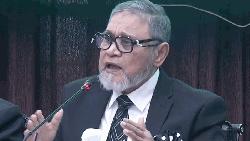
CAAB Chairman Air Vice Marshal Md Mostafa Mahmud Siddique announced the timeline at a press conference at the CAAB headquarters on Sunday.
The terminal had been hurriedly inaugurated partially on October 7, 2023, but remained non-operational following the fall of the Awami League government in 2024.
The CAAB chairman said the agreement was finalised following prolonged negotiations, reviews, and technical and financial analyses, prioritising national interest, airport security, and international-standard passenger services. Preparations are underway to begin partial operations on Victory Day, December 16, by handling four flights.
Under the agreement, the concession area will be handed over to the operator within 15 days of signing. At least 25 per cent of regular international flights are targeted to shift within eight months of handover, with 100 per cent of scheduled international passenger and cargo handling moving to the new terminal within 14 months. The 15-year concession tenure will take effect from the date all regular international flights are transferred to Terminal 3.
The Japanese consortium will operate, repair, and maintain the third terminal, the multi-storey car parking facility, and the new import and export cargo terminals at its own expense, while procuring additional equipment and expanding utility infrastructure as needed. Once Terminal 3 reaches full operation, CAAB will use existing Terminals 1 and 2 for domestic, Hajj, and non-scheduled flights.
Core sovereign and security functions—including runways, taxiways, aprons, air traffic control, aviation security, screening, and firefighting and rescue—will remain under CAAB, while immigration, customs, and health checks will stay with relevant government agencies.
The operator will collect embarkation fees from departing international passengers, boarding bridge fees, and non-aeronautical revenues from shops, lounges, parking, and advertisements. In return, it will pay CAAB 13.5 per cent of gross passenger and cargo revenue monthly from the start of operations, rising to 27 per cent once full capacity is achieved.
Alongside Biman Bangladesh Airlines, another international ground handler will be appointed at Terminal 3, with all ground and self-handlers paying royalties to the operator, while Biman will also pay a per-tonne US dollar royalty for cargo handling.
To ensure service quality, the contract mandates delivery of the first bag within 15 minutes of aircraft arrival and the last bag within 42.5 minutes for narrow-body and 47.5 minutes for wide-body aircraft. Average check-in wait times are capped at 5 to 10 minutes for business class and 20 to 30 minutes for economy class, while core systems such as BHS, CUTE, CUSS, and FIDS must maintain 95 to 98 per cent uptime. Repeated failure to meet performance indicators will incur liquidated damages ranging from $5,000 to $35,000 per breach.
Spanning 230,000 square metres with an annual capacity of 24 million passengers, Terminal 3 features 127 check-in counters including self-check-in kiosks, 129 passport control counters (114 manual and 15 automated), eight on-arrival visa counters, 10 transit and transfer counters, 16 airline ticket counters, 16 baggage belts, 12 contact boarding bridges, and 25 remote aircraft parking bays. Security installations include 99 baggage X-ray machines, 22 body scanners, 55 walk-through metal detectors, and 39 explosive trace detectors.
The multi-storey car park accommodates 1,230 vehicles, while the new 27,000-square-metre import cargo terminal and 36,000-square-metre export cargo terminal provide a combined annual handling capacity of 820,411 metric tonnes—comprising 273,470 metric tonnes of imports and 546,941 metric tonnes of exports.
-SA

Loading...
Loading...
Also read








Editor : Iqbal Sobhan Chowdhury
Published by the Editor on behalf of the Observer Ltd. from Globe Printers, 24/A, New Eskaton Road, Ramna, Dhaka.
Editorial, News and Commercial Offices : Aziz Bhaban (2nd floor), 93, Motijheel C/A, Dhaka-1000.
Phone: PABX- 41053001-06; Advertisement: 41053012; 01793317829, 01550707291, 01550707296
E-mail: [email protected], [email protected]. [email protected], [email protected], [email protected], [email protected], Online-email: [email protected]


