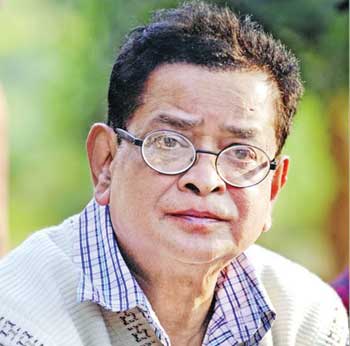
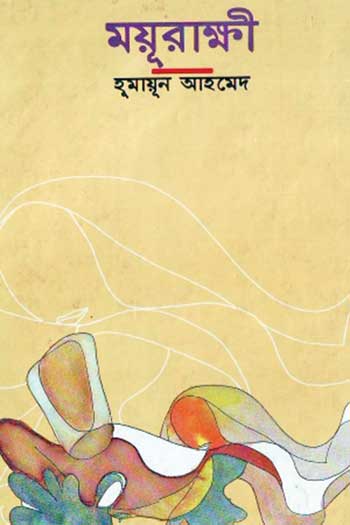
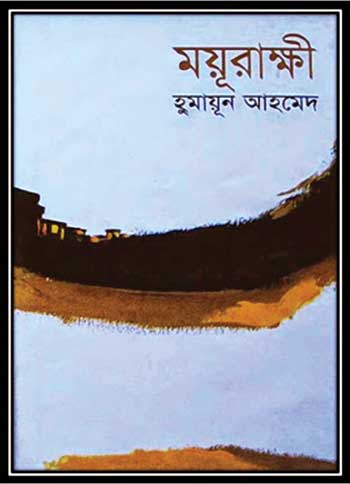
Many years ago when Humayun Ahmed was on an official duty in Barisal, invigilating a college exam, he had to spend some nights in an old, desolate house. In one of these nights, he woke up from his dream and felt deep inside a river humming away so mysteriously that it evoked an entire world of childhood, memory and nostalgia, blessing him with a creative downpour. The river that he christened as 'Mayurakshi' would later be the foundation of his many fictional works.
Born on 13 November, 1948 in Kutubpur, Mymensingh, Humayun Ahmed spent his childhood and adolescent years in different parts of the country for his father's peripatetic profession. His father Foyzur Rahman Ahmed was a sub-divisional police officer and also a literary enthusiast. He was killed by Pakistani military in 1971. His mother Ayesha Fayez also became a celebrated writer for her autobiographical works.
Humayun Ahmed and his siblings -- Muhammad Zafar Iqbal, a celebrated writer, Ahsan Habib, a prominent cartoonist and writer -- would write poems and short stories in wallpapers in their early age.
However, his government employee busy father would always inspire his children's creative venture. He studied in Chittagong Collegiate School. He eventually passed his Secondary School Certificate (SSC) examination from Bogra Zilla School in 1967 and Higher Secondary School Certificate (HSC) examination from Dhaka College in 1969. It was in Dhaka College when Humayun Ahmed experienced many uncanny events that would lay the foundation of his writing self.
He then attended the University of Dhaka and graduated with a Bachelor of Science in Chemistry and later with a Master of Science degree. His debut novel Nondito Noroke (In Blissful Hell) was published in 1972 while he was still a university student. The book explores the crisis of middle class family and the upper hand of patriarchy. The plot spins around a simple middle class family that faces many problems because of their mentally sick girl. The book was hailed by many literary critics and readers alike after its publication.
His literary career was prolific, for he produced several hundreds of novels, a good number of short story collection, TV drama and songs. He wrote fictional series featuring recurring characters such as Himu, Misir Ali and less frequently, Shubhro. Himu is an anti-logic character who lives like a vagabond or a gypsy. He does not have job and, therefore, no source of income too. He prefers the life of a beggar than that of a hard worker, often praising begging. Humayun Ahmed borrowed some of these ideas from the works of his favourite literary icon, John Steinbeck, an American novelist and also Nobel Prize laureate in literature.
Misir Ali is also a famous psychiatrist character invented by Humayun Ahmed. Some deem him as a famous character in Bengali literature, TV and film over the last three decades. Misir Ali is a very intelligent person and often seen solving mysteries, although never accepting money for them. He is a logical person and doesn't believe in any paranormal activities. He has a personal diary named 'unsolved', in which he writes about those mysteries not solved by him.
Humayun Ahmed wrote several novels based on the Bangladesh Liberation War -- Aguner Poroshmoni, Paap, 1971, and Jyotsna O Jononir Golpo. These works tell the macabre story of Pakistani military crackdown in 1971 and heroic resistance and fight of Bangladeshi people.
Like his novels, Humayun Ahmed was equally celebrated for his drama and film directions. His first television drama was Prothom Prohor, directed by Nawazesh Ali Khan. His first drama serial was Ei Shob Din Ratri. This was followed by the comedy series Bohubrihi, the historical drama series Ayomoy, the urban drama series Kothao Keu Nei, Nokkhotrer Raat, and Aaj Robibar. In addition, he made single episode dramas, most notably Nimful.
Humayun Ahmed is famous in both parts of Bangla. In an interview, Sunil Gangopadhyay described him as the most popular writer in Bengali language for a century and according to him, he was even more popular than Sarat Chandra Chattopadhyay. The inventor of the river Mayurakshi was suffering from colon cancer in his twilight years. He breathed his last on July 19, 2012. For his literary excellence, Humayun Ahmed was awarded Lekhak Shibir Pirze in 1973, Bangla Academy Literary Award in 1981 and Ekushey Padak in 1994.
Novels:
Aaj Ami Kothao Jabo Naa
Aaj Chitrar Biye
Adbhut Sob Golpo
Ahok
Akash Jora Megh
Amar Ache Jol
Amar Chelebela
Botol Vut
Brihonnola
Brishti Bilash
Chokkhe Amar Trishna
Daruchinir Dip
Debi
Ei Megh Roudro Chaya
Elebele
Ireena
Jibonkrishno Memorial High
Jochna O Jononir Golpo
Jodiyo Sandhya
Jol Jochona
Neel Oporajita
Nondito Noroke
Tondrabilas
Tomader Jonyo Bhalobasa
Shonkhonil Karagar
Uralpankhi
TV Drama:
Prothom Prohor
Eishob Dinratri
Bohubrihi
Ayomoy
Kothao Keu Nei
Nimful
Films:
Sonkhonil Karagar
Aguner Poroshmoni
Srabon Megher Din
Dui Duari
Chandrokotha
Shymal Chaya
Durotto
Amar Ache Jol





