



| HEADLINE |

|
The Symphony of our Times
IA exams and subsequent days
Published : Monday, 26 August, 2019 at 12:00 AM
Mizanur Rahman Shelley


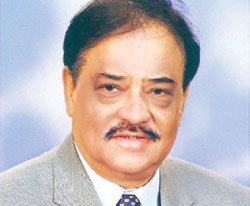
Mizanur Rahman Shelley
Next day baba dropped me at the Central Public Library for taking notes from textbooks there. In the afternoon when I was on my way to New Market from Armanitola, I met Aga Kohinoor Alam, Mokbul Hassan Moni, Mobin and Jahangir Mohammad Jasim at Bakshibazar. Moni, Mobin and Jahangir were childhood friends and students of other colleges. Aga Kohinoor, who was a close friend from the first week in Dhaka College, at this stage became a co-worker in preparations for the examinations. He and I walked to the New Market, our evening haunt, discussing various aspects of our studies. Our educational journey ended in the Dhaka Collage hostel in Salam's room.
The present, however, was not all studies. There was a larger canvas of life that made us eager to break free of shackles of inadequate financial resources marking middle-class existence. Frequently, during these challenging days, I overheard baba and ma discussing the financial problems of family. Ma said in early April with sadness in her voice, 'Next year three of the children would be in college. That would mean more expenses. It will take Shelley four or five years more to start earning. One does not know what will be the situation in the future'. In reply, baba said in a calm and composed voice, 'We should have faith in Allah, the Omni competent. He has always blessed us to tide over difficulties and problems.'
Listening to them, I felt all the more inspired to accomplish something worthwhile. Good results in the forthcoming IA examinations would be a significant step, however small, towards the desirable achievements. The Intermediate examinations that year spanned the last week of April and first part of May. Our seats were in Notre Dame College. The hall was spacious and that atmosphere correct and strict yet congenial. Some of the days we had two papers, meaning that the entire working day had to be spent in the examinations centre.
Notre Dame Collage, run by missionary fathers was an extension of St Gregory's School of which I was student. If things followed their natural course, I should have been in Notre Dame which earlier was called St Gregory's College. If I remember correctly, a few years ago, a brilliant student who later became Dr Kamal Hossain stood first in IA from that college. I was happy that I could take terminal examinations at the renowned college.
One thing I still remember is the absence of likeable restaurants around the college. Unlike Dhaka College, it did not have a New Market nearby. There was only a tin-roofed plebeian restaurant astride the large drain opposite the college. The eatery was named the Chittagong Restaurant. We had our meagre tiffins and tea there during recess.
The stress of not being able to access good cafés or tea-houses did not prevent us from giving a good account of ourselves in the examinations. I, in particular, felt highly satisfied with my performance, especially in English, Bengali, history and logic. I thought I fared well in my favourite subject, geography. That, however, was my self assessment. There was no way of knowing what will happen, when the result come out in three months.
Nevertheless, we left the future to the future. As soon as the gruelling days of final examinations ended, we rejoiced in the relaxation and freedom that follow every terminal test.
Days following the close of the Intermediate examinations provided for us a taste of a new kind of time. The main work was no more on the agenda. Our student age, as it were, experienced suspended animation. We would not have classroom studies until we entered the university. As May 1959 came to an end, that period seemed to be somewhat distant.
Nature abhors vacuum. Empty days were soon filled up by close sessions of class fellows, discussions about the pros and cons of intimate friendly relations, the clash of egos and sensitivities. For instance, on May 24, a rain-clad evening in Shahed Latif's place in Eskaton Garden gave us an opportunity to discuss Shahed Kamal's highly individualistic csonduct and the hurt it caused Shahed Latif. Such teen-age feelings, however trivial, felt significant in the emotional canvas of tender age. I recall the repeated attempts of Shahed's younger brother Zahed Latif to join our discussion. He was frustrated as Shahed persuaded him to leave the room. One year, our junior, Zahed, despite his brotherly clashes with Shahed, became a close friend.
Friends were not the only recourse of the empty days. There were also visits outside Dhaka. Last days of May found me in our quiet village home at Kushumpur in Bikrampur-Munshiganj.
After the journey by lunch from Sadarghat to Taltola, I travelled on bicycle over unmetalled road scorching in the summer sun. Familiar days in dear rural home was full of pleasing sights and sounds of unsullied nature. The fragrant fresh food, superbly cooked by grand ma, Bujan and aunties were tempting and tasty.
Most of the days in Kushumpur were awash with incessant, and refreshing downpour. This had the effect of not only keeping me indoors but providing ample opportunities for informative and entertaining readings. The sources were back copies of Bangla monthly Mahe Nau and weekly Pakistani Khabar, both government publications, which dada subscribed to. These hours also provided generous scopes for having tea with elder kins and engaging chats with generally solemn but occasionally friendly grandfather, dada, former police officer Jasimuddin Bhuiyan, in his late seventies. These also were inspiring times as the mind danced in the rain.
I composed several poems that came from the heart during these days in the lap of affectionate and generous nature. The rain-soaked enchantment of charming scenario in fading summer made the environment picturesque. In such a setting, the mind was deeply moved by romantic writings of like-minded poets, a few years our senior. Mohammad Moniruzzaman 'Dhyaner Nirjane' (In the solitude of meditation) and Shamsur Rahman's 'Dui Singha' (Two lions) and attractive poems of Md Mahfuzullah and Mohiuddin enthused me to compose such poems as 'Kshanik Muhurta' (The instant) and 'Simana' (The perimeter).
The next two days observed the mysterious hide-and-seek of alternating rain and sunlight. I wrote a few more poems including one on the longing of a city dweller captive in rural environment: 'Swarna Mriga' (The golden deer), 'Paper Par' (After the sin) and 'Adekha Tomay' (To unseen you).
The next day, May 27, was also wasted by rain and it frustrated my plans to return to Dhaka. The day was spent in writing diaries of the village days and some other poems including one called 'Dui Nagari' (Two cities). It is sad to note that moving times made me lose those poems composed in rural adolescence.
On Thursday, May 28, I finally tore the touching ties of the village home and started towards the launch terminal on way to Dhaka.
Indigent aunties tearfully pleaded to reach their messages of needs to their earning sons in Dhaka. Bujan cried her heart out as I cruelly decided to depart. The scene is indelibly etched in my memory. On return to Dhaka and reaching the Mahuttuli home, I related to eager brothers and sisters my pleasant experiences at Kushumpur. They were delighted and happy especially at receiving the large basket of mangoes from village home.
Eager to share my creations at Kushumpur I rushed in the afternoon to Baishakhi to join what I thought would be a regular session of Chakrabak. Alas! no one was there. Crestfallen, I went to New Market where Shahed and Masum were chatting. There was no sign of Shahed Kamal. Hence, we had an incomplete Chakrabak session where I eagerly read out my poems written in the village. The joy of sharing was unique.
The 'freedom' of study-less days when studentship was virtually suspended was often unshackling. Having nothing to do, especially when you have little or no money, can be limitlessly oppressive. May 29, a Friday, was a rain-swept, depressing and resource-less day. I went to the dens of cousins in minor government or private jobs. Among them were Togo Da, Majibur Rahman and Shantu Da. They both generously treated me to tea and snacks in crowded Islampur restaurant.
It was on Togo Da's spirited and encouraging insistence that we went to a house at Tanti Bazar to enjoy a private musical soiree. The session began at 11 o'clock at night. The solo artist was a teen-aged girl. She was fair, supple and she sang in an appealing voice. There were many gentlemen of various ages squatting on worn-out carpet. I was not delighted by the atmosphere. It was not the song but the singer that seem to captivate the somewhat crude audience. I felt frustrated and nudged Toga Da to arrange our departure. He did not move and it was not before 1 o'clock in the morning that we left for home. I was not happy.
Dr. Mizanur Rahman Shelley, founder Chairman of Centre for Development Research (CDRB), and former technocrat Cabinet Minister of Bangladesh, died on August 12 last. He contributed his writeups to the Daily Observer which are being published regularly as �The Symphony of our Times� .
Loading...
Loading...
Also read


Editor : Iqbal Sobhan Chowdhury
Published by the Editor on behalf of the Observer Ltd. from Globe Printers, 24/A, New Eskaton Road, Ramna, Dhaka.
Editorial, News and Commercial Offices : Aziz Bhaban (2nd floor), 93, Motijheel C/A, Dhaka-1000.
Phone: PABX- 41053001-06; Advertisement: 41053012; 01793317829, 01550707291, E-mail: [email protected], [email protected] Online: email: [email protected] 41053014; 01550707297 Advertisement: 01550707296
Published by the Editor on behalf of the Observer Ltd. from Globe Printers, 24/A, New Eskaton Road, Ramna, Dhaka.
Editorial, News and Commercial Offices : Aziz Bhaban (2nd floor), 93, Motijheel C/A, Dhaka-1000.
Phone: PABX- 41053001-06; Advertisement: 41053012; 01793317829, 01550707291, E-mail: [email protected], [email protected] Online: email: [email protected] 41053014; 01550707297 Advertisement: 01550707296


