



| HEADLINE |

|
The Symphony of our Times
Academic years in Dhaka College and aftermath
Published : Monday, 16 September, 2019 at 12:00 AM
Mizanur Rahman Shelley


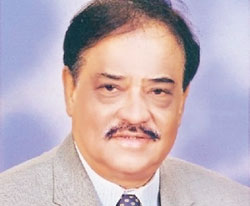
Mizanur Rahman Shelley
He was extremely moody and stung the students' with sharp sarcasm. One remembers how he got in a rage with class friend Habibullah. He thought quite mistakenly that Habibullah had caused disturbance in class. He punished Habib by making him stand on the raised platform for some minutes. Realising the wrong he had done to Habib Professor Mansuruddin later gave him the honour of writing key points of the lecture on the blackboard. The other favourite Bangla teacher was witty and humorous Professor Hisham Uddin who taught us with care and affection.
Professor Nurul Karim was teacher of modern European history and lent a singsong tone to his attractive lecture. Professor Shafiqur Rahman, the vice principal, taught us economics with solemn sincerity. Our favourite English teachers were Professor Noman and Professor Abu Rushed Matin Uddin dressed in spotless white trousers and shirt. Professor Noman taught us Wordsworth, Keats and Coleridge with great emotion that never failed to move us. Professor Abu Rushed Matin Uddin was a reputed novelist and came to the class immaculately dressed in cotton suits. He spoke with a British accent.
Other distinguished teacher such as Quamruzzaman of economics, Mr Syed Ahmed and Mr Matin of civics, Moslem Uddin of logic, Azhar Uddin of English, Azharul Haque of economics. Shafiqur Rahman made our time in Dhaka College rewarding. Professor Kabir Chowdhury, then a young teacher of English, returned from the United States and became our teacher at the fag-end of our college life. Our geography teachers were slightly crippled Mr Shafat Ullah and non-Bengali Mrs Siddiqui. The most distinguished geography teacher was Professor MI Chowdhury. Mafizul Islam Chowdhury whose teaching of physical geography was spellbinding. He was a cousin of my father and a favourite uncle of mine.
The halcyon days of literary creation and idle hours of friendly togetherness soon came to their close. The much-awaited results of the intermediate examinations were announced during July. For me the happening was a piercing shaft of intense light adorned by great optimism and titanic hope. I distinctly remember that a day before the official results were out, a kind and popular teacher of Bengali in Notre Dame College, Professor Abdul Hamid, sent an unsigned note on a piece of white paper to me. It simply said, 'Mizanur Rahman stands first in this year's IA examinations.'
There was no question of doubting the welcome information from the well-meaning and affectionate teacher. A burnt child, however, dreads fire. The memory of the disappointment of not being among the first twenty in the matriculation examinations two years ago still haunted me. Inclined as I was to accept the wonderful news I had my apprehension until the official publication of the results within a day.
Affectionate and large-hearted uncle, Paltu mama, immediately ordered for sweets. His follower and unofficial valet, an original inhabitant of Dhaka, Patok, whom everybody called Khan Bahadur, remarked innocently, 'I think it is the first division, not the first!' When the results came out and I was placed in the first position, many including me unsuccessfully tried to deny this reality. The happening was indeed extraordinary and came as a surprise despite my well-wishers and friends' hope that I would win.
Those were the days of championing individuals rather than groups in all realms, including education. Thousands of pupils were not clustered in bright groups of Golden GPA or GPA 5. This has the effect of diluting the brilliant achievers in the anonymity of collectivism. In the late 1950s until years later this was not the case. In the terminal examinations like matriculation and intermediate top individuals were placed in graded positions of the first to the twentieth.
That provided scope for individual students to shine in splendid and lonely brilliance. It had its downside also. Many of the youngsters later lost their brightness and gradually faded away in harsher canvas of real life. Achievements so early in life made them hostages to their deeds. I remember, good friend Jolly, Anis telling me: 'Shelley, now you are trapped. From this time on, even if you become second you would be considered a failure. I pity you.' Many a time since then I have thought how correct he was!
In 1959 in the IA examinations, Dhaka College did very well. I stood first while Mohiuddin Mahmood Hafiz stood fourth; Abul Hassan Mahmud Ali stood fifth while Abdur Rashid Mia got the sixth place from Dhaka College. Meherunnesa and Rawnak Jahan from Eden College stood second and third respectively. In the evening of the day that the results were officially announced, overwhelmed with joy, Mohiuddin Mahmud Ali, Rashid Mia and I sat at a corner table in the college restaurant celebrating our triumph.
Dwarfish Salam was giving us elated company. A second-year BA student of the college was passing by. He asked, 'What is the result?' Salam pointed us out one by one and said, 'Shelley stood first, Mohiuddin fourth, Hassan Mahmud Ali fifth and Rashid Mia sixth. The senior phewed, puffed his cigarette and with disbelief writ large on his face walked away to the third gate of New Market. We burst into hearty laughter.
Another incident related to results brought a new friend who became a close companion for the rest of our life. He was Rahman Sharif. A brilliant bright young man with sharp features and searching eyes, he looked like one of the sages of the 'Age of Enlightenment'. Two days after the results were published, our friend Shafaat Jamil brought him to our table in the college restaurant. He introduced Sharif as his cousin who cut short his studies in a West Pakistan Air Force College and came back to Dhaka to do 'something'.
On first encounter, Sharif smiled and shaking my hand candidly said, 'Brother, you have made me lose fifty rupees'. That was king's ransom in those days. I was curious and asked how and when did I cause him this loss since I had not even met him earlier. He sat down on a chair opposite me and said, 'For the last few months I have been watching you spend most of the time in the restaurant, chatting with friends and occasionally flipping through the pages of some books. Shafaat told me that you would stand first in the IA examinations. I thought he was bluffing and told him seeing what the fellow that is you are doing with your precious time before the exams. I bet fifty rupees with him saying that you could not get anything better than a second division. Now you see how you have made me sustain such a heavy loss'.
Needless to say, we joyfully celebrated the next two hours in tea, snacks and talks. Sharif became an inseparable member of our inner group. His intelligence and brilliance made us pursue him to resume studies in college. He became a student of Dhaka College but did not continue. Personal reasons made him abandon studies and take a job in a private firm. Later, he became a very successful businessman and came to own garment factories.
Throughout the time between 1959 and 2014, when he departed this world, he remained a close and trusted friend in good days and bad. His role in my personal life was significant from the beginning of our friendship. His daughters are active and well settled in life. The elder one, Shafina Rahman, is a successful entrepreneur in the garment sector. A prominent social worker, she is also the current governor of Rotary International District 3281 in Bangladesh.
The results changed the entire texture of my life. Baba, Ma, uncle and aunts, brothers and sisters, cousins and friends were overwhelmed with joy. They found satisfaction that my position was vindicated. They hoped for great things in the future. So did I.
The monsoons of 1959 signal the heralding of a new session in our life. It was a bridge to transition from one stage of our student life to another. College life came to an end. The publication of the results of our Intermediate examination led our path to the university. We stepped out of Dhaka College with its rich educational heritage and stepped through the majestic portals of Dhaka University's exulted tradition. Early autumn of 1959 opened before us the doors of immense possibilities.
Moreover, the fact that I unexpectedly own the first position in the IA examinations made the beginning of my university life more joyful and lively. The end of the 1950s and inception of the 1960s marked an era of the dramatic emergence of youth in revolt. The youth in the west began searching for an alternative way of life. Many of them were fed up with the gross consumerism of the west. The so-called Hippie movement spread like a wild fire.
Hippies opted for the alternative, simple and austere life full of love for music and natural beauty. Thus, they transformed themselves into 'flower children'.
Dr MIZANUR RAHMAN SHELLEY, founder Chairman of Centre for Development Research (CDRB), and former technocrat Cabinet Minister of Bangladesh, died on August 12 last. He contributed his write-ups to the Daily Observer which are being published regularly as "The Symphony of Our Times".
Loading...
Loading...
Also read


Editor : Iqbal Sobhan Chowdhury
Published by the Editor on behalf of the Observer Ltd. from Globe Printers, 24/A, New Eskaton Road, Ramna, Dhaka.
Editorial, News and Commercial Offices : Aziz Bhaban (2nd floor), 93, Motijheel C/A, Dhaka-1000.
Phone: PABX- 41053001-06; Advertisement: 41053012; 01793317829, 01550707291, E-mail: [email protected], [email protected] Online: email: [email protected] 41053014; 01550707297 Advertisement: 01550707296
Published by the Editor on behalf of the Observer Ltd. from Globe Printers, 24/A, New Eskaton Road, Ramna, Dhaka.
Editorial, News and Commercial Offices : Aziz Bhaban (2nd floor), 93, Motijheel C/A, Dhaka-1000.
Phone: PABX- 41053001-06; Advertisement: 41053012; 01793317829, 01550707291, E-mail: [email protected], [email protected] Online: email: [email protected] 41053014; 01550707297 Advertisement: 01550707296


