


বাংলা
E-Paper
� Dhaka
📅 Sunday | 11 October 2026, 26 Ashswin 1433 PID registration number 06



| HEADLINE |

|
Johanna Lindström, a torchbearer for creative and persecuted writers
Published : Tuesday, 1 October, 2019 at 12:00 AM
Takir Hossain


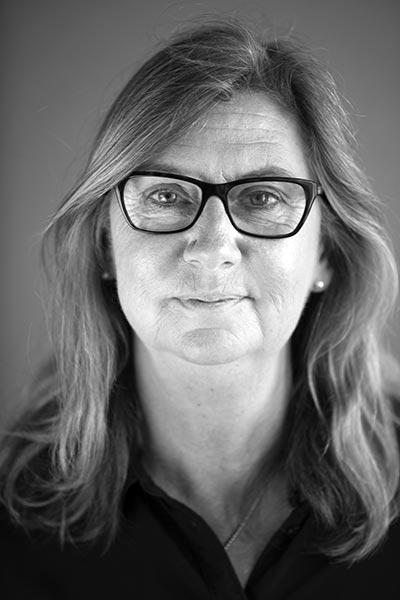
Johanna Lindstr�m Photograph: Ann-Charlotte Rugfelt Ferm
In May I was invited to a month-long residency programme for writers in Stromstad, Sweden. The programme named AIR Litteratur V�stra G�taland has been arranged by an organisation called, Kultur i V�st since Fall 2015 as its regional residency programme. Kultur i V�st administration works for a broad and inclusive cultural life that concerns the inhabitants living under the care of V�stra G�taland throughout Sweden. In order to achieve this, Kultur i V�st collaborates with cultural players both regionally, nationally and internationally, so that V�stra G�taland can achieve a dynamic and inclusive socio-cultural environment, that can be an ideal model for the rest of the world.
Johanna Lindstr�m works as a coordinator at Kultur i V�st. The basis of her work is to strengthen culture and its role in society. At present she has two separate assignments with Kultur i V�st. Her first assignment is to be the coordinator for the V�stra G�taland sanctuary region. Managing the writers' residency programme is her second assignment.
At this point, Johanna Lindstr�m would like to elaborate on her first assignment. The V�stra G�taland region is a member of ICORN (International Cities of Refuge Network) and they offer persecuted writers and other cultural workers a safe haven for two years giving them opportunities to continue their important works.
By supporting with sanctuaries, ICORN gives writers the opportunity to evacuate an environment where they are harassed, persecuted, censored. In Sweden they now have shelters in 25 cities and around the world there are around 70 cities and regions which are members of ICORN.
I have come to know that ICORN is relevant for Johanna's works because it operates in two cities in Sweden, Gothenburg and Uddevalla through V�stra G�taland. Keeping up with the norms of ICORN V�stra G�taland authority wants to stand up for democratic values and emphasise the importance of freedom of expression. Of its two cities under ICORN, Gothenburg has been a City of Refuge for the longest time, for almost 20 years.
There have been several guests over the years, including Svetlana Aleksijevich in Gothenburg. Svetlana stayed in Gothenburg from 2006-2008. A few years later, in 2015 she received the Nobel Prize in Literature.
Details of her second assignment with AIR Litteratur V�stra G�talandand her perceptions, experiences about it and other literary residency programmes will be revealed through her own words in the following conversation.
1. How do you perceive aliterary residency programme?
Artist in residence is an established concept within the cultural world. We work with invited artists, musicians and writers, taking them to visits in towns, institutions or museums. In this way we want to offer the scholarship holders work peace and new inspiration. It creates opportunities for an exchange and collaboration between the scholarship holders and the place where they live. Opening your cities, museums or institutions for guests from around the world is enriching both for your own operations and for your guests and it creates new contacts and new collaborative projects.
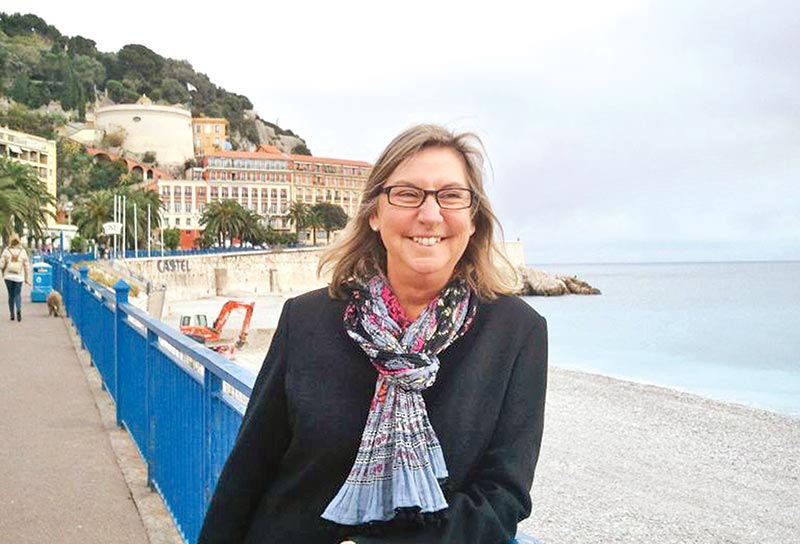
Johanna Lindstr�m
Our residency programme is regional. Our region V�stra G�taland is a large region in Western Sweden. It consists of 49 cities or municipalities. The literary residency programme called AIR LitteraturV�stra G�taland is organised by the regional administration Kultur i V�st,in four small cities in our region, Str�mstad, Alings�s, Jonsered and �m�l.
Each city has chosen its own focus for the programme. In Str�mstad we receive international guests, in Alings�s we work with literature for children and young people, in Jonsered we collaborate with the University of Gothenburg and the focus is mainly on research and academic work, in �m�l we have chosen to focus on Nordic literature.
3. What are the basic resident benefits?
The residency programme is basically a way of strengthening the position of literature as an art form. It is a way of offering writers and translators opportunities to create new literature, to find new collaborations, to meet colleagues, audiences and people in a new environment.
It is also a way for our cities to generously invite scholars within their boundaries and in this way get new impressions and new opportunities to meet people with different backgrounds and experiences. It is also an opportunity for the hosts to see their city through the eyes of the guests. Our regional cultural plan emphasizes promoting international and intercultural exchange and collaboration.
We also see that many of our guests travel home with completed manuscripts, novels, short stories and poems. This proves that they use their time well here. The new environment and context in our region that is mostly foreign to them unleashes creativity within them. The opportunity to work for a whole month without disturbances from all the demands of everyday life is a favour that many appreciate. Nowadays,lack of time and space for reflection is a problem that we often experience. Writing, reading and getting time to think is a great way to get to know yourself, your fellow humans and the world.
4. What kind of feedback have past fellowship holders given you about the programme?
Most emphasize the importance of peace and quiet for writing. They see it as an opportunity to create their own space for creative work. When you leave everyday life and all the annoying moments at home and travel to a new place, something else happens. Many are also very happy about the new friendships, relationships theyget to establish. The opportunity to meet new colleagues and find new collaborations is inspiring. Gettin to know a new city is also a way to get new thoughts and ideas. Many of our guests tell us that they were inspired by the places they visited and wrote new poems, essays or stories based on their impressions of the city they were staying in.
5. How do you perceive your programme compared to other programmes?
I do not know of any other literary residency programme that is region-based, that is to say covers a number of cities or habitats simultaneously. Most other residency programmes stay fixed in one place. The fact that we work with several cities at the same time is probably unique. We have an independent jury that decides who will be granted a scholarship stay. We try, as far as possible, to meet the wishes of our scholarship holders about the month and place they wish to pay a visit in. We also work breaking limitations and boundaries of different forms of art. For example, we have had playwrights, filmmakers, musicians and even scientists among our guests. We strive to see an interdisciplinary transparency.
Loading...
Loading...
Also read






Editor : Iqbal Sobhan Chowdhury
Published by the Editor on behalf of the Observer Ltd. from Globe Printers, 24/A, New Eskaton Road, Ramna, Dhaka.
Editorial, News and Commercial Offices : Aziz Bhaban (2nd floor), 93, Motijheel C/A, Dhaka-1000.
Phone: PABX- 41053001-06; Advertisement: 41053012; 01793317829, 01550707291, E-mail: [email protected], �[email protected] Online: email: [email protected] 41053014; 01550707297 Advertisement: 01550707296
Published by the Editor on behalf of the Observer Ltd. from Globe Printers, 24/A, New Eskaton Road, Ramna, Dhaka.
Editorial, News and Commercial Offices : Aziz Bhaban (2nd floor), 93, Motijheel C/A, Dhaka-1000.
Phone: PABX- 41053001-06; Advertisement: 41053012; 01793317829, 01550707291, E-mail: [email protected], �[email protected] Online: email: [email protected] 41053014; 01550707297 Advertisement: 01550707296


