



| HEADLINE |

|
E-waste: Bangladesh situation
Published : Wednesday, 23 October, 2019 at 12:00 AM
Shaikh Shahrukh


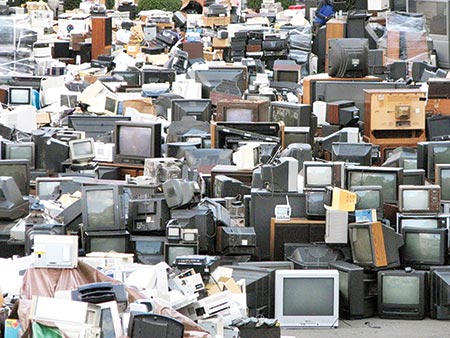
Electronic waste (E-waste) is the causal agent responsible for numerous environmental and health hazards. At present, there is colossal information gap aboute-waste hazards in Bangladesh which is primarily due to lack of awareness as well as the conceptual knowledge of the need of safe disposal.
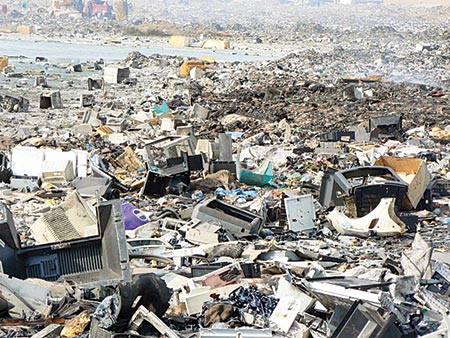
Heavy metals and trash electronic items are dismantled without following effective controls in place, the hazardous compounds get released which affects human health and the environment adversely. Components which are not biodegradable or cannot be recycled are dumped or burned in open those release toxic substance into the environment.
Here in a study report made by the organisation Environment and Social Development Organization-ESDO, prominent researchers have shed light onto this topic which is a part of our everyday lives and affects our future.
The research was done with the intent to address the problem of E-waste and create mass awareness through learning initiatives on e-waste via a project focusing the metropolitancities of Dhaka and Chattogram.
Definition : "Electronic waste (E-waste)" may be defined as all secondary electronic goods including phone sets / mobile phones , entertainment device electronics, computers, and other items such as television sets and refrigerators which are sold, donated, or discarded by their original owners.
Impact in numbers : Sadly, no prior inventory had been made to assess the extent of E-waste problem in Bangladesh.
Annually, Bangladesh generates now over 2.8 million metric tons of e-waste (including e-waste from ship-breaking yards), that too without having the slightest clue about the detrimental effects of the accumulation ofthis type of waste in open landfills, farming land and in the open sources of water bodies.
The health impact of e-waste is as varied as the components which are found in them. However, the most common types of maladies which are caused by it include cancer, asthma, neuraldegradation, audio-visual impairment, infant-mortality, disability amongst new-borns, etc.
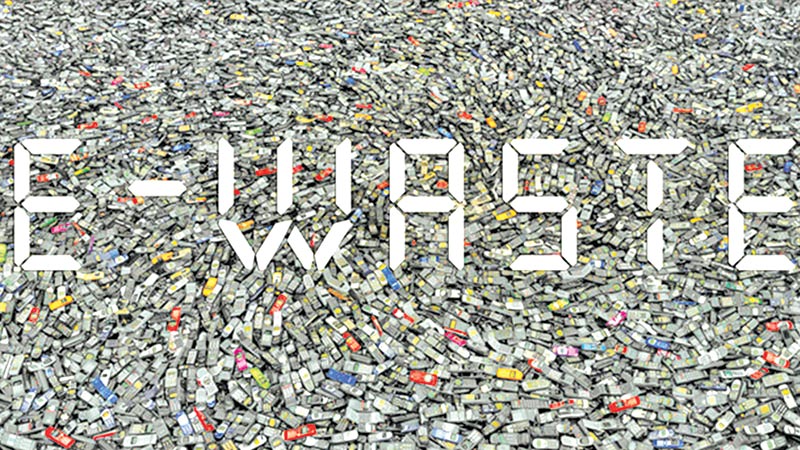 Environmental impacts such as air, water and soil pollution alongside endangerment of wildlife are probably the only impact category which individuals are slightly aware of, due to its visible cause and effect nature.
 More than 30 millions of children, women and non-formal workers are exposed by heavy metals lead, mercury, cadmium, zinc and chromium, PCB, Dioxin and furan by these e-wastes.As per ESDO's recent study alongsideavailable information, approximately (50,000) fifty thousand children's are involved in the informal e-waste collection and recycling processes, amongst them about 40% are involved in ship breaking yards.
In the last 21 years, Bangladesh has generated 10,504 metric tons of harmfule-waste only by cell phone sets. Our country's mobile phone penetration has touched a record mark, even though a big market is untapped. Average longevity of a set is about one year. So every year we are dumping over one core mobile phone sets. Expectation of the mobile phone companies is to make five core subscribers before the end of this decade. Thus very soon we will dump two and half core mobile phones annually.
Furthermore, 2,96,302 TV sets are scrapped and generate 0.17 million metric tons of e-waste every year. Interestingly, with the onset of a Digital Bangladesh, in the last 10 years IT sector has generated 35,000 metric tons of e-waste in Bangladesh. And, in the capital Dhaka, the concentration e-waste is highest in Islampur, Kamrangirchar, Gingira, Mirpur (11, 12) and Mohammadpur.
Recycling and disposal of E-wastem : Reuse of e-equipment is a common practice in Bangladesh. E-equipment recycling and dismantling is a growing business although there are no e-waste dismantling facility in formal sector. The process of recycling in Bangladesh is very injurious and hazardous; there is no proper waste management guideline or regulation.
1,20,000 urban poor from the informal sector are involved in the recycling trade chain of Dhaka city. 15% of the total generated waste in Dhaka (mainly inorganic) which amounts 475 tonnes being recycled daily. Within this amount of waste, only 20 to 35% are recycled and rest laid in to landfills ,rivers, ponds, drains, lake ,canals and open spaces.
Existing Laws : No specific law or ordinance for e-waste management and recycling exists, but there is the Bangladesh Environment Conservation Act, 1995, The Environmental Court Act, 2000, and The Environmental Conservation Rules, 1997. Bangladesh adopted its National Environment Policy in the year of 1992 highlighting the regulating all activities that pollute and destroy the environment. The Environment conservation act, 1995 authorizes the Director General to undertake any activity necessary to conserve and enhance the quality of environment and to control, prevent and mitigate pollution.
 Medical Waste Management Rules, 2008 addresses the waste management issues for the medical sector including E-waste.
 Government already prepared draft National 3R (Reduce Reuse and Recycle) Strategy and in that draft e-waste issues have been addressed. The Department of Environment prepared draft solid waste management rules which is now in consultation stage and still time to include E-waste management issues in that rule.
Import of any kind of waste requires Government permission. The High Court also directed the government to ensure that no ship with hazardous wastes enter the country without being pre-cleaned at source or outside the territory of Bangladesh.
Conclusion and Recommendation: Till now no effective steps to stop generating e-waste or strict disposal of this sludge. Following actions can be taken as part of way forward: Inventory of E-waste in large cities of Bangladesh. Develop E-waste policy and guideline with consultation with the relevant stakeholders. Establish efficient collection system at least for selected electronic waste. Registration and capacity development of E-waste recyclers. Introduction of Environmental Management System in E-waste sector. Establish E-waste tracking mechanism in order to update the inventory. Awareness raising and development of communication material (poster, leaflets, brochure, TV spot). Monitor e-waste trafficking and shipment
Loading...
Loading...
Also read







Editor : Iqbal Sobhan Chowdhury
Published by the Editor on behalf of the Observer Ltd. from Globe Printers, 24/A, New Eskaton Road, Ramna, Dhaka.
Editorial, News and Commercial Offices : Aziz Bhaban (2nd floor), 93, Motijheel C/A, Dhaka-1000.
Phone: PABX- 41053001-06; Advertisement: 41053012; 01793317829, 01550707291, E-mail: [email protected], [email protected] Online: email: [email protected] 41053014; 01550707297 Advertisement: 01550707296
Published by the Editor on behalf of the Observer Ltd. from Globe Printers, 24/A, New Eskaton Road, Ramna, Dhaka.
Editorial, News and Commercial Offices : Aziz Bhaban (2nd floor), 93, Motijheel C/A, Dhaka-1000.
Phone: PABX- 41053001-06; Advertisement: 41053012; 01793317829, 01550707291, E-mail: [email protected], [email protected] Online: email: [email protected] 41053014; 01550707297 Advertisement: 01550707296


